
 Submit an article

Search
- Page Path
- HOME > Search
Research Paper
- Development and evaluation of the Trauma-nursing Education and Skill Support program to enhance trauma nursing competencies: a quasi-experimental study
- Tae Yeong Yang, Myung Jin Jang, Ki Ung Kim, Min So, Mi Na Choi, Eun Jung Lee, Jin Su Jo, Ji Yun Lee, Kwang Kyun Lim, Kyoung Mi Kim, Hae Jun Baek, Sun Ho Wang, Jin Oh Choi
- J Korean Acad Nurs 2026;56(1):67-80. Published online February 24, 2026
- DOI: https://doi.org/10.4040/jkan.25134
-
 Abstract
 PDF
PDF ePub
ePub - Purpose
This study aimed to develop and evaluate the effectiveness of the Trauma-nursing Education and Skill Support (TESS) program based on the ADDIE model (Analysis, Design, Development, Implementation, Evaluation model). The program was designed to enhance trauma nurses’ clinical competencies, including trauma-related knowledge, self-efficacy, and problem-solving ability, through the integration of theoretical education and simulation-based practice.
Methods
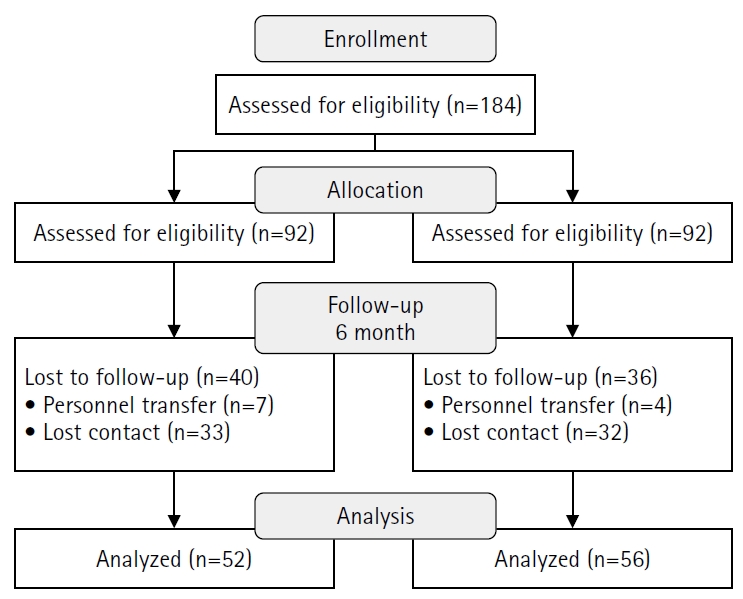
A quasi-experimental study using a non-equivalent control group pretest–posttest design was conducted. Participants included 108 trauma nurses from regional trauma centers, military trauma centers, and emergency care facilities, who were assigned to an experimental group (n=52) or a control group (n=56). The TESS program consisted of a 2-day, 14-hour blended-learning course that included eight lecture sessions and four simulation-based practice stations. Data were collected at baseline, immediately after the intervention, and at 6 months using validated instruments measuring trauma-related knowledge, self-efficacy, and problem-solving ability. Two-way repeated-measures analysis of variance was used for data analysis.
Results
The experimental group demonstrated significant improvements in trauma-related knowledge, self-efficacy, and problem-solving ability compared with baseline (all p<.001). These improvements were sustained at 6 months, although trauma-related knowledge scores showed a slight decline compared with immediate posttest levels. Between-group analyses confirmed significant group-by-time interaction effects for all outcomes: trauma-related knowledge (η2=0.12, p<.001), self-efficacy (η2=0.09, p=.002), and problem-solving ability (η2=0.08, p=.003).
Conclusion
The TESS program effectively enhanced trauma nurses’ trauma-related knowledge, self-efficacy, and problem-solving ability, with effects sustained for up to 6 months. Incorporating blended learning and simulation-based training into standardized trauma nursing education may strengthen clinical competencies and ultimately contribute to improved patient outcomes.
- 3,326 View
- 353 Download

Original Articles
- The Influence of Grit on Turnover Intention of University Hospital Nurses: The Mediating Effect of Job Involvement
- Ji Yeong Jeong, Youn Sook Seo, Jung Hoon Choi, Seong Hee Kim, Min Sook Lee, Sung Hwa Hong, Jung Suk Choi, Da Eun Park
- J Korean Acad Nurs 2019;49(2):181-190. Published online April 30, 2019
- DOI: https://doi.org/10.4040/jkan.2019.49.2.181
-
Abstract
PDF
Purpose This study aimed to confirm the mediating effect of job involvement in the relationship between grit and turnover intention among nurses working at university hospitals.
Methods Participants included 437 nurses from university hospitals located in C city, Gyeongnam. Data were collected from January 8 to 19, 2018, using self-report questionnaires. Data were analyzed using the t-test, analysis of variance, Scheffe's test, Pearson's correlation coefficient, and multiple regression, with the SPSS/22.0 program. A mediation analysis was performed according to the Baron and Kenny, and bootstrapping methods.
Results There were significant relationships between grit and job involvement (r=.40,
p <.001), grit and turnover intention (r=−.29,p <.001), and turnover intention and job involvement (r=−.52,p <.001). Job involvement showed partial mediating effects in the relationship between grit and turnover intention.Conclusion Grit increased job involvement and lowered turnover intention. Therefore, to reduce nurses' turnover intention, it is necessary to develop a program and strategies to increase their grit.
-
Citations
Citations to this article as recorded by
- Örgütsel Kibirliliğin İşten Ayrılma Niyeti Üzerine Etkisinde Metanetin Aracı Rolü
Ethem Merdan
Ahi Evran Üniversitesi Sosyal Bilimler Enstitüsü Dergisi.2026; 12(1): 222. CrossRef - The influence of occupational stress and grit on clinical nurses’ organizational commitment
Sun Mi Ha
The Journal of Korean Academic Society of Nursing Education.2026; 32(2): 170. CrossRef - Examining the Relationship between Rumination and Job Involvement, Organizational Citizenship Behavior, with the Mediating Role of Grit
Seyed mohammadjavad Mousavinia, Mostafa Asheghi, Abdolzahra Naami
International Journal of Psychology (IPA).2026; 20(1): 153. CrossRef - The Effects of Workplace Spirituality and Self‐Efficacy on Quality of Life Among Cancer Survivors: Empirical Quantitative Research
Seulgi Kang, Yoonjung Kim, Hyeji Shin
Journal of Advanced Nursing.2025; 81(5): 2438. CrossRef - Mediating effect of grit on the influence of nurses’ silence behavior on medication safety competence: a cross-sectional study
Haengsuk Kim, Wanju Park
Journal of Korean Academy of Nursing.2025; 55(1): 81. CrossRef - Success doesn’t come to you, you go to it: the role of self-perceived employability among engineering graduates
Arun Aggarwal, Amit Mittal, Ishani Sharma, Pawan Kumar Chand, Amruta Deshpande
Industrial and Commercial Training.2025; 57(4): 361. CrossRef - The associations of grit, self-leadership, and followership with competency in evidence-based practice among nurses in Korea: a descriptive correlational study
Ha-young Kim, Jin-il Kim
Journal of Korean Biological Nursing Science.2025; 27(2): 244. CrossRef - Effects of Grit and Nursing Work Environment on Work Engagement in Clinical Nurses
Young Ju Kim, Hye Young Cho
Journal of Korean Academy of Nursing Administration.2025; 31(3): 312. CrossRef - Exploring personal, community, and societal conditions associated with South Korean new graduate nurses’ organizational socialization: a cross-sectional survey study
Jihye Song, Jeongsuk Lee, Youmin Cho, Ahyoung Jeon, Moonhee Gang
BMC Nursing.2025;[Epub] CrossRef - Free Will Belief and Nurses’ Job Performance: The Mediating Roles of Grit and Positive Affect
Wei Liu, Song Wang
International Nursing Review.2025;[Epub] CrossRef - Effects of Attitude Toward Interdepartmental Transfer, Career Growth Opportunity, and Role Breadth Self-Efficacy on Job Crafting among Nurses with Transfer Experience
Yu Jin Lee, Chung Hee Woo
Journal of Korean Academy of Fundamentals of Nursing.2025; 32(4): 497. CrossRef - Effects of Grit and Retention Intention on Work Performance among Operating Room Nurses
Ae-Kyung Jang, Jun-Hee Lee, Kyeong-Soo Lee, Tae-Yoon Hwang
Journal of Korean Public Health Nursing.2025; 39(3): 381. CrossRef - Effects of grit, calling, and resilience on the retention intention of general hospital nurses
Gi Ran Lee, Imsun Lee, Mihee Chung, Jiyeon Ha
International Nursing Review.2024; 71(4): 766. CrossRef - Relationship between the sense of nursing professional pride and adversity quotient, grit levels among nurses in blood purification centers: a multicenter cross-sectional study
Wenbin Xu, Lin Li, Qian Jiang, Yiqian Fang, Qian Yang
Frontiers in Psychology.2024;[Epub] CrossRef - Experiences of Newly Graduated Nurses Trained by Clinical Nurse Educators
Yeon Hee Kim, Young Sun Jung, Kyoung Hui Lee, Eun Ji Chang
Journal of Korean Association for Qualitative Research.2024; 9(1): 34. CrossRef - The influence of grit on nurse job satisfaction: Mediating effects of perceived stress and moderating effects of optimism
Cui Yang, Lu Yang, Dongmei Wu
Frontiers in Psychology.2023;[Epub] CrossRef - The effect of grit on the work engagement of nurses: The mediating effects of positive psychological capital and burnout
Mi Kyung Park, Won Hwa Kim
The Journal of Korean Academic Society of Nursing Education.2023; 29(2): 161. CrossRef - Grit among Nursing Students at Private Nursing Institute of Karachi Pakistan
Muhammad Ishaq, Afsha Bibi, Fazal Khaliq, Ashfaq Ahmad
Pakistan Journal of Health Sciences.2023; : 115. CrossRef - The Mediating Effect of Grit on the Relationship between Work Environment and Intention to Stay at Work among Regional Trauma Center Nurses: A Cross-Sectional Study
Ji Sun Yang, Myung Jin Jang
Korean Journal of Adult Nursing.2023; 35(2): 107. CrossRef - Similarity in functional connectome architecture predicts teenage grit
Sujin Park, Daeun Park, M Justin Kim
Social Cognitive and Affective Neuroscience.2023;[Epub] CrossRef - Effects of Gratitude Disposition, Social Support, and Occupational Stress of Clinical Nurses on Grit
Ha-Na Lee, Hwee Wee
Journal of Korean Academy of psychiatric and Mental Health Nursing.2023; 32(1): 56. CrossRef - Effects of Nurses' Grit on the Nursing Performance: Multiple Mediating Effects of Work Engagement and Job Crafting
Jeong-Lim Ryu, So-Hyoung Hong, Yoon Seo Yang
Journal of Korean Academy of Nursing Administration.2023; 29(4): 468. CrossRef - Factors Affecting Nurse Retention Intention: With a Focus on Shift Nurses in South Korea
Eun-Young Cho, Hwee Wee
Healthcare.2023; 11(8): 1167. CrossRef - Development and Evaluation of Passion Continuation Program based on GRIT Theory for Nurses in COVID-19 Pandemic: A Non-Randomized Experimental Study
Do-Young Lee, Nam-Joo Je, Yoon Jung Kim, Chunseon Jang, Hyun-Ju Kim
Journal of Korean Academy of Fundamentals of Nursing.2023; 30(3): 357. CrossRef - Antecedents and Consequences of Grit Among Working Adults: A Transpersonal Psychology Perspective
Devanshi Agrawal, Surekha Chukkali, Sabah Singh
Frontiers in Psychology.2022;[Epub] CrossRef - Development of a scale to measure the psychological resources of grit in adults
Sarah E. Schimschal, Denis Visentin, Rachel Kornhaber, Tony Barnett, Michelle Cleary
Nursing & Health Sciences.2022; 24(3): 752. CrossRef - Effect of Nurses’ Grit on Nursing Job Performance and the Double Mediating Effect of Job Satisfaction and Organizational Commitment
Hyun-Kuk Cho, Boyoung Kim
Healthcare.2022; 10(2): 396. CrossRef - An Exploratory Study on the Mediating Effect of Clinical Competence in the Relationship Between Grit and Field Adaptation in Newly Graduated Nurses
Eunhee Shin
SAGE Open Nursing.2022;[Epub] CrossRef - Pediatric nurses' grit and nursing intention during the COVID-19 pandemic: Mediating and moderating effects of mindset and psychological collectivism
Young Soo Chu, Won-Oak Oh, Il Tae Park, Anna Lee, Myung-Jin Jung
Child Health Nursing Research.2021; 27(4): 395. CrossRef - Grit and Meaning in Life of Chinese Nurses: The Chain Mediating Effect of Social Support and Hope
Lei Yang, Dongmei Wu
Frontiers in Psychology.2021;[Epub] CrossRef - Psychometric Properties of the Grit-S in Chinese Nurses
Changjiu He, Dongmei Wu, Lu Yang, Lei Yang, Yuchuan Yue
Frontiers in Psychology.2021;[Epub] CrossRef - The Influences of Grit, Emotional Labor and Organizational Intimacy on Nurses' Intention to Stay in Comprehensive Nursing Care Service Units
Dae Yeon Lee, Sook Young Kim
The Korean Journal of Rehabilitation Nursing.2020; 23(2): 149. CrossRef - Studying the effects of future-oriented factors and turnover when threatened
Sean McGinley, Nathaniel Discepoli Line, Wei Wei, Taylor Peyton
International Journal of Contemporary Hospitality Management.2020; 32(8): 2737. CrossRef - Development and Validation of the Clinical Nurses Grit Scale (CN-GRIT)
Hyosun Park, Kyungmi Lee, Nayeon Shin
Journal of Korean Academy of Nursing Administration.2020; 26(1): 55. CrossRef - The Relationship between Occupational Stress and Burnout among Firefighters: Mediating of Grit
Yun Ah Jung, Myung Soo Oh, Hee Sook Kim
Journal of Korean Academy of psychiatric and Mental Health Nursing.2020; 29(2): 96. CrossRef - Mediation Effects of Calling and Role Breadth Self-efficacy on the Relationship between Supportive Supervision and Job Crafting of Nurses in General Hospitals
Sujeong Han
Journal of Korean Academy of Nursing Administration.2020; 26(3): 251. CrossRef - Effects of Grit and Critical Thinking Disposition on Nursing Students’
Clinical Competence
Sook-Hee Cho, Kyung-Soon Yun
The Korean Journal of Health Service Management.2020; 14(2): 117. CrossRef - The Impact of Grit on University Student’s Core Competency in Dental Hygiene Students
Soo-Auk Park, Young-Sik Cho
Journal of Dental Hygiene Science.2019; 19(3): 170. CrossRef
- Örgütsel Kibirliliğin İşten Ayrılma Niyeti Üzerine Etkisinde Metanetin Aracı Rolü
- 3,634 View
- 100 Download
- 17 Web of Science
- 38 Crossref
- A Study on HeaIth Education Activities of the School Nurses in the Secondary School
- Min Sook Kwon
- Journal of Nurses Academic Society 1985;15(2):34-48. Published online April 3, 2017
- DOI: https://doi.org/10.4040/jnas.1985.15.2.34
-
Abstract
PDF
The purpose of this study was to find out health education activities of the 435 school nurses in the secondary schools in Seoul. A questionnaire was sent by mail on March 11, 1985 and received a total of 252 responds till April 4, 1985. Among them, 230 were included in final analysis. Those of 22 school nurses who have worked not more than one year were excluded. The results of the findings obtained of this study are summarized as follows ; 1. An average number of health education activities carried out by the school nurses turned out to be 31.7 times/nurse/year. 2. The practice rates of health education activities by contents of health education were revealed as follows ; in parasite disease 89.6%, hepatitis 89.1% physical examination 87.3%, influenza 84.3%, etc. Health education on drinking and smoking, drug abuse were the lowest rate as 37.8% and 40.9%. 3. The practice rates of health education by the school nurses according to the health education methods were shown as follows ; instruction by the teacher 90.9%, bulletin boards in the classroom 73.0%, message to home notices 72.6%, etc. 4. Difficulties in carrying out health education programs by the school nurse were analysed according to Likert's five point scale. The scores on item to the no availability of teaching tools and tips were 3.90, no availability of audiovisual aids 3.80, lack of understanding from the school principals 3.30, insufficient time of the school nurse 3.26, no guidance or improper form of health education material 3.20, lack of knowledge of educational method 3.18. As a conclusion of this study, the development of the supporting system to health education activities and programs for improvement of school health education is strongly needed from policy making level.
- 669 View
- 1 Download
- A Study on the Nursing Time in Nursing Units in Hospital to Applied Computer System
- Chun Ja Chang, Ik Wha Kang, Eun Ja Lee, Byung Youn Kim, Min Sook Lee
- Journal of Nurses Academic Society 1995;25(3):441-456. Published online March 30, 2017
- DOI: https://doi.org/10.4040/jnas.1995.25.3.441
-
Abstract
PDF
This study was done to determine direct and indirect nursing time in nursing units in hospital to applied computer system and expect that those results contribute to measure efficiency of nursing practice and planning of nursing manpower. The design for study was a descriptive study. The study results are as follows. 1. Patients admitted to the Internal Medicine and General Surgery units were grouped into four: Group I, 32.9% of the total patients, consisted patients whose condition was considered minor: Group II, 26.1%, was of those whose condition was considered moderate, Group III, 41. 8%, moderate severe and Group IV, 29.2% the most severe. 2. Nursing intervention times by care type were as follows: four minutes spent for suction, eight minutes, for simple position change, ten minutes, for sheet change, seven minutes for a hot or cool compress, six minutes for dressing change, four minutes for I.M.injection, six minutes for patient health education and five minutes for body temperature check. 3. Direct care time by patient group revealed the following: Group I rquired 191.4 minutes, Group II required 331.1 minutes, Group III rquired 499.4 minutes, and Group IV rquired 1328.0 minutes. 4. The ratio of time for adequate nursing care and direct care time in the Internal Medicine and General Surgery units was 67.4%-83.4% and 94.7%-99.3% in the Intensie Care Unit. 5. Average daily direct care time per patient was 5.5 hours in the Internal Medicine unit and 11.5 hours in the Intensive Care Unit. 6. Time spent in indirect care was 48.3 minutes for computer recording, 34.8 minutes for giving and receiving patient information for shift duty, 28.0 minutes for eating and resting time, 26.6 minutes for transfering and identifying patients, 25.6 minutes for identifying Doctor's order, 23.9 minutes for recording vital signs. 7. Time spent in indirect care was 282.2 minutes by head nurses (charge nurses), 258.7 minutes by nurses and 261.6 minutes by nurse aids. 8. The average nurse's workload was 9.3 hours and daily indirect nursing time required 46.3%-50. 5% of above mentioned workload time. 9. The average daily indirect care time per patient was expected to be 57.7 minutes in the Internal Medicine unit and 3.3 hours in the Intensive Care Unit.
- 792 View
- 0 Download
- Factors associated with Self-Rated Health in Metabolic Syndrome and Relationship between Sleep Duration and Metabolic Syndrome Risk Factors
- Bo Gyeong Lee, Jae Yeon Lee, Sun Ah Kim, Dong Min Son, Ok Kyung Ham
- J Korean Acad Nurs 2015;45(3):420-428. Published online June 30, 2015
- DOI: https://doi.org/10.4040/jkan.2015.45.3.420
-
Abstract
PDF
Purpose Purpose was to explore associations between sleep duration and metabolic syndrome (MS) risks, and to determine factors associated with self-rated health (SRH) of adults with MS compared to other adults.
Methods This is a secondary data analysis based on the Fifth Korea National Health and Nutrition Examination Survey KNHANES V (N=12662). Study instruments included sleep duration, MS risk factors, SRH and health-related quality of life (HRQoL).
Results Mean age of participants was 43.68±12.26 years. Fifty-eight percent were women, and 18.3% were identified as having MS. Systolic blood pressure (SBP), diastolic blood pressure (DBP), and SRH were significantly different according to sleep duration (
p <.05) among all participants. In the non MS group, male gender, younger age (19~30 and 41~50 age brackets) upper income level, sufficient sleep duration, and high density lipoprotein (HDL) were positively associated with SRH, whereas, lower education levels (≤ middle school), glucose level, and waist circumference were negatively associated with SRH (p <.05). In the MS group, lower income, lower education levels (≤ middle school), glucose level, and waist circumference were negatively associated with SRH, whereas, having an occupation was positively associated with SRH (p <.05).Conclusion Results suggest that tailored approaches are required for prevention and control of MS and sleep duration of each individual should be considered rather than applying standardized guidelines. However, as sleep quality was not included in the analysis, further investigations regarding influence of sleep quality on MS and SRH and controlling for other lifestyle and health behavior factors are required.
-
Citations
Citations to this article as recorded by- Can self-rated health be useful to primary care physicians as a diagnostic indicator of metabolic dysregulations amongst patients with type 2 diabetes? A population-based study
K. Umeh, S. Adaji
BMC Primary Care.2025;[Epub] CrossRef - Effects of Sleep Duration on Prevalence of Metabolic Syndrome and Metabolic Syndrome Components in Korean Adults
Jiyoung PARK, Byung-sun CHOI
Korean Journal of Health Promotion.2024; 24(4): 167. CrossRef - Lifestyle and Health Behaviors Associated with Metabolic Syndrome and Cardiovascular Disease
Goeun Chung, Hye-Jin Kim
Metabolic Syndrome and Related Disorders.2024; 22(2): 105. CrossRef - Health-related quality of life associated with coexisting chronic conditions in postmenopausal women
Bo Gyeong Lee, Haein Lee
Health Care for Women International.2024; 45(11): 1220. CrossRef - The Unique Role of Self-Rated Health in Metabolic Syndrome and its Diagnostic Cardiometabolic Abnormalities: An Analysis of Population-Based Data
K. Umeh, S. Adaji, L. Graham
Journal of Medical Psychology.2023; 25(1): 7. CrossRef - Sociodemographic and Health Characteristics Associated with Metabolic Syndrome in Men and Women Aged ≥50 Years
Goeun Chung, Hye-Sun Jung, Hye-Jin Kim
Metabolic Syndrome and Related Disorders.2021; 19(3): 159. CrossRef - Mental health according to sleep duration in stroke survivors: A population‐based nationwide cross‐sectional study
Hye‐Mi Moon, Yoonjung Kim
Geriatrics & Gerontology International.2020; 20(3): 223. CrossRef - The Association between Muscle Mass and Metabolic Syndrome Configuration among Korean Adults
Hwa-Ji Kim, Sung-Je Cho, Seong-Hwa Jeong
Journal of Health Informatics and Statistics.2019; 44(3): 279. CrossRef - A Study on Risk Factors of Metabolic Syndrome and Health Behaviors in a Region - 2014 community health survey -
Ok-hee Ahn, Seong-hui Choi, Seo-Hyeon Kim, Si-Ok Ryu, Young-Mi Choi
Journal of the Korea Academia-Industrial cooperation Society.2016; 17(12): 218. CrossRef - Predictors of Sleep Quality Among Young Adults in Korea: Gender Differences
Ae Kyung Chang, Jinyi Choi
Issues in Mental Health Nursing.2016; 37(12): 918. CrossRef - Impact of Menopausal Status, Metabolic Syndrome and its Risk Factors on Impaired Quality of Life above Middle-aged Women
Jisoon Kim, Sukhee Ahn
Korean Journal of Women Health Nursing.2016; 22(4): 275. CrossRef
- Can self-rated health be useful to primary care physicians as a diagnostic indicator of metabolic dysregulations amongst patients with type 2 diabetes? A population-based study
- 1,947 View
- 19 Download
- 11 Crossref
- pH, Temperature, Hydration of the Stratum Corneum of the Dorsal Hand and the Cord Area, and Acid Mantle Formation during Early Days of life in High-risk Newborns
- Youngmee Ahn, Min Sohn, Sangmi Lee, Mijin Lee
- J Korean Acad Nurs 2013;43(1):30-38. Published online February 28, 2013
- DOI: https://doi.org/10.4040/jkan.2013.43.1.30
-
Abstract
PDF
Purpose The study was done to explore variations in physiologic parameters of the stratum corneum (SC) of the dorsal hand and cord area during early days of life in high-risk newborns.
Methods In this longitudinal study, a total of 77 high-risk newborns were assessed for pH, temperature and hydration of the SC of the dorsal hand and the cord area on the 1st, 2nd, 3rd, 5th and 7th days of life.
Results Results showed that an acid mantle (AM) was formed in 57.1% for dorsal hand and 35.1% for cord area, implying significant delay regardless of decrease in pH (F=103.60,
p <.001), and hydration (F=4.00,p =.003) across days in both areas. Peripheral hypothermia with low hydration level was also observed in both areas. There was a positive relation between hydration and temperature (.14<r<.27,p <.010), and negative relation between hydration and pH in both areas (-.23<r<-.15,p <.010). Antibiotics may play a positive role in AM formation.Conclusion High-risk newborns may experience delay in acid mantle formation on SC, hypothermia and decreases in hydration on peripheral sites during the first 7 days of life.
-
Citations
Citations to this article as recorded by- Development of a Nursing Guideline for Improving Skin Integrity in High-Risk Infants
Young Mee Ahn, Sang Mi Lee, Jung Ae Cho
The Journal of Continuing Education in Nursing.2020; 51(5): 238. CrossRef - Hydration and pH of the Stratum Corneum in High-risk Newborns in the First 2 Weeks of Life
Young Mee Ahn, Min Sohn, Sangmi Lee
Child Health Nursing Research.2018; 24(3): 345. CrossRef - Hypothermia and Related Factors in High-Risk Infants
Youngmee Ahn, Min Sohn, Namhee Kim, Narae Kang, Seungyeon Kang, Eunmi Jung
Child Health Nursing Research.2017; 23(4): 505. CrossRef - Glucose and pH of Oral Secretions in Newborns
Namhee Kim, Youngmee Ahn
Child Health Nursing Research.2017; 23(3): 353. CrossRef - Two methods of cord care in high-risk newborns
Youngmee Ahn, Min Sohn, Yonghoon Jun, Eunyoung Lee, Sangmi Lee
Journal of Child Health Care.2015; 19(1): 118. CrossRef
- Development of a Nursing Guideline for Improving Skin Integrity in High-Risk Infants
- 1,821 View
- 4 Download
- 5 Crossref
- Growth Patterns of Premature Infants Up to 40th Term Week of Corrected Age
- Youngmee Ahn, Min Sohn, Sangmi Lee
- J Korean Acad Nurs 2011;41(5):613-622. Published online October 31, 2011
- DOI: https://doi.org/10.4040/jkan.2011.41.5.613
-
Abstract
PDF
Purpose Study purpose were to describe growth patterns of premature infants in weight, length and head circumference from birth to 40th week of corrected ages (CA) and to explore factors affecting patterns.
Methods A longitudinal descriptive study was conducted with 267 premature infants. They were categorized into 2 groups; GA group with measurements at birth and the CA group with measurements at CA, which was categorized into 3 groups (group 1-3) by WHO guideline for gestational age (GA) at birth.
Results GA group presented greater measures in all than CA group at same week of life. Among CA groups, group 3 showed the highest measurements, up to 37 weeks of life, though this disappeared at 38-40 weeks. Reversely, group 1 revealed the highest growth rates in all measures, followed by group 2 and group 3. Significant interaction was observed in all measures between week of life and any type of groups.
Conclusion Higher measures in GA group, as well group 3 among CA groups, supported the superiority of intra-uterine environment overriding quality of regimen from NICU. Regardless of growth acceleration, smaller infants remain smaller, indicating that intra-uterine thrifty phenotype may continue at least up to the 40th week of CA.
-
Citations
Citations to this article as recorded by- Socioeconomic disparities in the postnatal growth of preterm infants: a systematic review
Krithi Ravi, Aneurin Young, R. Mark Beattie, Mark J. Johnson
Pediatric Research.2025; 97(2): 532. CrossRef - Factors associated with the growth of preterm infants
Jisu Jeon, Won Hee Seo, Sang-Jin Chung
Journal of Nutrition and Health.2022; 55(5): 572. CrossRef - The effects of early-stage neurodevelopmental treatment on the growth of premature infants in neonatal intensive care unit
Eun-Ju Lee, Sang-Yeol Lee
Journal of Exercise Rehabilitation.2018; 14(3): 523. CrossRef - Weight Variation in Term Newborns Hospitalized during Early Postnatal Period
Youngmee Ahn, Namhee Kim, Eunyoung Lee, Miyoung Kwak
Child Health Nursing Research.2015; 21(4): 339. CrossRef - Growth of Korean preterm infants in a family‐centered tradition during early infancy: The influence of health risks, maternal employment, and the sex of infants
Youngmee Ahn, Min Sohn, Sangmi Lee
Japan Journal of Nursing Science.2014; 11(4): 281. CrossRef - Growth patterns and their implications for preterm infants in a culture of rapid modernization
Youngmee Ahn, Min Sohn, Yonghoon Jun, Sangmi Lee
Journal of Child Health Care.2013; 17(3): 242. CrossRef - Relationship Between Brain Injury and Head Circumference Growth in Extremely Premature Infants
Young-mee Ahn, Sang-mi Lee
Journal of Korean Academy of Child Health Nursing.2011; 17(4): 281. CrossRef
- Socioeconomic disparities in the postnatal growth of preterm infants: a systematic review
- 1,906 View
- 0 Download
- 7 Crossref
- Comparison in Weight, Height, Degree of Obesity and Body Mass Index Among Different Methods for Body Shape Classification in School-Age Children
- Young-mee Ahn, Min Sohn, Sun-Ha Choi
- J Korean Acad Nurs 2010;40(6):775-784. Published online December 31, 2010
- DOI: https://doi.org/10.4040/jkan.2010.40.6.775
-
Abstract
PDF
Purpose The study was conducted to describe body shapes of school age children using the degree of obesity index (DOI) and body mass index obesity index classified by the Ministry of Education, Science and Technology (M-BOI) and Seoul Metropolitan Office of Education (S-BOI).
Methods In this cross sectional descriptive study health screening data for school children collected in 2007 was used.
Results Data were analyzed for 2,193 4th-6th grade boys (52%) and girls who attended 4 schools in rural areas. DOI determined that only 44.3% of students had average weight. This proportion was much lower than the results of other methods (74.3-77.6%). All three methods defined girls (51.3-61.8%) as skinnier than boys. Skinny and average body shaped children classified by DOI and obese children classified by S-BOI were heavier and taller and presented higher degrees of obesity (DO) and BMI scores than by other methods. M-BOI and S-BOI presented statistically significant positive correlations with weight, height, DO and BMI, while DOI was not correlated with height.
Conclusion BMI based body shape classifications provide a more rigorous classification of body shape which are favorable for school health professionals with limited resources and policy makers for internationally comparable references.
-
Citations
Citations to this article as recorded by- Automatic recognition of the neck–shoulder shape based on 2D photos
Jian Zhang, Kaiyi Xu, Songling Zhao, Ruoweng Wang, Bingfei Gu
Textile Research Journal.2022; 92(23-24): 5095. CrossRef - Upper Body Type Classification of Elementary School Boys Using 3D Data
Hyun Wook Kim, Yun Ja Nam
Fashion & Textile Research Journal.2019; 21(6): 789. CrossRef - Associations among the Degree of Nonalcoholic Fatty Liver Disease, Metabolic Syndrome, Degree of Obesity in Children, and Parental Obesity
Min-Su Oh, Sorina Kim, Joon-Hyuck Jang, Jong Yoon Park, Hyun-Sik Kang, Mu Sook Lee, Ki Soo Kang
Pediatric Gastroenterology, Hepatology & Nutrition.2016; 19(3): 199. CrossRef - Association between Axial Length and Anthropometric Value in Korean Children
Hyojin Kim, Jungmook Lyu
Journal of Korean Ophthalmic Optics Society.2014; 19(3): 397. CrossRef
- Automatic recognition of the neck–shoulder shape based on 2D photos
- 2,063 View
- 0 Download
- 4 Crossref
- Evaluation of Mental Status in High-Risk Neonates using Infants Coma Scale
- Young-Mee Ahn, Min Sohn, Sang-Mi Lee
- J Korean Acad Nurs 2010;40(4):561-570. Published online August 31, 2010
- DOI: https://doi.org/10.4040/jkan.2010.40.4.561
-
Abstract
PDF
Purpose This was a cross sectional descriptive study to introduce the Infants Coma Scale (ICS), describe mental status of high risk infants using ICS and explore the relationships between ICS and clinical variables in infants hospitalized in a neonatal intensive care unit of a university hospital in Korea.
Methods After ICS was developed and tested by the authors, a research nurse evaluated the mental status of the infants using the English version of ICS and obtained clinical information on the infants from their medical records.
Results Data from 88 infants were analyzed. About 60% were male, 90% were preterm births, and 40% had pathologic abnormalities. Their mean gestational age was 32.4 (±3.50) weeks and the mean birth weight was 1,842 (±728.6) grams. The Cronbach's alpha for the ICS was .78. There was a statistically significant positive correlation between ICS total score and five clinical variables including gestational age, birth weight, 1 and 5 min Apgar scores and respiration status.
Conclusion Mental status is an important parameter in nursing assessment. ICS is a valid and reliable instrument, which clinicians can easily use to evaluate the mental status of high risk infants.
- 1,431 View
- 3 Download
- Relationship between Goodness-of-Fit for Mother-Preschool Child and Parenting Stress in Mother
- Hyang Mi Jung, Min Soon Ahn
- J Korean Acad Nurs 2009;39(1):53-61. Published online February 28, 2009
- DOI: https://doi.org/10.4040/jkan.2009.39.1.53
-
Abstract
PDF
Purpose This study was done to identify the relationship between goodness-of-fit for mother-preschool child dyads and parenting stress experienced by the mother.
Methods Study participants were 500 mothers who had children aged 3 to 5 who attended one of ten kindergartens or infant schools in M City or B City. Descriptive statistics and Pearson's correlation coefficients were calculated using the SPSS program.
Results Comparison of goodness-of-fit scores for mother-preschool child dyad according to the characteristics of the participants, showed a significant difference according to child's age, gender, and birth order, mother's education and occupation, father's age and education, family income, and the chief caregiver in the family. There was a positive correlation between goodness-of-fit scores for mother-child dyad and parenting stress scores for mothers.
Conclusion The findings of the study indicate a need to identify differences between children's behavioral problems and parenting styles according to the degree of discord in the mother-child temperaments. It is also necessary to develop and apply nursing programs to promote harmonizing of temperaments, programs in which the characteristics of the child and the mother are considered.
-
Citations
Citations to this article as recorded by- Relationships between Mother-Child Temperamental Interactions and Parenting Stress in Korean School-Aged Children
Gyung Yu, Lak Hyung Kim, Seung Taek Yu
The Journal of Korean Oriental Pediatrics.2015; 29(3): 12. CrossRef - The effects on the parent's self-esteem and parenting stress according to the Childhood Education Center Satisfaction
Geun-hye Jeon, Sung-je Cho
The Journal of Korea Institute of Information, Electronics, and Communication Technology.2015; 8(4): 299. CrossRef - Studies on Relations between Goodness of Fit in Mother-children Temperament Interaction and Problem Behaviors of Children
Hyun-Yee Ha, HaeRee Jung, Soo Jin Lee, Han Chae
The Journal of Korean Oriental Pediatrics.2013; 27(2): 11. CrossRef - The Relationship of the Parenting Stress with Child's Characteristics in Preschool Children
Jang-Ho Park, Seock-Hoon Chung, Hyo-Won Kim
Journal of the Korean Academy of Child and Adolescent Psychiatry.2011; 22(4): 236. CrossRef - Grounded Theory Approach to Transition Process of Parenting Experience among Mothers Defecting from North Korean
Hyun-Jeong Park, Yun-Soo Kim, Ho-Ran Park
Journal of Korean Academy of Child Health Nursing.2011; 17(1): 48. CrossRef
- Relationships between Mother-Child Temperamental Interactions and Parenting Stress in Korean School-Aged Children
- 1,878 View
- 7 Download
- 5 Crossref
- Effects of a Maternal Education Program Based on the Temperament Theory on the Temperamental Goodness-of-Fit between Mother and Child
- Min Soon Ahn
- Journal of Korean Academy of Nursing 2005;35(6):1044-1053. Published online October 31, 2005
- DOI: https://doi.org/10.4040/jkan.2005.35.6.1044
-
Abstract
PDF
Purpose This study was aimed to evaluate the effects of a maternal education program based on the temperament theory on the temperamental goodness-of-fit between mother and child.
Method The research method was a nonequivalent, control group, non-synchronized design and the experimental period was from May 10, 2004 to July 24, 2004. The subjects were mothers who had children 3-4 years old who registered in eight kindergartens or infant schools in M city. Among the total 94 subjects, 47 were allocated as an experimental group and 47 were a control group. Using the SPSS/WIN 10.0 program, the data was analyzed by a Chi-square test, and t-test.
Result 1. After treatment with a maternal education program based on the temperament theory, the experimental group significantly decreased in scores for perceived children's behavior problems in comparison to the control group(t=-4.01, p<.001). 2. After treatment with a maternal education program based on the temperament theory, the experimental group did not significantly decrease in scores for parenting stress in comparison to the control group(t=-.85, p=.40). 3. After treatment with a maternal education program based on the temperament theory, the experimental group did not significantly decrease in scores for rejective parenting behaviors in comparison to the control group(t=-1.32, p=.19).
Conclusion A maternal education program based on the temperament theory is a useful intervention to decrease perceived children's behavior problems.
-
Citations
Citations to this article as recorded by- Mizaç Temelli Eğitim Programının Çocukların Problem Davranışları ve Anne-Çocuk İletişimine Etkisinin İncelenmesi
İsa Özkan, Arzu Özyürek
Iğdır Üniversitesi Sosyal Bilimler Dergisi.2025; (38): 1. CrossRef - The longitudinal effects of children’s temperament on maternal depression: A hierarchical linear modeling approach
Chul-Gyu Kim, Mi-Young Choi
The Journal of Korean Academic Society of Nursing Education.2022; 28(1): 91. CrossRef - Structural Equation Modeling of the Interaction between Mothers and Preschool-Age Children
Hyun-Yi Chai, Mi-Young Choi
Journal of Korean Academy of Nursing.2021; 51(5): 630. CrossRef - Studies on Relations between Goodness of Fit in Mother-children Temperament Interaction and Problem Behaviors of Children
Hyun-Yee Ha, HaeRee Jung, Soo Jin Lee, Han Chae
The Journal of Korean Oriental Pediatrics.2013; 27(2): 11. CrossRef - Relationship between Goodness-of-Fit for Mother-Preschool Child and Parenting Stress in Mother
Hyang Mi Jung, Min Soon Ahn
Journal of Korean Academy of Nursing.2009; 39(1): 53. CrossRef
- Mizaç Temelli Eğitim Programının Çocukların Problem Davranışları ve Anne-Çocuk İletişimine Etkisinin İncelenmesi
- 1,221 View
- 6 Download
- 5 Crossref
 First
First Prev
Prev


