
 Submit an article

Search
- Page Path
- HOME > Search
Research Papers
- Latent profile analysis of health and fatigue recovery among shift work nurses and differential associations with participation in a shift work improvement pilot project: a descriptive cross-sectional study
- Eunhee Jung, Eunhye Kim, Suryang Seo, Sunyoung Lee, Sora An, Hyejin Kim, Ye Seul Kim, Youjin Kim, Mijeong Park, Hyoun-Joong Kong, Saram Lee, Yeong Joo Hong, Minho Jung
- J Korean Acad Nurs 2026;56(3):358-369. Published online July 23, 2026
- DOI: https://doi.org/10.4040/jkan.26006
-
 Abstract
 PDF
PDF ePub
ePub - Purpose
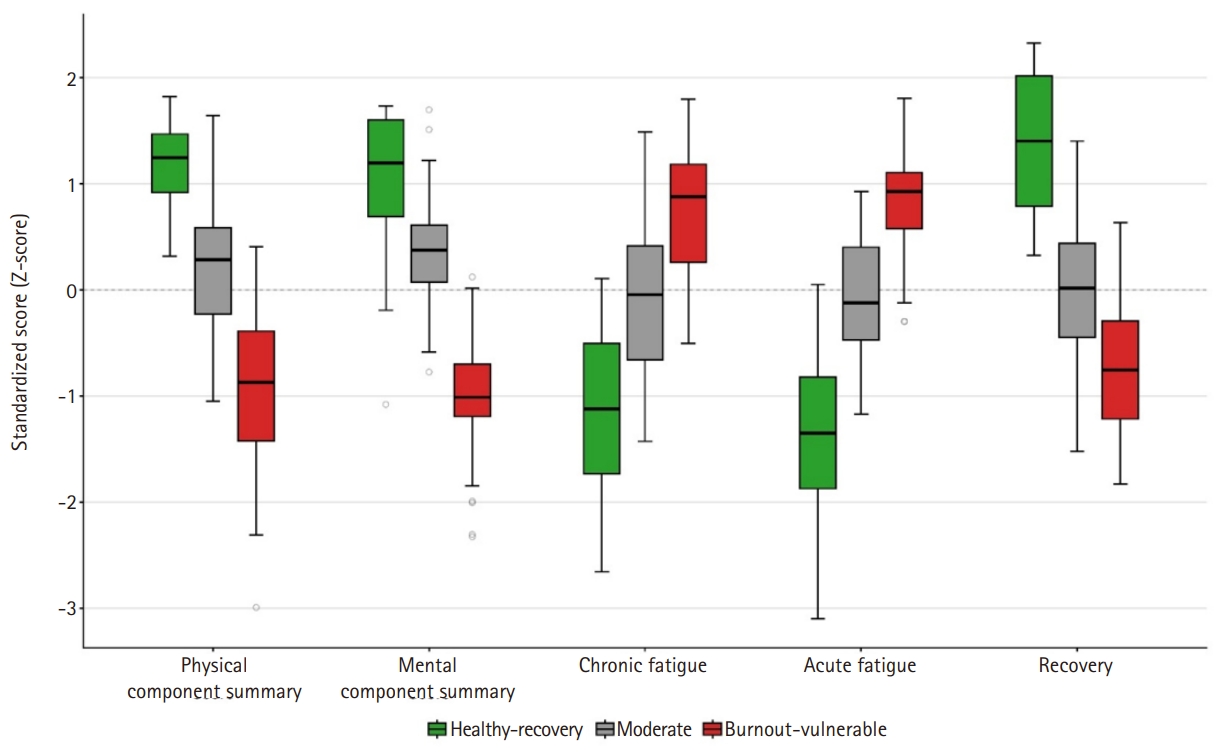
This study aimed to identify latent profiles of shift-work nurses according to perceived health, fatigue, and recovery levels and to examine differences across profiles in work-related outcomes, including sleep quality, work-life balance, job satisfaction, and turnover intention. It also examined whether patterns associated with participation in a shift-work improvement pilot project differed by latent profile.
Methods
This descriptive cross-sectional study included 120 shift-work nurses working in pediatric wards at a tertiary hospital in South Korea. Data were collected from January 14 to 24, 2025. Latent profile analysis was performed using the 36-Item Short Form Health Survey and the Occupational Fatigue Exhaustion Recovery Scale. Differences in outcomes by latent profile membership and pilot-project participation status at the time of data collection were examined using two-way analysis of covariance, with age included as a covariate.
Results
Three latent profiles were identified: Healthy-Recovery (20.8%), Moderate (41.7%), and Burnout-Vulnerable (37.5%). Significant differences among profiles were observed in sleep quality (F=37.37, p<.001), work-life balance (F=50.86, p<.001), job satisfaction (F=12.29, p<.001), and turnover intention (F=12.11, p<.001). A significant interaction between latent profile membership and pilot-project participation was observed for job satisfaction (F=4.77, p=.010, partial η²=.078). Pilot-project participation was associated with significantly higher job satisfaction only in the Healthy-Recovery profile (p=.005).
Conclusion
Associations between pilot-project participation and work-related outcomes differed according to nurses’ health, fatigue, and recovery profiles. These findings indicate that heterogeneity among shift-work nurses should be considered when interpreting work-related outcomes and designing tailored support strategies.
- 872 View
- 83 Download

- Determinants of Problem Drinking by Regional Variation among Adult Males in Single-Person Households: Geographically Weighted Regression Model Analysis
- Junggeun Ahn, Heeseung Choi, Jiu Kim
- J Korean Acad Nurs 2023;53(1):101-114. Published online February 28, 2023
- DOI: https://doi.org/10.4040/jkan.22131
-
Abstract
PDF
- Purpose
This study aimed to identify regional differences in problem drinking among adult males in single-person households and predict the determinants.
Methods
This study used data from the 2019 Community Health Survey. Geographically weighted regression analysis was performed on 8,625 adult males in single-person households who had been consuming alcohol for the past year. The Si-Gun-Gu was selected as the spatial unit.
Results
The top 10 regions for problem drinking among adult males in single-person households were located in the Jeju-do and Jeollanam-do areas near the southern coast, whereas the bottom 10 regions were located in the Incheon and northern Gyeonggi-do areas. Smoking, economic activity, and educational level were common factors affecting problem drinking among this population. Among the determinants of regional disparities in problem drinking among adult males in single-person households, personal factors included age, smoking, depression level, economic activity, educational level, and leisure activity, while regional factors included population and karaoke venue ratio.
Conclusion
Problem drinking among adult males in single-person households varies by region, and the variables affecting each particular area differ. Therefore, it is necessary to develop interventions tailored to individuals and regions that reflect the characteristics of each region by prioritizing smoking, economic activity, and educational level as the common factors. -
Citations
Citations to this article as recorded by
- Analysis of factors associated with unmet dental care needs using geographically weighted regression
Ji-Yeon Lim, Sang-Hee Lee
Journal of Korean Academy of Oral Health.2025; 49(2): 72. CrossRef
- Analysis of factors associated with unmet dental care needs using geographically weighted regression
- 2,476 View
- 49 Download
- 1 Crossref
Original Articles
- Actor and Partner Effects of Health Status, Marital Satisfaction and Self Efficacy on Retirement Preparation of Middle Aged Couples: Actor-Partner Interdependence Model Analysis
- Eun Hee Jung, Sung Hee Shin
- J Korean Acad Nurs 2018;48(2):154-166. Published online January 15, 2018
- DOI: https://doi.org/10.4040/jkan.2018.48.2.154
-
Abstract
PDF
Abstract Purpose This study aimed to identify the actor and partner effects of health status, marital satisfaction, and self efficacy on retirement preparation in middle aged couples using the Actor-Partner Interdependence Model.
Methods Participants were 121 middle aged couples living in Seoul, Gyeonggi-do and Daegu City, Korea. All measures were self-administered. The collected data were analyzed using SPSS 20.0 and AMOS 20.0.
Results 1) Wife's self efficacy and marital satisfaction showed direct actor and partner effects on retirement preparation in middle aged couples. Wife's health status showed an indirect actor effect through wife's self efficacy and marital satisfaction on wife's retirement preparation, and showed an indirect partner effect through husband's self efficacy on husband's retirement preparation. 2) Husband's self efficacy and marital satisfaction showed only direct actor effect on retirement preparation. Health status among the husbands showed an indirect actor effect on husband's retirement preparation through their self efficacy and marital satisfaction, and an indirect partner effect through wife's marital satisfaction on wife's retirement preparation. 3) The actor effect size of health status on self efficacy and marital satisfaction was larger among husband's than wife's. Additionally, the partner effect size of health status on self efficacy and marital satisfaction was different between the two groups; however, the actor and partner effect size of self efficacy and marital satisfaction on retirement preparation was the same for husband and wife.
Conclusion The results of this study indicate that nursing intervention strategies for improving self efficacy and marital satisfaction are strongly needed to enhance retirement preparation of middle aged couples in Korean community.
-
Citations
Citations to this article as recorded by- Relational Dynamics and Financial Preparedness for Old Age Among Immigrant Spouses in South Korea: Focusing on Gender Differences
Nayoung Heo, YoonKyung Kwak
International Migration.2026;[Epub] CrossRef - Dyadic Research of Patients and Their Family Caregivers in the Context of Chronic Illness: Current Status and Challenges
Youn-Jung Son
Korean Journal of Adult Nursing.2021; 33(5): 415. CrossRef - The Effects of Climacteric Symptom Cognition, Self-efficacy on Aging Anxiety in Middle-Aged Couples: Actor and Partner Interdependence Mediation Model
Yeon-Suk Kim, Myung-Haeng Hur
Korean Journal of Adult Nursing.2021; 33(3): 247. CrossRef - Actor and Partner Effects of Couple's Daily Stress and Dyadic Coping on Marital Satisfaction
Su Kyung Won, Kyoung Ok Seol
Journal of Korean Academy of Nursing.2020; 50(6): 813. CrossRef
- Relational Dynamics and Financial Preparedness for Old Age Among Immigrant Spouses in South Korea: Focusing on Gender Differences
- 2,132 View
- 16 Download
- 4 Crossref
- Predictors of health Promoting Lifestyle for the Korean Immigrants in the U.S.A
- Myung Ja Kim, Hyo Jeong Song
- Journal of Nurses Academic Society 1997;27(2):341-352. Published online March 30, 2017
- DOI: https://doi.org/10.4040/jnas.1997.27.2.341
-
Abstract
PDF
The study was to examine the relationships among health promoting lifestyle, level of anxiety, and perceived health status and to reveal those variables affecting health promoting lifestyle in Korean immigrants in the United States. The subjects were 425 adults chosen from Korean religious and social organizations located in New York from April 25th through July 5th, 1996. Data analyses were conducted by using pearson correlation coefficients, t-test, ANOVA, and stepwise multiple regression. The results were as follows : Health promoting lifestyle was significantly different according to age, religion, occupation, and the length of residence in the US. Those insured and those with no chronic conditions revealed a significantly higher score in health promoting lifestyle. Significant differences in the level of anxiety were found according to education, marital status, occupation, family income, and the length of residence. Those with no chronic conditions experienced a significantly lower level of anxiety. In the subscales of the health promoting lifestyle profile, self-actualization and interpersonal relationship revealed higher scores, whereas the scores of stress management, health responsibility, and exercise were lower. Those subjects whose perceived health status was very good, showed the lowest level of anxiety and the highest score on the health promoting lifestyle profile. Negative correlations were observed between the health promoting lifestyle profile and the level of anxiety, and between the perceived health status and the level of anxiety. Health promoting lifestyle was significantly predicted by the level of anxiety(22.0%), age(2.0%), health insurance(1.1%), respectively.
-
Citations
Citations to this article as recorded by- Effects of yoga exercise on maximum oxygen uptake, cortisol level, and creatine kinase myocardial bond activity in female patients with skeletal muscle pain syndrome
Min-Sung Ha, Yeong-Ho Baek, Jong-Won Kim, Do-Yeon Kim
Journal of Physical Therapy Science.2015; 27(5): 1451. CrossRef
- Effects of yoga exercise on maximum oxygen uptake, cortisol level, and creatine kinase myocardial bond activity in female patients with skeletal muscle pain syndrome
- 1,204 View
- 0 Download
- 1 Crossref
- Determinants of Health Promoting Behavior of Middle Aged Women in Korea
- Sook Ja Lee, Eun Sook Park, Young Joo Park
- Journal of Nurses Academic Society 1996;26(2):320-336. Published online March 30, 2017
- DOI: https://doi.org/10.4040/jnas.1996.26.2.320
-
Abstract
PDF
Health promoting behaviors of an individual are affected by various variables. Recently, there has been a growing concern over important health problems of the middle aged women. Physiological changes in the middle aged women and their responsibility for family care can result in physical and psychological burden experienced by middle aged women. This study was designed to test Pender's model and thus purpose a model that explains health promoting behaviors among middle-aged women in Korea. The hypothetical model was developed based on the Pender's health promoting model and the findings from past studies on women's health. Data were collected by self-reported questionnaires from 863 women living in Seoul, between 20th, April and 15th, July 1995. Data were analyzed using descriptive statistics and correlation analysis. The Linear Structural Relationship (LISREL) modeling process was used to find the best fit model which assumes causal relationships among variables. The results are as follows; 1. The overall fit of the hypothetical model to the data was good expect chi -square value (GFI=.96, AGFI=.91, RMR=.04). 2. Paths of the model were modified by considering both its theoretical implication and statistical significance of the parameter estimates. Compared to the hypothetical model, the revised model has become parsimonious and had a better fit to the data expect chi-square value (GFI=. 95, AFGI=.92, RMR=.04). 3. Some of modifying factors, especially age, occupation, educational levels and body mass index (BMI) are revealed significant effects on health promoting behaviors. 4. Some of cognitive -perceptual factors, especially internal health locus of control, self-efficacy and perceptive health status are revealed significant effects on health promoting behaviors. 5. All predictive variables of health promoting behaviors, especially age, occupation, educational levels, body mass index(BMI), internal health locus of control, self-efficacy and perceptive health status are explained 20.0% of the total variance in the model.
- 852 View
- 5 Download
- A Relation Study on Burden, Health promotion Behavior and Health Status of the Family Caregiver of Intensive Care Unit Patient
- Eun Sil Kim, Jeong Sook Park, Chung Ja Park
- Journal of Korean Academy of Nursing 2002;32(5):654-664. Published online March 29, 2017
- DOI: https://doi.org/10.4040/jkan.2002.32.5.654
-
Abstract
PDF
PURPOSE: The purpose of this study was to identify the burden, health promotion behavior and health status and to describe the relationship of the burden, health promotion behavior and health status of the family caregivers of intensive care unit patients. METHOD: The subjects were 48 family caregivers of ICU patients in a University Hospital. Data were collected between June, 1 and July, 31, 2000 using structured questionnaires. Research tools used were Suh and Oh's Burden Scale, Revised Walker, Sechrist, and Pender's HPLP(1987) ; Revised Nam's Health State Scale(1965). RESULT: The mean score of burden of family caregiver was 3.01(full score was 5). The mean score of health promotion behavior of family caregiver was 2.52 (full score was 4). And the mean score of health status of family caregiver was 0.68(full score was 1.00). The score of psychological health state was a little higher than the physiological one. In correlational analysis, the burden and the health status of caregivers were reversely correlated . The correlation between the burden and the health promotion behavior, and the health behavior and health status were not significant. CONCLUSION: The more burden caregivers of ICU patients felt, the worse their health status. So nurses need to understand the family caregiver's burden and apply nursing care that can reduce burden, in order to improve the health status of family caregivers.
-
Citations
Citations to this article as recorded by- Experiences of Family Members With Visitation Prohibition for Critically Ill Patients
Sunjung Kim, Sunghee H. Tak
Western Journal of Nursing Research.2024; 46(11): 854. CrossRef - The Lived Experiences of Patient’s Families with the Intensive Care Unit Diary
Yu Jin Jeong, Sung Suk Ryoo, Hyun Jeong Shin, Young Hee Yi
Journal of Korean Critical Care Nursing.2023; 16(1): 28. CrossRef - Challenges Experienced by Family Caregivers of the Adult Intensive Care Unit Patients in Korea: An Integrative Review
JiYeon Choi, Judith A. Tate, Youn-Jung Son
Clinical Nursing Research.2021; 30(4): 423. CrossRef - Factors Affecting Caregivers' Burnout Caring for a Family Member in an Intensive Care Unit
Min-Jeong Park, So-Hee Park, Mi Young Chung
Korean Journal of Adult Nursing.2017; 29(5): 517. CrossRef - Nursing Needs of the Parents of Infants in Neonatal Intensive Care Unit
Ji-Sun Park, Kyung-Sook Bang
Journal of East-West Nursing Research.2014; 20(2): 136. CrossRef
- Experiences of Family Members With Visitation Prohibition for Critically Ill Patients
- 1,498 View
- 7 Download
- 5 Crossref
- The Relationship between Bathing and Health Status
- Hee Jung Choi, Eun Ok Lee
- Journal of Korean Academy of Nursing 2002;32(4):519-528. Published online March 29, 2017
- DOI: https://doi.org/10.4040/jkan.2002.32.4.519
-
Abstract
PDF
PURPOSE: The purpose of this study was to test the relationship between health status and bathing. METHOD: The population of this study consisted of females, above age 20 in urban areas in order to control the effects of extraneous variables, resident areas, gender, and age. Four hundred and twenty-eight (428) women were interviewed with a structured questionnaire. Medical Outcomes Study Short Form (SF)-36 Health Survey assessed individual health status. Bathing behavior and attitudes toward bath have been measured with questionnaires designed by the authors. RESULT: The most popular bathing type was shower (46.8%). The preferred type of bath was related to health status. A common purpose of the tub-bath was relieving fatigue and hygiene, but the other purposes were different on the subjects health status. Persons with low health status took frequently tub-baths for health. Attitudes toward bath were related to health status. Women with low scores in physical health recognized more physical effects of bath than psychological effects or hygenic effects. CONCLUSION: Bathing included physical and psychological dimensions and was related to health status.
-
Citations
Citations to this article as recorded by- Distractive Emotion Regulation: The Construct and Its Measurement
Dohyeon Kim, Hae Youn Choi
STRESS.2021; 29(1): 11. CrossRef - The EULAR Sjogren's syndrome patient reported index as an independent determinant of health-related quality of life in primary Sjogren's syndrome patients: in comparison with non-Sjogren's sicca patients
H. J. Cho, J. J. Yoo, C. Y. Yun, E. H. Kang, H.-J. Lee, J. Y. Hyon, Y. W. Song, Y. J. Lee
Rheumatology.2013; 52(12): 2208. CrossRef - Effects of Korean Herbal Bathing Extracts Composition on Th2 Cytokine Production in MC/9 Mast Cells
Moon-Hee Jang, Jae-Song Choi, Ae-Ryun Choi, Taek-Won Ahn
Journal of Sasang Constitutional Medicine.2012; 24(3): 80. CrossRef
- Distractive Emotion Regulation: The Construct and Its Measurement
- 1,322 View
- 4 Download
- 3 Crossref
- The Correlational Analysis between Perceived Heath Status, Self-Esteem, and Self-Care Agencies among Adolescents
- Hee Jung Jang, Yun Hee Shin
- Journal of Korean Academy of Nursing 2002;32(2):186-195. Published online March 29, 2017
- DOI: https://doi.org/10.4040/jkan.2002.32.2.186
-
Abstract
PDF
PURPOSE: This study was to identify and clarify the relationship between perceived health, self-esteem, and self-care agencies for promoting self care among Korean adolescents. METHOD: Data were collected from 817 adolescents in schools located in Seoul, Kyungki-do, and Chuncheon from Sept, 16th to Sept, 28th, 1999, and from Mar 10th to Mar 25th, 2000. The instruments used for this study were the Health Self-Rating Scale, Self-Care Agency Assessment Questionnaire (Denyes, 1981), the Self-Esteem Questionnaire (Rosenberg, 1971). RESULT: 1) The mean perceived health status among Korean adolescents was 8.75 (SD=1.72) 2) The mean self-esteem was 27.27 (SD=4.64). 3) The mean self-care agency was 99.64 (SD=21.02) and the average self-care agency score was 3.99 (SD=0.84). In the subcategories, the highest degree was feelings towards health (4.15), followed by ego strength (4.06), attending to health (3.87), general health knowledge (3.56), and the lowest degree was specific health knowledge (3.20) 4) There was statistical significant differences between demographic factors and self-care agencies, expecially, gender (t=28.65), grade (F=3.79), pocket money (t=5.72), and height (F=9.82) 5) The statistical relationship between perceived health status, self-esteem, and self-care agencies were found to have a positive correlation. 6) Self-care agencies among adolescents was the highest factor predicting self-esteem (15%). CONCLUSION: The relationship between perceived health status, self-esteem, and self-care agencies revealed a significant positive correlation among adolescents. Therefore, nursing intervention for adolescents needs to develop self-esteem programs to increase self-care agencies.
-
Citations
Citations to this article as recorded by- The relationship between self-esteem and overall health behaviors in Korean adolescents
Junghyun Park, Young-Ho Kim, Seon-Joo Park, Sooyeon Suh, Hae-Jeung Lee
Health Psychology and Behavioral Medicine.2016; 4(1): 175. CrossRef - Factors Associated with Perceived Health among Korean Adolescents
JongSerl Chun, Sunghee Nam, Ick-Joong Chung, Hyunah Kang, Choong Rai Nho, Seokjin Woo
Social Work in Public Health.2014; 29(6): 528. CrossRef - Relationship between Health Status and Life Styles and Atopic Dermatitis in Adolescents
Eun-Sun So, Ji-Young Yeo
Journal of Korean Academy of Child Health Nursing.2012; 18(3): 143. CrossRef - Factors Influencing Health Risk Behavior in High School Students
Jin Choi, Mi-Ye Kim
Journal of Korean Academy of Child Health Nursing.2009; 15(2): 182. CrossRef
- The relationship between self-esteem and overall health behaviors in Korean adolescents
- 1,348 View
- 5 Download
- 4 Crossref
- Self-Esteem, Health Status and Life Satisfaction in Elderly Women According to the Spouse's Perspective
- Hye Sook Shin
- Journal of Korean Academy of Nursing 2001;31(6):1119-1119. Published online March 29, 2017
- DOI: https://doi.org/10.4040/jkan.2001.31.6.1119
-
Abstract
PDF
PURPOSE: This study was designed to identify degrees of self-esteem, health status, and life satisfaction in elderly women and investigate the relationship between these factors. The results will contribute to effective nursing intervention for promoting the quality of life for elderly women.
METHOD
The subjects of this study included 129 elderly women. The data was collected through personal interviews using questionnaires from Nov. to Dec. of 2000. The measurement tools were the self-esteem scale developed by Rosenberg and translated by Byong-Je Jong (1974), the health status scale developed by Young Ja Lee (1989), and the life satisfaction scale developed by Jin Youn (1982). The data was analyzed by the SPSS computer program, and it included descriptive statistics, x2-test, t-test and the pearson correlation coefficient.
RESULT
The conclusions of this study are summarized as follows: 1. There was a significant difference in age (x2=12.952, p=.000), religion (x2=6.140, p=.000), spending money (x2=.7.511, p= .000), living expenses load (x2=16.189, p= .000), and the major support provider (x2=6.539, p=.000), according to general characteristics in the existence elderly women. 2. There was a significant difference in self-esteem (t=7.05, P=.000), Health status (t=-10.09, P=.000), and life satisfaction (t=6.62, P=.000) between the two groups. 3. There was a significant positive correlation between self-esteem and health status (r=.406, P=.000), self-esteem and life satisfaction (r=.524, P=.000), and health status and life satisfaction (r=.504, P= .0000) in elderly women.-
Citations
Citations to this article as recorded by- Factors Affecting Activities of Daily Living, Depression and Life Satisfaction among Aged Women
Journal of East-West Nursing Research.2015; 21(2): 119. CrossRef - Factors Influencing Quality of Sleep of Disturbance Factors Sleep by Inpatients
Mi-Ryon Lee, Mun-Hee Nam
Journal of Korean Clinical Health Science.2014; 2(3): 176. CrossRef - A Q-methodological Study of Students' Attitudes toward Remarriage by the Elderly
Yeong Sug Yi, Kyung Rhan Park
Korean Journal of Human Ecology.2012; 21(5): 849. CrossRef - A comparison of the factors influencing life satisfaction between Korean older people living with family and living alone
S.H. Shin, S.R. Sok
International Nursing Review.2012; 59(2): 252. CrossRef - Effects of an Elder Health Promotion Program using the Strategy of Elder Health Leader Training in Senior Citizen Halls
Mee Ock Gu, Young Eun, Eun Sim Kim, Hwang Ran Ahn, In Soo Kwon, Hyun Sook Oh, Young-Sil Kang, Myun Sook Jung, So Young Choi, Kyung Mi Sung, Hye Yeon Kang
Journal of Korean Academy of Nursing.2012; 42(1): 125. CrossRef - Factors Influencing Life Satisfaction of Korean Older Adults Living with Family
Sohyune R. Sok
Journal of Gerontological Nursing.2010; 36(3): 32. CrossRef - Factors Influencing Sleep of Elderly Women
Sohyune R. Sok, Jin Yi Choi
Journal of Korean Academy of Nursing.2010; 40(1): 119. CrossRef - Comparison in Care Burden, Fatigue, and Life Contentment of Caregivers by Gender Relationship with Demented Elders
Young Whee Lee, In Sook Cho, Hwa Soon Kim
Korean Journal of Women Health Nursing.2009; 15(3): 196. CrossRef - Life Satisfaction, Self-Esteem, and Perceived Health Status Among Elder Korean Women: Focus on Living Arrangements
Ji-Young An, Kyungeh An, Linda O'Connor, Sharon Wexler
Journal of Transcultural Nursing.2008; 19(2): 151. CrossRef
- Factors Affecting Activities of Daily Living, Depression and Life Satisfaction among Aged Women
- 1,251 View
- 2 Download
- 9 Crossref
- The Effects on Home Visiting Nursing Service for Community Based Disabled Persons
- Ho Sihn Ryu
- Journal of Korean Academy of Nursing 2001;31(6):1098-1108. Published online March 29, 2017
- DOI: https://doi.org/10.4040/jkan.2001.31.6.1098
-
Abstract
PDF
PURPOSE: To evaluate the effects of planned visiting nursing services for homebound disabled persons in the community who have had a cerebrovascular accident
METHODS
One group pre-test and post-test research deign was applied to 61 disabled persons who were undergoing rehabilitation with visiting nursing services to evaluate the effects on the health status (SF-36) and activity daily living (ADL/IADL) from March to August, 2001.
RESULTS
The health status score by SF-36 of homebound disabled people was significantly improved; the average score was 28.56+/-21.24 before service, 34.29+/-22.30 at 3 months after, and 40.84+/-=27.41 at 6 months after. The activity daily living score by OASIS II was also significantly increased (z= -6.09, p=.000; z= -6.04, p= .000) at 3 months and 6 months after home visiting nursing services.
CONCLUSION
The strategy plan for developing a visiting nursing service in health centers should be prepared to develop community based rehabilitation (CBR) programs as well as to improve the level of health status and ADL/IADL for homebound disabled people in the community.-
Citations
Citations to this article as recorded by- Contract Employment Experiences of Visiting Nurses at Public Health Centers in the Metropolitan Area: Focused on Employment Type and Treatment
Hee-Gerl Kim, Soong-Nang Jang, Young Ran Chin, Jungyi Hur, Ryoun-Sook Lee
Journal of Korean Academy of Community Health Nursing.2022; 33(2): 175. CrossRef - Evaluation of Efficiency of Community Visiting Health Service Units - A Demonstration of Using Data Envelopment Analysis (DEA) -
Ji Young Lim, Mi Ja Kim, Chang Gi Park, Jung Yun Kim
Journal of Korean Academy of Nursing Administration.2011; 17(1): 54. CrossRef - A Cost Benefit Analysis of Individual Home Visiting Health Care
Jinhyun Kim, Taejin Lee, Jinhee Lee, Sangjin Shin, Eunhee Lee
Journal of Korean Academy of Community Health Nursing.2010; 21(3): 362. CrossRef
- Contract Employment Experiences of Visiting Nurses at Public Health Centers in the Metropolitan Area: Focused on Employment Type and Treatment
- 1,418 View
- 4 Download
- 3 Crossref
- Physical Health Status and Depression of a Community-Dwelling Elderly Group
- Nam Cho Kim, Soo Yang
- Journal of Korean Academy of Nursing 2001;31(6):1012-1020. Published online March 29, 2017
- DOI: https://doi.org/10.4040/jkan.2001.31.6.1012
-
Abstract
PDF
PURPOSE: The purpose of this study was to describe physical health and depression status, as well as to assessing factors that influence the physical health status.
METHOD
The data was collected from July to August 2000. Study participants were 252 community-dwelling elderly who were recruited from 10 senior centers located in Seoul, Korea. Their physical health status was measured using the Physical Health Status Measurement Scale developed by Choi and Jung (1991), and depression was measured using BDI-II developed by Beck et al. (1996).
RESULTS
1) The physical health status score was 4.00 +/-0.68 (range :1-5). The sub-dimension that showed the highest score was personal hygiene ability at 4.62+/-0.95, and the lowest score was sexual function at 2.20+/-1.38. 2. The depression score was 17.99+9.79 (range : 0-63). Regarding the sub-dimensions, the depression scores were higher in the domain of interest with sexuality, general weakness, difficulty in concentration, and fatigue. 3. Deeper levels of depression were correlated with a declining physical health status. 4. The most influential factor on physical health was depression, and the explaining variance was 31.68%.
CONCLUSION
It is concluded that elder subjects in senior centers had fairly good physical health and self-care ability. Also, they did not have significantly high levels of depression. Therefor, health promotion of elderly, it is recommended that elder individuals should be regarded as a respectful and useful segment of our society. Along with this basic concept, there should be a social milieu that does not snow prejudice. Moreover, health care professionals should give more attention to helping the elderly achieve a minimal level of ALD, and, particularly, to raise sexuality and help energize the lives of elder individuals.-
Citations
Citations to this article as recorded by- Developing a Predictive Model for Depressive Disorders Using Stacking Ensemble and Naive Bayesian Nomogram: Using Samples Representing South Korea
Haewon Byeon
Frontiers in Psychiatry.2022;[Epub] CrossRef - Health Perception and Family Support as Influencing Factors on Depression in Hospitalized Elderly Patients
Sun-Ok Lee, Moon-Jeong Kim
The Korean Journal of Health Service Management.2015; 9(4): 145. CrossRef - The Effects of a Health Management Program on Health-promoting Lifestyle and Depression in Older Adults Living at Home
Young Rye Park, Yang Gyeong Yoo
The Korean Journal of Rehabilitation Nursing.2013; 16(1): 71. CrossRef - A comparison of the factors influencing life satisfaction between Korean older people living with family and living alone
S.H. Shin, S.R. Sok
International Nursing Review.2012; 59(2): 252. CrossRef - Gender Differences in the Relationships between Physical Activity and the Psychological and Physical Self-Reported Conditionof the Elderly in a Residential Care Facility
Emanuela Rabaglietti, Monica Emma Liubicich, Silvia Ciairano
Psychology.2011; 02(01): 35. CrossRef - Factors Influencing Life Satisfaction of Korean Older Adults Living with Family
Sohyune R. Sok
Journal of Gerontological Nursing.2010; 36(3): 32. CrossRef - Residential status and depression among Korean elderly people: a comparison between residents of nursing home and those based in the community
Soondool Chung
Health & Social Care in the Community.2008; 16(4): 370. CrossRef - 10.5932/JKPHN.2012.26.1.072
CrossRef Listing of Deleted DOIs.2000;[Epub] CrossRef
- Developing a Predictive Model for Depressive Disorders Using Stacking Ensemble and Naive Bayesian Nomogram: Using Samples Representing South Korea
- 1,279 View
- 1 Download
- 8 Crossref
- An Application Effect of Rhythmic Movement Program for the Health Promotion in the Elderly
- Sook Ja Lee
- Journal of Korean Academy of Nursing 2000;30(3):776-790. Published online March 29, 2017
- DOI: https://doi.org/10.4040/jkan.2000.30.3.776
-
Abstract
PDF
Every year the number of the elderly increases in Korea thanks to the improvement of social and economical levels and the development of medicine. However, many problems such as insufficent care and the isolation of the elderly have been commonplace. This trend exists not only because of increased lifespan but also the changing social structure of the nuclear family. Accordingly, inspite of the development of medicine, geriatric diseases including circulatory diseases are increasing in proportion of elderly population, as well as the severity. Therefore, it is important to emphasize that health care programs provide the best possible health care and functional capacities in terms of healthy elderly lifestyles. Especially, the phenomena of aging and geriatric diseases taking place with the elderly naturally are affected by lifestyle and the drastic changes in exercise patterns. This study aims to improve geriatric health by introducing a rhythmic movement program for the elderly to estabilish a health-promoting self-care system and by developing quality of life, perceived health status, their physical and physiological functions and emotional state. The theoretical framework used in this dissertation is derived from the Health-Promoting Self-Care System Model (Simmons, 1990), which integrates the Self-Care Deficit Nursing Theory (Orem, 1985), the interaction model of Client Health Behavior (Cox, 1982) and the Health Promotion Model (Pender, 1987). As a quasi-experimental design, the nonequivalent control group pretest-posttest design is utilized for this study. The subjects of this study consist of 64 people, over 65 years old who live in 2 nursing homes for the aged located in S city , Kyong-gi province and volunteered for this study from July, 12, 1999 to September, 17, 1999. They are divided into two groups: 33 in the experimental group and 31 in the control group. The experimental group particpated in the Rhythmic Movement Program at the nursing home, which was comprised of 45 minutes a session, 5 sessions a week during 9 weeks. In order to measure the results of the Rhythmic Movement Program, aspects of perceived health status, balance, flexibility, grip strength, leg strength, heart rate, blood pressure, depression, anxiety and the quality of life were measured before and after participating in the Rhythimic Movement Program for the experimental group after 9 weeks, as well as the control group. The collected data were processed by SPSS PC+ and analyzed by the X2 test, t-test, ANCOVA and the Pearson Correlation Coefficient. The results of this study are as follows: 1. The perceived health status conditions in the experimental group show statistically significant improvement when compared to the control group (F=17.51, p=.000). 2. The physical and physiological functions, that is, balance (F=17.51, p=.000), flexibility (F=8.01, p=.006), grip strength (F=3.21, p=.018) and leg strength (F=25.78, p=.000) in the experimental group are higher than the control group. The vital signs, that is, the number of heart rate (F=.022, p=.884), systolic pressure (F=1.73 p=.193), and diastolic pressure (F=2.74, p=.103) in the experimental group compared to the control group decreased, but doesn't show statistically significant differences. Immune responses (F=5.13, p=.003) showed statistically significant increases in the experimental group when compared to the control group. 3. The emotional state are improved, that is, degree of depression (F=11.56, p=.001) and degree of anxiety (F=9.14, p=.004) in the experimental group showed statistically significant decreases. 4. The quality of life in the experimental group (F=3.03, p=.037) showed statistically significant differences compared to the control group. 5. The observations of the relationships among the perceived health status, emotional state , the quality of life, the relationships between the perceived health status, the degree of depression (r=-.653, p=.000) and the degree of anxiety (r=-.786, p=.000) were in contrary propotions, while the relationships between the perceived health status and the quality of life (r=.234, p=.008) were in direct propotion. In conclusion, the Rhythmic Movement Program used in this study for geriatric nursing care is simple and safe for application to the elderly and shows significant effects by implementing 5 sessions a week for 9 weeks. The Rhythmic Movement Program improves the quality of life, maintains as well as improves the physical and physiological fuctions and emotional state, therefore this program is strongly recommended for positive applications for independant geriatric nursing health care.
-
Citations
Citations to this article as recorded by- The Effect of Dance Sports Program on Physical Function, Cognition, Depression and Quality of Life in Rural Elderly Women
Yun-Hee An, Nam-Soo Hong, Hee-Jung Yoon
Journal of Health Informatics and Statistics.2020; 45(4): 385. CrossRef - The Effects of Self-Care Intervention Programs for Elderly with Mild Cognitive Impairment
Myung-Suk Kim, Moonhee Gang, Jihye Lee, Eunyoung Park
Issues in Mental Health Nursing.2019; 40(11): 973. CrossRef - The Effects of Qi-gong Exercise on the Health of the Elderly - With Respect to the Physical Health Status, the Fear of Falling, Balance Efficacy, and Hwa-Byung -
Kum-Sook Park, Heon-Young Jeong, Young-Hee Kim
Journal of Oriental Neuropsychiatry.2016; 27(4): 207. CrossRef - Impact Factors for Health of Family Caregivers of Hospice Patients
Bok Yae Chung, Hyeon Sook Park
The Korean Journal of Hospice and Palliative Care.2014; 17(2): 75. CrossRef - The Effects of a Health Management Program on Health-promoting Lifestyle and Depression in Older Adults Living at Home
Young Rye Park, Yang Gyeong Yoo
The Korean Journal of Rehabilitation Nursing.2013; 16(1): 71. CrossRef - The Effects of an Aerobic Exercise Program on Mobility, Fall Efficacy, Balance, and Stress in the Elderly at Senior Centers
Su Kyung Chu, Chung Yul Lee, Jang Hak Yoo
Journal of Korean Academy of Community Health Nursing.2012; 23(1): 22. CrossRef - The Effects of Aerobic Exercise Therapy on Physical Functions in the Elderly
Sook Hee Jung, Kyung Hee Chung
Journal of Korean Academy of Community Health Nursing.2010; 21(2): 252. CrossRef - Relations among Depression, Life Satisfaction and Health Promoting Behavior in the Elderly
Ji-Hye Seo, Hyun-Sook Ryu
Journal of Korean Academy of Community Health Nursing.2010; 21(2): 169. CrossRef - Effects of Music Therapy and Rhythmic Exercise on Quality of Life, Blood Pressure and Upper Extremity Muscle Strength in Institution-Dwelling Elderly Women
Eun Young Jeon, Sook Young Kim, Hyun Suk Yoo
Journal of Korean Academy of Nursing.2009; 39(6): 829. CrossRef - Effects of Aroma Hand Massage On Sleep, Depression and Quality of Life in the Institutionalized Elderly Women
Soon Yi Seo, So Young Chang
Korean Journal of Women Health Nursing.2009; 15(4): 372. CrossRef - The effect of modified jazz dance on balance, cognition, and mood in older adults
Patricia T Alpert, Sally K Miller, Harvey Wallmann, Richard Havey, Chad Cross, Theresa Chevalia, Carrie B Gillis, Keshavan Kodandapari
Journal of the American Academy of Nurse Practitioners.2009; 21(2): 108. CrossRef - Effects of a Strengthening Program for Lower Back in Older Women with Chronic Low Back Pain
Hee-Kyoung Hyoung
Journal of Korean Academy of Nursing.2008; 38(6): 902. CrossRef - Comparisons of Motivation, Health Behaviors, and Functional Status Among Elders in Residential Homes in Korea
Rhayun Song, Kyung Ja June, Chun Gill Kim, Mi Yang Jeon
Public Health Nursing.2004; 21(4): 361. CrossRef
- The Effect of Dance Sports Program on Physical Function, Cognition, Depression and Quality of Life in Rural Elderly Women
- 1,420 View
- 6 Download
- 13 Crossref
- The Analysis of the Effects of Comprehensive Health Promotion Program for RA on Changes in Health Promotion Strategies, Knowledge, and Health Status
- Hyun Soo Oh
- Journal of Korean Academy of Nursing 2000;30(3):619-631. Published online March 29, 2017
- DOI: https://doi.org/10.4040/jkan.2000.30.3.619
-
Abstract
PDF
This study was conducted to test whether a comprehensive health promotion program for rheumatoid arthritis (CHPRRA) affected patients' health promotion strategies and knowledge about the disease, thus leading to the improvement of health status by using repeated measure of quasi- experiment design. Eighteen RA patients who visited the RA clinic of an university hospital located in Inchon were invited to participate in the CHPPRA. According to the study results, it was shown that the CHPPRA had significant effects on the patients' health status such as pain, depression, and functional disability. Also, that the improvement of health status was achieved by a positive change in the four health promotion strategies, which consisted of goal setting, positive thinking, exercise, and knowledge about the disease. Goal setting, positive thinking, and knowledge about the disease could also affect the patients' depression. Thus it can be interpreted that the improvement of these strategies may result in a remarkable decrease of depression. In addition, alleviation of functional disability may be due to increase of exercise. However although the strategies which were directly associated with pain management were not significantly improved, pain was significantly reduced. On the other hand, the study result showed that the other health promotion strategies included in CHPPRA such as pain management, positive thinking, stress management, asking for assistance and communication were not significantly increased. although the health status such as pain, depression, and functional disability, which are final goals of the program, were significantly improved through the exposition of patients to those health promotion strategies.
- 828 View
- 0 Download
- A Study on the Forecast of Bed Demand for Institutional Long-term Care in Taegu, Korea
- Myung Hi Kim
- Journal of Korean Academy of Nursing 2000;30(2):437-451. Published online March 29, 2017
- DOI: https://doi.org/10.4040/jkan.2000.30.2.437
-
Abstract
PDF
The purpose of this study was to estimate the forecast of bed demand for institutional long-term care for the elderly persons in Taegu Metropolitan City. The study subject was the total 1,877 elderly persons over age 65 living in Taegu. Among them 1,441 elderly persons were sampled from community and 436 were from the elderly admitted 5 general hospitals. Data collection was carried out by interview from 25 August to 25 December 1997. The measuring instrument of this study was the modified tool of CARE, MAI, PCTC, and ADL which were examined for validity and reliability. In order to forecast bed demand of Nursing Home, this study revised prediction techniques suggested by Robin. The results were as follows : 1. OLDi of Taegu City were 122,202 by the year 1998 and number of Low-Income Elderly Persons were 3,210. 2. The Level I : Senior Citizen Home AQi * ASTAYi ADEMi = --------------- 365 * AOCUi . AQi = OLDi * LADLi * NASi * ALONi * LIADLi * AUTILi Predicted number of bed demand for Home Based Elderly Persons were 4,210 and Low-Income Elderly Persons were 1,081 and Total Elderly Persons were 5,291 by the year 1998, 6,343 by the year 2000 and 8,351 by the 2005. 3. The Level II : Nursing Home (BQ1i+BQ2i) * BSTAYi BDEMi = ----------------------- 365 * BOCUi . BQ1i = OLDi * HADLi * ALONi * HIADLi BQ2i = OLDi * HADLi * FAMi * OBEDi Predicted number of demand for Total Elderly Persons were 668 by the year 1998, 802 by the year 2000 and 1,055 by the 2005. 4. The Level III : Nursing Home COLDi * HDISi * CUTILi * CSTAYi CDEMi = ------------------------------------ + CQi/10 365 * COCUi Predicted number of demand for Total Elderly Persons were 1,899 by the year 1998, 2,311 by the year 2000 and 3,003 by the 2005. 5. Predicted number of bed demand of long-term care facilities in the year 1998 according to Levels were 4.3% among elderly persons in Taegu by Level I, 0.5% by Level II and 1.5% by Level III. Number of elderly persons in current long-term care facilities were 458 in LevelI I,284 in Level II. 6. Deficit number of bed demand of long-term care facilities were 4,833 in Level I, 384 in Level II , 1,899 in Level III for the elderly persons in Taegu Metropolitan City.
- 831 View
- 1 Download
- Effects of Group Art Therapy Program on Self-Esteem and Mental Health Status in Chronic Schizophrenic Inpatients
- Kil Soo Chung
- Journal of Korean Academy of Nursing 1999;29(6):1314-1323. Published online March 29, 2017
- DOI: https://doi.org/10.4040/jkan.1999.29.6.1314
-
Abstract
PDF
The purpose of the study was to determine the effects of the 8-week, 15-session group art therapy program on self-esteem and mental health status in chronic schizophrenic inpatients. The sample consisted of two groups of chronic schizophrenic inpatients: 10 patients with an average of total disease duration of 8.90 years who participated in a 8-week group art therapy program, and 8 comparison subjects with an average of total disease duration of 8.25 years who did not participate in the program. A pretest-posttest quasiexperimental design was used to assess self-esteem and mental health status at the beginning and at the end of the 8-week, 15-session group art therapy program. The time points for obtaining data were matched for both groups. The effectiveness of the 8-week group art therapy program was assessed by Rosenberg's Self-esteem Scale(Rosenberg, 1965) and SCL-90- R(Derogatis et al., 1973). SPSSWIN 8.0 was utilized for data entry and analysis employing Mann-Whitney U test. The findings of the study indicated the followings: (a) No significant differences were found between two groups in self-esteem and (b) The experimental group showed significantly lower scores in obsessive-compulsive symptom dimension and interpersonal sensitivity symptom dimension on the SCL-90-R than the comparison group after participating in the group art therapy program. In conclusion, the findings showed the possibility of applying group art therapy as an effective nursing intervention for patients with lack of verbal communication skills and social interaction to improve their interpersonal relationship.
-
Citations
Citations to this article as recorded by- The Effects of an Integrated Health Care Program on the Physical, Psychosocial, and Spiritual Health of People with Mental Disorder in Community
Gwang Ha Jung, Young Ran Chin
Journal of Korean Academy of Community Health Nursing.2015; 26(2): 69. CrossRef
- The Effects of an Integrated Health Care Program on the Physical, Psychosocial, and Spiritual Health of People with Mental Disorder in Community
- 1,510 View
- 9 Download
- 1 Crossref
- An Analytical Study on Health-Promoting Lifestyle Patterns and Associated Variables of Korean Immigrant Elderly in Seattle
- Kyeong Yae Sohng, Hye A Yeom
- Journal of Korean Academy of Nursing 1999;29(5):1058-1071. Published online March 29, 2017
- DOI: https://doi.org/10.4040/jkan.1999.29.5.1058
-
Abstract
PDF
Although healthy lifestyle have been proved as an effective way of improving higher well-beings for individuals, researches on health -promoting behaviors of minority elderly with a specific ethnic heritage have been sparsely tried. This study was designed to explore health-promoting lifestyle patterns of Korean immigrant elderly living in Seattle. USA and its relationships with two associated elderly were recruited from two senior centers and interviewed with a structured questionnaire. Data were collected from October 1998 to January 1999, and analyzed using SPSS program through which t-test, ANOVA, and Pearson Correlation Coefficients were tested. As the results, the mean HPLP score of the Korean immigrant elderly was 2.54 (SD =.36), showing significant differences by education (F=3.61, P=.016), economic status (F=3.01, P=.034), and current health status (F=3.69, P=.008). In self-esteem, two socioecomic variables showed statistical association with self-esteem; martial status (t= 2.47, P=.015) and living situation (F= 4.03, P= .021). The HPLP subscales that showed higher mean scores were nutrition (M=3.01, SD= .52) and interpersonal support (M= 2.65, SD= .47) while lower mean scores were detected in the domain of excercise (M= 1.92, SD= .74) and stress management (M= 2.26, SD= .47). Perceived health status revealed significant positive correlation with health-promoting lifestyle patterns (r= .19, P=.043) and self-esteem (r= .19, P= .043) and self-esteem (r= .32, P= .001) in the present study. It is concluded that engagement in health-promoting lifestyle patterns should be actively encouraged to enhance personal health of Korean immigrant elderly. Developing health promotion programs focused on exercise and stress management is also imperatively suggested not only for better health practices of Korean immigrant elderly population but also for enhancing their level of well-beings and life satisfaction.
- 784 View
- 1 Download
- The Risk of Malnutrition, Depression, and the Perceived Health Status of Older Adults
- Yeon Hwan Park, Eunyoung E Suh
- Journal of Korean Academy of Nursing 2007;37(6):941-948. Published online March 28, 2017
- DOI: https://doi.org/10.4040/jkan.2007.37.6.941
-
Abstract
PDF
PURPOSE: The purpose of this study was to investigate the risk of malnutrition and its relationship with depression and perceived health status. METHODS: A total number of 154 elderly over 60 years participated in the study through a community elderly center. The risk of malnutrition was measured by NSI (Nutritional Screening Initiative), depression by CES-D, and health status by a self-rated Likert scale. RESULTS: About one fourth (22.7%) of the subjects had a high risk, and 31.2% had a moderate risk of getting malnutrition. Regarding depression, 34.4% (53 elderly) of the subjects had a high risk. Overall health status had a mean of 3.46 within the range of 1 to 5. In relation to demographic factors, female elderly (chi-square=6.68, p= .04), aged younger than 75 years old (chi-square=8.60, p= .01), and having co-morbidity (F=9.81, p= .001) were significantly related to a high risk of malnutrition. Having a higher depression score, higher number of co-morbidity, and lower perceived health status were significantly related to a higher risk of becoming malnourished. CONCLUSION: The elderly's risk of getting malnutrition was significantly related to their depression and perceived health status. With these findings nursing interventions focusing on these factors should be developed in order to improve the elderly's multidimensional well-being.
-
Citations
Citations to this article as recorded by- The bidirectional association of malnutrition with depression and anxiety in patients with cancer: a systematic review and meta-analysis of evidence
Agnieszka Micek, Ewa Błaszczyk-Bębenek, Aneta Cebula, Justyna Godos, Kamil Konopka, Anna Wąż, Giuseppe Grosso
Aging Clinical and Experimental Research.2025;[Epub] CrossRef - Assessment of nutritional status using anthropometric index among older adult and elderly population in India
Junaid Khan, Aparajita Chattopadhyay, Subhojit Shaw
Scientific Reports.2023;[Epub] CrossRef - The longitudinal reciprocal relationship between food insecurity and depressive symptoms among Korean elderly who live in poverty: application of auto-regressive cross-lagged model
Jayoung Cho
Asia Pacific Journal of Social Work and Development.2023; 33(2): 86. CrossRef - Comparison of Coronary Risk Factor and Nutrient Intake Status of Patients with Chronic Kidney Disease and Normal Subjects : Data Obtained from the 2015-2019 Korea National Health and Nutrition Examination Survey
Hyun Kyung Oh, Ho Kyung Ryu
The Korean Journal of Community Living Science.2022; 33(2): 189. CrossRef - Physical Function Monitoring Systems for Community-Dwelling Elderly Living Alone: A Comprehensive Review
Sungbae Jo, Changho Song
Physical Therapy Rehabilitation Science.2022; 11(1): 49. CrossRef - Malnutrition and other risk factors of geriatric depression: a community-based comparative cross-sectional study in older adults in rural Bangladesh
Md. Ziaul Islam, Tasnim Rahman Disu, Sharmin Farjana, Mohammad Meshbahur Rahman
BMC Geriatrics.2021;[Epub] CrossRef - Malnutrition and its determinants among older adults people in Addis Ababa, Ethiopia
Tadele Abate, Berhanu Mengistu, Asmamaw Atnafu, Terefe Derso
BMC Geriatrics.2020;[Epub] CrossRef - Food and nutrient intake status of Korean elderly by perceived anxiety and depressive condition: data from Korean National Health and Nutrition Examination Survey 2013 ~ 2015
Da-Mee Kim, Kyung-Hee Kim
Journal of Nutrition and Health.2019; 52(1): 58. CrossRef - Malnutrition and its association with functional, cognitive and psychological status among Palestinian older adults in long-term care houses
Manal Badrasawi, Kamal Badrasawi, May Hamdan, Alma A. Irshaid
Educational Gerontology.2019; 45(12): 708. CrossRef - Nutritional Risk of the Elderly Receiving a Home-Delivered Meal Service Program and the Factors for Nutritional Risk
Na-Young Yi, Jung-Hwa Choi
Korean Journal of Community Nutrition.2019; 24(3): 197. CrossRef - Depression and Cognitive Function of the Community-dwelling Elderly
Seong Ok Seo, Ae Young So
Journal of Korean Academy of Community Health Nursing.2016; 27(1): 1. CrossRef - Depression Symptom, Anthropometric Assessment, and Nutrient Intake of Elderly Females Who Eat Congregate Meals at Lunch in Rural Area
Sujung Lee, Hyunsuk Ryu, Kyunghee Song, Hongmie Lee
The Korean Journal of Food And Nutrition.2015; 28(4): 517. CrossRef - The Effects of Korean DASH Diet Education with Calcium/Vitamin D Supplements on Nutrient Intakes, Food Consumption, Bone Turnover Markers and Bone Mineral Density among Korean Elderly Women
Haeyoung Lee, Smi Choi-Kwon, Seung-Hye Choi
Korean Journal of Adult Nursing.2015; 27(1): 94. CrossRef - A study on dietary habits and food intakes in adults aged 50 or older according to depression status
Seungjae Lee, Yuri Kim, Sunhee Seo, Mi Sook Cho
Journal of Nutrition and Health.2014; 47(1): 67. CrossRef - Factors Influencing Health-Promoting Behaviors in People Living with HIV
Young Mi Park, Gisoo Shin, Jiyoung Kim
Korean Journal of Adult Nursing.2014; 26(2): 234. CrossRef - The Effect of a Community-Based Nutrition Intervention Program on Dietary Behavior and Nutritional Status of Low-Income Elderly Women in Gwangju City
Bok Hee Kim, Ji-Suk Yang, Seung-Hee Kye, Yoonna Lee
The Korean Journal of Food And Nutrition.2014; 27(3): 495. CrossRef - Prevalence and Its Influencing Factors on Depression among Elderly Vulnerable People in Urban Community
Hye-Ryoung Kim
The Korean Journal of Health Service Management.2013; 7(3): 275. CrossRef - Prevalence of Depression and its Risk Factors among Aged at Social Service Centers in One Urban Community
Hye-Ryoung Kim
The Korean Journal of Rehabilitation Nursing.2013; 16(2): 79. CrossRef - Analysis of the Characteristics of the Older Adults with Depression Using Data Mining Decision Tree Analysis
Myonghwa Park, Sora Choi, A Mi Shin, Chul Hoi Koo
Journal of Korean Academy of Nursing.2013; 43(1): 1. CrossRef - Influence of Malnutrition and Social Network on Health-related Quality of Life in Elders
Hee Kyung Kim, Hae Kyung Chang, Mi-Ra Lee, Youn-Jung Son, Su Jeong Han, Nam Young Yang, Myoung-Ran Yoo, Seon Young Choi, Youn Mi Kim
Journal of Korean Academy of Fundamentals of Nursing.2013; 20(2): 98. CrossRef - Depression Health Literacy and Help-seeking Intention of the Aged Receiving Customized Home Visiting Health Care Services
Doo-Nam Oh, Ji Yun Lee
Journal of Korean Academy of Community Health Nursing.2012; 23(3): 276. CrossRef - Factors Influencing Exercise Compliance among Older Adults
Young-Ji Ko, Ju-Hee Lee
Journal of muscle and joint health.2012; 19(2): 223. CrossRef - Nutritional Risk, Perceived Health Status, and Depression of the Young-Old and the Old-Old in Low-Income Elderly Women
Myung-Suk Lee
Journal of agricultural medicine and community health.2012; 37(1): 12. CrossRef - Characteristics of Eating Behavior in Elders with Dementia residing in Long-Term Care Facilities
Kyoung Min Lee, Jun-Ah Song
Journal of Korean Academy of Nursing.2012; 42(4): 466. CrossRef - Factors Influencing Depression and Quality of Life in Elderly Customized Home Visiting Health Services
Yunhee Kwon, Chungnam Kim, Oh-Gye Kwag
Journal of Korean Academy of Community Health Nursing.2011; 22(3): 262. CrossRef - The Effects of Foot Reflexology on Sleep, Depression and Skin Temperature of the Female Elderly at Home
Chung Soon Kim, Se Hwa Hong, Se Ryeong Kim, Yeo Jin Kim
Journal of Korean Academy of Community Health Nursing.2011; 22(4): 409. CrossRef - Impact of Body Mass Index and Perceived Health Status on Depression in Elderly Women Living Alone in the Community
Eun Kyeung Song, Youn-Jung Son
Journal of Korean Academy of Psychiatric and Mental Health Nursing.2011; 20(4): 376. CrossRef - The Effects of Chronic Musculoskeletal Pain and Depression on Health-related Quality of Life by Gender in Community-dwelling Older Adults
Seung-Hee Lee, Soon-Ok Yang
Journal of Korean Academy of Community Health Nursing.2010; 21(1): 21. CrossRef - Effects of Aroma Hand Massage On Sleep, Depression and Quality of Life in the Institutionalized Elderly Women
Soon Yi Seo, So Young Chang
Korean Journal of Women Health Nursing.2009; 15(4): 372. CrossRef - The Relationship of Quality of Sleep, Depression, Late-Life Function and Disability (LLFDI) in Community-Dwelling Older Women with Urinary Incontinence
Kyung Rim Shin, Younhee Kang, Jiwon Oak
Journal of Korean Academy of Nursing.2008; 38(4): 573. CrossRef
- The bidirectional association of malnutrition with depression and anxiety in patients with cancer: a systematic review and meta-analysis of evidence
- 1,711 View
- 8 Download
- 30 Crossref
- Prediction of Perceived Health Status on Job Stress and Family Stress with Middle School Teachers
- Hyoung Sook Park, Seong Hee Jeong, Kyung Yeon Park
- Journal of Korean Academy of Nursing 2007;37(4):549-557. Published online March 28, 2017
- DOI: https://doi.org/10.4040/jkan.2007.37.4.549
-
Abstract
PDF
Purpose The purpose of this study was to identify the relationship among job stress, family stress and perceived health status of middle school teachers and to present basic information about promoting health and coping with stress.
Method Participants(N=547) was recruited in B city from November 2005 to December 2005. Data were analyzed with descriptive statistics, t-test, ANOVA, Pearson's correlation and multiple regression.
Results The degree of job stress of the middle school teachers was 54.47 out of a total score of 88; that of family stress was 46.57 out of a total score of 96; and that of perceived health status was 78.59 out of the perfect score 100. There was a significantly negative relationship between job stress and perceived health status (r=-.274, p<.001), and family stress and perceived health status(r=-.408, p<.001). However, there was a positive relationship between job stress and family stress(r=.298, p<.001).Family stress, gender, charging subject, job stress, charging grade and number of family member was 27.1% of the variance in perceived health status of middle school teachers.
Conclusion Family stress has the most important impact on perceived health status with middle school teachers. Based on the finding, we could conclude that both job stress and family stress management shouldbe required to improve perceived health status.
-
Citations
Citations to this article as recorded by- A Study on the Relationship between Family Stress and Health Promoting Behavior of the Dual Earner Couples
Ae-Ran Joo
Korean Journal of Occupational Health Nursing.2011; 20(2): 221. CrossRef
- A Study on the Relationship between Family Stress and Health Promoting Behavior of the Dual Earner Couples
- 1,236 View
- 1 Download
- 1 Crossref
- Needs for Home Care Nursing in the Vulnerable Elderly
- Ji Hyun Lee, Younhee Jeong, Geum Ja Park, Sook Hee Kwon
- Journal of Korean Academy of Nursing 2007;37(2):201-207. Published online March 28, 2017
- DOI: https://doi.org/10.4040/jkan.2007.37.2.201
-
Abstract
PDF
Purpose The purpose of this study was to determine the subjects' health status according to the needs of visiting health and the function of the family in home care nursing.
Sample and Method The data collection period was from 07/01/04 to 10/31/04 and the subjects were 488 of those above 60 years of age staying at home or living alone who registered at a visiting health service of public health center at an urban area in Korea. This survey was carried out by visiting health nurses and participation was agreed on by the elderly people.
Results The extent of the subjects' total health status to the general characteristics had differences according to the age, sex, monthly income, perceived health status, known functional disorder, and yes-or-no for disease. At all health status domains, visiting health need care in the group I was very lower than one in II, III, or IV groups. Also the severe dysfunctional family was lower than lightly dysfunctional family and normal functional family in all health status domains.
Conclusion Nurses must provide their characteristics considered nursing intervention for the elderly who have high visiting health needs and severe dysfunctional family with vulnerable health care.
- 1,031 View
- 12 Download
- Development and Application of an Online Alternative Therapy and Health Promotion Class
- Jeong Sook Park, Young Sook Kwon, Hye Ran Lee
- Journal of Korean Academy of Nursing 2006;36(2):286-298. Published online March 28, 2017
- DOI: https://doi.org/10.4040/jkan.2006.36.2.286
-
Abstract
PDF
Purpose This study was to develop an online ‘ alternative therapy and health promotion’ class for university students and to evaluate its changes.
Method The online class was developed based on the Instructional Systems Development (ISD) model and model of Web-Based Instruction (WBI) developmental process. This was a quasi- experimental, one group pretest-posttest design. The subjects of this study were 130 students in 3 universities, and they were provided the cyber class for 16 weeks. Data was analyzed by descriptive and plural answer statistics, and paired t-test.
Results The cyber class was developed in five steps : analysis, design, data collection and reconstruction, programing and publishing, and evaluation. The results of program evaluation were positive, which included learning 3.47, system 3.57, and learning satisfaction 3.64 on the scale of 5. The posttest scores of cognition and reliability of alternative therapy were higher than pretest scores. The posttest score of health promoting lifestyle (t=-5.051, p=.000) and perceived health status (t=2.979, p=.003) were significantly higher than those of the pretest.
Conclusion These results suggest that the cyber class is a positive method in increasing a cognition, reliability of alternative therapy, and is effective to improve a health promotion lifestyle and perceived health status for the university students.
-
Citations
Citations to this article as recorded by- Self-reported Realities of Health Behavior of Undergraduate Students After Web-based Health Promotion Education: Qualitative Content Analysis
Joo Hyun Kim, Eun Young Park, Kyung Choon Lim
The Journal of Korean Academic Society of Nursing Education.2012; 18(3): 413. CrossRef
- Self-reported Realities of Health Behavior of Undergraduate Students After Web-based Health Promotion Education: Qualitative Content Analysis
- 1,281 View
- 2 Download
- 1 Crossref
- The Effects of a Health Promotion Program in Rural Elderly on Health Promotion Lifestyle and Health Status
- Jeong Sook Park, Yun Jung Oh
- Journal of Korean Academy of Nursing 2005;35(5):943-954. Published online March 28, 2017
- DOI: https://doi.org/10.4040/jkan.2005.35.5.943
-
Abstract
PDF
Purpose The purpose of this study was to identity the effects of a health promotion program for rural elderly on health promotion lifestyle and health status.
Method The study was a nonequivalent control group pre-post experimental design. Data collection was performed from April 12th, 2003 to August 2nd, 2003. The subjects were selected at Mari Myun Geochang Gun in Korea. 44 elders were in the experimental group and 45 elders were in the control group. The 16-week health promotion program was given to the experimental group. Data was analyzed by descriptive statistics, χ2-test, t-test, and ANCOVA test with SPSS/Win 10.0 program.
Result The experimental group showed higher scores of a health promotion lifestyle and perceived health status than the control group. In addition, systolic BP, heart rate, body fat and glucose of the experimental group were lower than the control group. Waist flexibility, left hand grip power, back strength and leg strength of the experimental group were higher than the control group. However, there were no significant differences in diastolic BP, total cholesterol and right hand grip power between the two groups.
Conclusion This health promotion program for rural elderly can be recommended as an effective nursing intervention in rural communities.
-
Citations
Citations to this article as recorded by- Development of core outcome set for healthy aging treatment in primary care settings
Soobin Jang, Hyein Jeong, Jungi Park, Mi Mi Ko, Jeeyoun Jung
Integrative Medicine Research.2025; 14(4): 101205. CrossRef - Developing and Evaluating an Educational Program for Respiratory Infection Prevention among Rural Elderly Residents in South Korea
Jin Soon Kim, Ji Hye Choi, Myung Soon Kwon
International Journal of Environmental Research and Public Health.2020; 17(9): 3057. CrossRef - Deriving the Components of Lifestyle-Related Occupational Therapy Intervention Program for the Elderly: Through the Delphi Technique
Yun-Chan Shin, Da-Sol Park, Eun-Hye Cho, Kyung-A Won, Dae-Sung Han, Jung-Ran Kim
Journal of Korean Society of Occupational Therapy.2020; 28(1): 45. CrossRef - Operation and Process Evaluation of a Community Meal Program for the Elderly in Rural Areas during Agricultural Off-Season Perceived by Cooking Volunteers
Jeong-Sook Bae, Sol-Bee Seong, So-Mang Jang, Chang-Hee Yoo, Young-Suk Lim, Young-Mi Lee, Hae-Ryun Park, Kyung-Eun Lee
Korean Journal of Community Nutrition.2019; 24(4): 277. CrossRef - The influences of socio‐individual determinants and health information seeking on health‐promoting behaviors among migrant women: A cross‐sectional study
Jung‐ae Ahn, Duckhee Chae
Japan Journal of Nursing Science.2019; 16(4): 481. CrossRef - Development and evaluation of physical activity promotion program in the resident elderly
Sang-Min Kwon, Mal-Suk Kwon
Journal of the Korea Academia-Industrial cooperation Society.2016; 17(8): 485. CrossRef - Effects of Nordic Walking on Body Composition, Muscle Strength, and Lipid Profile in Elderly Women
Min-Sun Song, Yong-Kwon Yoo, Chan-Hun Choi, Nam-Cho Kim
Asian Nursing Research.2013; 7(1): 1. CrossRef - The Effect of Health Promotion Program for Frail Elderly Residents on Health Promoting Behavior and Health Status
Sang Min Kwon, Jeong Sook Park
Korean Journal of Adult Nursing.2013; 25(2): 194. CrossRef - The Effectiveness of Health Promotion Program for the Elderly
Mee Young Im, Young-Hee Mun
Journal of Korean Public Health Nursing.2013; 27(2): 384. CrossRef - The Effect of Health Promotion Program in Vulnerable Women with Osteoarthritis
Myung Suk Lee, Hyun JA Lim, Jung Suk Kim
Journal of Korean Academy of Community Health Nursing.2011; 22(3): 241. CrossRef - Factors Affecting Health-Promoting Behaviors of Community-Dwelling Korean Older Women
Young Mi Lim, Mi Hae Sung, Kyung Sook Joo
Journal of Gerontological Nursing.2010; 36(10): 42. CrossRef - The Effects of Aerobic Exercise Therapy on Physical Functions in the Elderly
Sook Hee Jung, Kyung Hee Chung
Journal of Korean Academy of Community Health Nursing.2010; 21(2): 252. CrossRef - Effect of an On-line Health Promotion Program connected with a Hospital Health Examination Center on Health Promotion Behavior and Health Status
Jeong Sook Park, Sang-min Kwon
Journal of Korean Academy of Nursing.2008; 38(3): 393. CrossRef
- Development of core outcome set for healthy aging treatment in primary care settings
- 1,576 View
- 8 Download
- 13 Crossref
- Health Status, Health Perception, and Health Promotion Behaviors of Low-income Community Dwelling Elderly
- Tae Wha Lee, Il Sun Ko, Kyung Ja Lee, Kyeong Hwa Kang
- Journal of Korean Academy of Nursing 2005;35(2):252-261. Published online March 28, 2017
- DOI: https://doi.org/10.4040/jkan.2005.35.2.252
-
Abstract
PDF
Purpose The purpose of the study was to investigate the health status(present illness, ADL and IADL), health perception, and health promotion behaviors of low-income elderly who are receiving the visiting nurse service in the community.
Method The sample of the study was 735 elderly over 65years old with basic livelihood security, who were conveniently selected from 245 public health centers nation-wide. Data collection was done using a structured questionnaire through interviews by visiting nurses.
Result The average number of present illnesses in the study subjects was 4.18. The average scores of ADL and IADL were 15.903.39and 9.772.97 respectively, which indicates a relatively independent everyday life. However, 64.2% of the subjects perceived their health status as ‘ not healthy’. In terms of health promotion behaviors, 77.8% of the subjects had ceased smoking, 83.9% stopped drinking, 56.4% had a regular diet, 45.8% received regular physical check-ups during the past two years, and 66% received flu shots. Approximately 50% of the subjects were practicing 3-4 health promotion behaviors. Significant factors associated with health promotion behaviors were ADL, IADL and self-efficacy.
Conclusion Health promotion programs which focus on regular diet, exercise, and regular physical check-ups should be developed to improve independence of everyday life and quality of life among low-income elderly.
-
Citations
Citations to this article as recorded by- Nutritional Risk of the Elderly Receiving a Home-Delivered Meal Service Program and the Factors for Nutritional Risk
Na-Young Yi, Jung-Hwa Choi
Korean Journal of Community Nutrition.2019; 24(3): 197. CrossRef - The Effects of a Health Mentoring Program in Community-dwelling Vulnerable Elderly Individuals with Diabetes
Ki wol Sung, Hye Seung Kang, Ji Ran Nam, Mi Kyung Park, Ji Hyeon Park
Journal of Korean Academy of Nursing.2018; 48(2): 182. CrossRef - Health Status and Health Service Utilization: Barriers and Facilitators for Korea Medicaid Beneficiaries
Sung-Heui Bae, Eun-Ok Choi, In sook Lee, In Young Lee, Chae min Chun
Journal of Korean Biological Nursing Science.2016; 18(3): 144. CrossRef - The Relationship between Psychological Needs and Health Promoting Behavior in Community-dwelling Older Women
Journal of East-West Nursing Research.2015; 21(2): 126. CrossRef - Nutritional Risk, Perceived Health Status, and Depression of the Young-Old and the Old-Old in Low-Income Elderly Women
Myung-Suk Lee
Journal of agricultural medicine and community health.2012; 37(1): 12. CrossRef - Psychosocial Adjustment of Low-Income Koreans with Cancer
Myungsun Yi, Eun Young Park, Dal Sook Kim, Young Sook Tae, Bok Yae Chung, Hyang Sook So
Journal of Korean Academy of Nursing.2011; 41(2): 225. CrossRef - The Influencing Factors of Influenza Vaccination in the Elderly Participating in Lifetime Transitional Health Examination
Eun-Shil Yim, Kyung-Ha Kim, Hyun-Ju Chae
Journal of Korean Academy of Community Health Nursing.2010; 21(4): 502. CrossRef - Life Satisfaction, Activities of Daily Living, Depression and Health Behavior of Low Income Elderly Living at Home
Soon-Yi Seo
Journal of muscle and joint health.2010; 17(2): 162. CrossRef - Aging, Health, and Physical Activity in Korean Americans
Kyung-Choon Lim, Jeanie S. Kayser-Jones, Catherine Waters, Grace Yoo
Geriatric Nursing.2007; 28(2): 112. CrossRef
- Nutritional Risk of the Elderly Receiving a Home-Delivered Meal Service Program and the Factors for Nutritional Risk
- 1,389 View
- 7 Download
- 9 Crossref
- The Effects of an Elderly Health Promotion Program on Health Promotion Lifestyles, Health Status and Quality of Life in the Elderly
- Jeong Sook Park
- Journal of Korean Academy of Nursing 2004;34(7):1194-1204. Published online March 28, 2017
- DOI: https://doi.org/10.4040/jkan.2004.34.7.1194
-
Abstract
PDF
Purpose The purpose of this research was to identify the effect of an elderly health promotion program on health promotion lifestyles, health status, and quality of life in the elderly.
Method The research design was a nonequivalent control group pre post experimental design. Thirty two elderly persons were in the experimental group and the other thirty two elderly were in the control group. A 16 week health promotion program was given to the experimental group. The measurement tools were HPLP II, grip strength, back lift strength, flexibility, body fat percentile, blood sugar, serum cholesterol, and quality of life.
Result The experimental group showed a higer score of health promoting lifestyles, flexibility, grip strength, back lift strength, and quality of life. There were no differences in body fat percentiles, blood sugar and serum cholesterol between the experimental and control group.
Conclusion This health promotion program for elderly can be recommended as an effective nursing intervention for elderly in a community.
-
Citations
Citations to this article as recorded by- Development of core outcome set for healthy aging treatment in primary care settings
Soobin Jang, Hyein Jeong, Jungi Park, Mi Mi Ko, Jeeyoun Jung
Integrative Medicine Research.2025; 14(4): 101205. CrossRef - An Analysis of Convergence Structural Model on Well-Dying Awareness among Retired Seniors Participating in Sports Activities
Seung-Hee Lee
Journal of Digital Convergence.2015; 13(11): 517. CrossRef - The Effects of a Health Management Program on Health-promoting Lifestyle and Depression in Older Adults Living at Home
Young Rye Park, Yang Gyeong Yoo
The Korean Journal of Rehabilitation Nursing.2013; 16(1): 71. CrossRef - Influence of Korean Traditional Dance Exercise upon Mental Health and Life Satisfaction in Elderly Women
Young-Hee Kim, Jin-Sook Han
Journal of the Korea Academia-Industrial cooperation Society.2011; 12(7): 3082. CrossRef - Degree of Dry Mouth and Factors Influencing Oral Health-related Quality of Life for Community-Dwelling Elders
Myung Sook Park, Se Ang Ryu
Journal of Korean Academy of Nursing.2010; 40(5): 747. CrossRef - Factors Affecting the Health-related Quality of Life According to Age in Vulnerable Aged Men
Eun Young Jeon, Yeon Hee Choi
Journal of Korean Academy of Nursing.2010; 40(3): 400. CrossRef - Factors related to Life Satisfaction in Young-Old, Old, and Oldest-Old Women
Kae-Hwa Jo, Hyun Ji Lee
Journal of Korean Academy of Nursing.2009; 39(1): 21. CrossRef - Development and Application of a Multidimensional Suicide Prevention Program for Korean Elders by utilizing a Community Network
Kae-Hwa Jo, Yeong-Kyeong Kim
Journal of Korean Academy of Nursing.2008; 38(3): 372. CrossRef - Effect of an On-line Health Promotion Program connected with a Hospital Health Examination Center on Health Promotion Behavior and Health Status
Jeong Sook Park, Sang-min Kwon
Journal of Korean Academy of Nursing.2008; 38(3): 393. CrossRef
- Development of core outcome set for healthy aging treatment in primary care settings
- 1,386 View
- 4 Download
- 9 Crossref
- Structural Equation Model for the Health Behaviors of University Students in Korea
- Sung Eun Yi, Ka Sil Oh, Young Joo Park, Jeong Ah Kim, Hee Soon Kim, Kyoung Ok Oh, Sook Ja Lee, Hoa Yun Jun, Choo Ja Chung, Sang Soon Choi, Hyun Chul Kang
- Journal of Korean Academy of Nursing 2004;34(6):903-912. Published online March 28, 2017
- DOI: https://doi.org/10.4040/jkan.2004.34.6.903
-
Abstract
PDF
Purpose A structural equation model was analysed to explore the determinants of health behaviors of university students in Korea.
Metnod Nine hundred sixty nine university students were selected by random cluster sampling from five universities located in the central area of Korea.
Data Collection The data was collected by questionnaires about demographic characteristics, stressful life events, perceived social support, perceived health status and health behaviors.
RESULTS
1. Gender showed indirect effect on health behaviors. 2. Living together with(out) family had a direct effecton health behaviors: students living with family showed more positive health behaviors. 3. Stressful life events had an indirect effect on health behaviors via perceived health status;a higher score of stressful life events was the predictor for negative health behaviors. 4. A higher score of perceived health status predicted positive health behaviors.Recommendation Each university should be encouraged to develop a health behavior control program and health promotion program for their own university students. It would be more effective to develop health programs separately according to the demographic or social characteristics of the students. It is also necessary for the Ministry of Education to reform the School Health Act and school health policy to strengthen a health promotion program for university students. In conclusion, following studies should identify and promote the validity and reliability of perceived health status and health behaviors measurements.
-
Citations
Citations to this article as recorded by- The Effects of Obesity Stress, Weight Bias, and Heath Care on BMI in Soldiers of Non-combat Area
Kyeng Jin Kim, Yeon Kyung Na
Korean Journal of Occupational Health Nursing.2016; 25(3): 199. CrossRef - The Reliability and Validity of the Personal Competence of Health Care (PCHC) Scale
Kyung-Sook Lee, Jung-Sook Choi, Ae-Young So, Eun-Hee Lee
Journal of muscle and joint health.2012; 19(2): 197. CrossRef - The Relationship between Optimistic Bias about Health Crisis and Health Behavior
Su Ho Park, Sul Hee Lee, Eun Mi Ham
Journal of Korean Academy of Nursing.2008; 38(3): 403. CrossRef
- The Effects of Obesity Stress, Weight Bias, and Heath Care on BMI in Soldiers of Non-combat Area
- 1,610 View
- 4 Download
- 3 Crossref
- A Study on Health Concern, Self-rated Health, Health Status, and Health Promotion Behavior of Elderly Women in Urban Area
- Kyung Rim Shin, Jeong Sun Kim
- Journal of Korean Academy of Nursing 2004;34(5):869-880. Published online March 28, 2017
- DOI: https://doi.org/10.4040/jkan.2004.34.5.869
-
Abstract
PDF
Purpose This study was conducted to examine the relationship among health concern, self-rated health, health status, and health promotion behavior of elderly women in urban areas.
Method The subjects of this study consisted of 271 Korean elderly women over 65years. The data was collected through personal interviews using questionnaires from March to May of 2003. The data was analyzed by the SPSS(ver.10.0) computer program, and it included descriptive statistics, t-test, one way ANOVA, and the pearson correlation coefficient.
Result There was a significant positive correlation between self-rated health and health status. Health promotion behavior related to all health concerns, self-rated health, and health status.
Conclusion This study showed that strategies of elderly care intervention to put in practice health promoting behavior is needed to improve quality of life in elderly women. In addition, health education appropriate for health maintenance and health promotion must be done fordaily living to maintain well-being for the rest of their lives.
-
Citations
Citations to this article as recorded by- Health perceptions of patients with forgotten double-J stent
Mehmet Sezai Ogras, Kadir Yildirim
PeerJ.2024; 12: e18156. CrossRef - Knowledge, attitude, and practice of medical interns and postgraduate residents on American Geriatric Society updated Beers criteria
Aditi Rathore, Rishabh Sharma, Parveen Bansal, Manik Chhabra, Malika Arora
Journal of Education and Health Promotion.2023;[Epub] CrossRef - Effects of Subjective Health Perception on Health Behavior and Cardiovascular Disease Risk Factors in Patients with Prediabetes and Diabetes
Sungjung Kwak, Yoonmi Lee, Seunghui Baek, Jieun Shin
International Journal of Environmental Research and Public Health.2022; 19(13): 7900. CrossRef - The Mediating Effects of Subjective Health Status on the Relationship between Relatedness and Participation in Exercise by Younger Elderly Women
Yeong-Mi Seo, Won-Hee Choi
Journal of Korean Gerontological Nursing.2019; 21(3): 183. CrossRef - The relationships among the physical competence, subjective health status, and health promoting behavior of elderly participating in health activity program
Yun-Hwa Ko
Journal of Digital Convergence.2016; 14(12): 571. CrossRef - Factors influencing oral discomfort in elderly people
Ju-Yeon Kim, Young-Sam Kim, Hae-Jin Lee, Jin-Sil Hong, Kee-Wan Chang
Journal of Korean Academy of Oral Health.2016; 40(1): 49. CrossRef - The Relationship between Psychological Needs and Health Promoting Behavior in Community-dwelling Older Women
Journal of East-West Nursing Research.2015; 21(2): 126. CrossRef - Factors Influencing Health Promotion Behaviors of College Students
Hwanhui Sim, Misook Kim, Kyeongsook Jeong, Jeeun Heo, Eunjung Choi
Korean Journal of Health Education and Promotion.2014; 31(3): 97. CrossRef - Factors Influencing Exercise Compliance among Older Adults
Young-Ji Ko, Ju-Hee Lee
Journal of muscle and joint health.2012; 19(2): 223. CrossRef - Understanding the Online Health Information User Profiles in Korea: From a Psychological Perspective
Sung Hee Shin, Eun Kyoung Yun
Telemedicine and e-Health.2011; 17(5): 341. CrossRef - Testing and Developing the Health Promotion Model in Low-Income, Korean Elderly Women
Kyung Rim Shin, Younhee Kang, Hyo Jung Park, Myoung Ok Cho, Margaret Heitkemper
Nursing Science Quarterly.2008; 21(2): 173. CrossRef
- Health perceptions of patients with forgotten double-J stent
- 1,391 View
- 12 Download
- 11 Crossref
- The Development of a Client Health Status Outcome Evaluation Instrument in Home Care
- Hyun Tae Park
- Journal of Korean Academy of Nursing 2004;34(3):552-564. Published online March 28, 2017
- DOI: https://doi.org/10.4040/jkan.2004.34.3.552
-
Abstract
PDF
Purpose This study was to develop a client health status outcome evaluation instrument, and examine content validity, reliability, construct validity, and the acceptability of this instrument.
Method A preliminary list was made of such key information as standards, criteria, indicators and measures, by means of a broad review of literature within the field. After determining the preliminary instruments, the study sought to obtain examination, consensus, and modification of two groups of experts in the home-care field. Finally, the instrument examined content validity, reliability, construct validity, and the acceptability of this instrument.
Result The tool was considered of 13 criteria, 48 indicators, and 167 detail measures. The content validity index of the tool was above 0.8 according to the expert group. Regarding the reliability of the evaluators of standards 1 and 2, the degree of agreement between evaluators was high(96.4% through 98.2%). Construct validity in this study, the difference in the mean score between the baseline point and the follow up point of each of standards 1 and 2 was significant, and the mean score of the follow up point was more than that of the baseline point. After examining the acceptability of this instrument with practice managers and home care nurses in home care institutions, a positive opinion was given of this instrument, and it was indicated that to be useful and applicable in home care practice.
Conclusion The results of evaluating client outcome will contribute to overall outcome-based quality improvement and service marketing in home care by providing a constant gauge of home care effectiveness.
-
Citations
Citations to this article as recorded by- Identifying core nursing sensitive outcomes associated with the most frequently used North American Nursing Diagnosis Association—International nursing diagnoses for patients with cerebrovascular disease in Korea
Eunjoo Lee, Hyejin Park, James Whyte, Youngae Kim, Sang Youn Park
International Journal of Nursing Practice.2014; 20(6): 636. CrossRef
- Identifying core nursing sensitive outcomes associated with the most frequently used North American Nursing Diagnosis Association—International nursing diagnoses for patients with cerebrovascular disease in Korea
- 1,361 View
- 5 Download
- 1 Crossref
- Correlational Study among Anger, Perceived Stress and Mental Health Status in Middle Aged Women
- Pyoung Sook Lee
- Journal of Korean Academy of Nursing 2003;33(6):856-864. Published online March 28, 2017
- DOI: https://doi.org/10.4040/jkan.2003.33.6.856
-
Abstract
PDF
Purpose This study was to identify the relationships of trait anger, mode of anger expression, and perceived stress to mental health status in middle aged women.
Method The subjects were 157 middle aged women from 40s to 60s who lived in Seoul. Data was collected by questionnaire surveys using the convenience sampling. The instruments used for this study were Spielberger's trait anger scale and anger expression scale, Cohen, Kamarck, and Mermelstein's perceived stress and Derogatis's SCL-90-R. The collected data was analyzed using descriptive statistics, Pearson correlation coefficient, and Stepwise multiple regression with SAS/PC.
Result The trait anger of middle aged women indicated a significantly positive correlation to perceived stress(r=.180, p=.023) and mental health status(r.=021, p=.014). Anger-in(r=.237, p<.05), and perceived stress(p=.461, p<.01) showed significantly positive correlation to mental health status. The most significant predictor influencing health status of middle aged women was perceived stress, and anger-in and the variance explained was 27%.
Conclusion These results suggested that middle aged women with high degree of trait anger is likely to be high in stress perception. Perceived stress and anger-in are major factors influencing mental health status.
-
Citations
Citations to this article as recorded by- The relationship between psychological distress, depressive symptoms, emotional eating behaviors and the health-related quality of life of middle-aged korean females: a serial mediation model
Jihyun Oh, Sunghee Kim
BMC Nursing.2023;[Epub] CrossRef - What increases the risk of gamers being addicted? An integrated network model of personality–emotion–motivation of gaming disorder
Yuhong Zhou, Xin Lv, Ling Wang, Jiayu Li, Xuemei Gao
Computers in Human Behavior.2023; 141: 107647. CrossRef - Living alone, employment status, and psychological symptoms among middle-aged: The seventh Korea National Health and Nutrition Examination Survey (KNHANES VII, 2016-2018)
Jong-Hyun Noh, Yoon-Sang Oh, Kwang-Hyun Kim, Chae-Yeon Lee, Jun-Young Jang, Dong-Whi Choi, Ho-Jang Kwon, Yong-Han Lee, Kyung-Hwa Choi
Korean Journal of Health Education and Promotion.2020; 37(3): 1. CrossRef - Horticultural therapy program for middle-aged women’s depression, anxiety, and self-identify
Kyung-Hee Kim, Sin-Ae Park
Complementary Therapies in Medicine.2018; 39: 154. CrossRef - Factors Influencing Depression in Middle Aged Women: Focused on Quality of life on Menopause
Jung Nam Sohn
Journal of Health Informatics and Statistics.2018; 43(2): 148. CrossRef - Factors Influencing Middle-aged Women's Depression
Hung Sa Lee, Chunmi Kim, Dohyun Lee
Korean Journal of Health Promotion.2016; 16(1): 1. CrossRef - The Relationship among Anger-in, Forgiveness, and Quality of Life in Clinical Nurses
Jeong Hwa Choi, Young Sook Tae, Je Eun Heo, Young Suk Kim
Journal of East-West Nursing Research.2016; 22(1): 78. CrossRef - The Effect of K-MBSR Program on Stress, Stress Coping Style, Depression, Anger and Sleep of Middle Aged Women
Jeong Min Park, In-Ryoung Choi
Journal of Korean Academy of Nursing.2016; 46(2): 194. CrossRef - The Effect of walking exercise on the improvement of housewives' Self-esteem, Stress, Depression in terms of convergence
Hae-Mi Kim
Journal of Digital Convergence.2015; 13(12): 453. CrossRef - Subjectivity on Experience of Middle-aged Women Who Attend Self-help Group to Overcome Midlife Crisis: Q Methodology Approach
Hyun Jung Doo
journal of east-west nursing research.2013; 19(2): 78. CrossRef - The Related Factors Influencing on Self-rated Health Level of Middle-aged Women
Hyejin Lee, Kyung-Hea Lee, Eunkyung Kim, Mi-Jung Kim, Suk-Man Hwang
Korean Journal of Community Nutrition.2012; 17(3): 290. CrossRef - Patterns of Anger Expression among Middle-aged Korean Women: Q methodology
Yong Mi Lee, Geun Myun Kim
Journal of Korean Academy of Nursing.2012; 42(7): 1001. CrossRef - Factors Influencing Fatigue in Elderly People with Chronic Pain
Geun Myun Kim, Yong-Mi Lee, Sung Ok Chang
Journal of Korean Academy of Psychiatric and Mental Health Nursing.2011; 20(1): 61. CrossRef - Bone Mineral Density, Body Mass Index, Stress, and Health Promotion Lifestyle of Female College Students
Chunmi Kim, Eun Man Kim
Journal of Korean Academy of Community Health Nursing.2010; 21(3): 333. CrossRef - A comparison of the health and related quality of life between middle‐aged Korean and Chinese women
K.‐B. Kim, S.R. Sok
International Nursing Review.2010; 57(4): 463. CrossRef - Anger Expression Type and Mental Health in Middle Aged Women
Il-Rim Choi
Journal of Korean Academy of Nursing.2009; 39(4): 602. CrossRef - Health Behavioral Patterns Associated with Psychologic Distress Among Middle-Aged Korean Women
Hye-Sook Shin, Jia Lee, Kyung-Hee Lee, Young-A Song
Asian Nursing Research.2007; 1(1): 61. CrossRef
- The relationship between psychological distress, depressive symptoms, emotional eating behaviors and the health-related quality of life of middle-aged korean females: a serial mediation model
- 1,616 View
- 4 Download
- 17 Crossref
- Meta-analysis on the Effectiveness of Pulmonary Rehabilitation Program on Exercise Capacity/Tolerance and General Health Status
- Hyun Soo Oh
- Journal of Korean Academy of Nursing 2003;33(6):743-752. Published online March 28, 2017
- DOI: https://doi.org/10.4040/jkan.2003.33.6.743
-
Abstract
PDF
Purpose This study was conducted to combine the effects of pulmonary rehabilitation program (PRP) on exercise capacity/tolerance and general health status of COPD patients based on the primary research results examined the effects of PRP.
Method Seventeen studies were selected by the sampling criteria established to include the studies that reported enough statistics necessary to conduct meta-analysis.
Result According to the study results, the most effective indicators for exercise capacity/tolerance were exercise time (such as cycling time or treadmill walking time) and ground walking distance within given time (6 minutes or 12 minutes), whereas effects on such indicators as VE and VO2 were not statistically significant. PRP induced significant effect on patients' general health status, frequently measured by physical, psycho-emotional, and holistic indicators, the enhancement on psycho-emotional dimension resulted from PRP was more prominent than those of the other dimensions. From the results, it was noted that the place where PRP was given and the contents of PRP exercised their influence on the outcome variables. Which body part was trained was also one of the important factors that influence on the patients' perception of dyspnea during exercise as well as on exercise capacity/tolerance.
Conclusion PRP including exercise training significantly improved the exercise capacity and general health status of COPD patients.
-
Citations
Citations to this article as recorded by- A Systematic Review of Home based Pulmonary Rehabilitation in COPD Patients: Randomized Controlled Trials
Min Hee Ahn, Ja Yun Choi, Yun Hee Kim
The Korean Journal of Rehabilitation Nursing.2016; 19(2): 82. CrossRef - Effectiveness of a Brief Self-Care Support Intervention for Pulmonary Rehabilitation Among the Elderly Patients with Chronic Obstructive Pulmonary Disease in Korea
Hee-Young Song, Suk Joong Yong, Hea Kung Hur
Rehabilitation Nursing.2014; 39(3): 147. CrossRef
- A Systematic Review of Home based Pulmonary Rehabilitation in COPD Patients: Randomized Controlled Trials
- 1,303 View
- 1 Download
- 2 Crossref
- Health Status among Community Elderly in Korea
- Hye Ryoung Kim
- Journal of Korean Academy of Nursing 2003;33(5):544-552. Published online March 28, 2017
- DOI: https://doi.org/10.4040/jkan.2003.33.5.544
-
Abstract
PDF
Purpose This study examined the health status among elderly in community.
Method This is a survey using cross-sectional design. The subjects were 531 elders who were 65 and over in Pusan, Korea. Data were collected by 17 trained interviewers from April 10 to August 26, 2000. Functional status for physical health status, depression, loneliness, self-esteem for psychological health status, and social support for social health status were measured.
Result About forty three percent of the subjects were found as the elderly who need support in physical status. About fifty six percent of the subjects were depressed. The mean score on the Loneliness scale was 40.4, which means relatively higher. For self-esteem, its score was lower than that of elderly who were examined in other studies. The subjects were living in the state of lower social support. The risk factors for vulnerable health status were being female, becoming older, lower income and education, and living alone.
Conclusion This finding indicates that the elderly subjects in Korean community were in poor health status in physical, psychological and social aspects.
-
Citations
Citations to this article as recorded by- Understanding the health outcomes of the work pattern transformation in the age of gig economy: an investigation of the association between multiple-job holding and health status in the United States and China
Bocong Yuan, Junbang lan, Jiannan Li
International Archives of Occupational and Environmental Health.2022; 95(3): 737. CrossRef - The Impact of Stigmatization on Social Avoidance and Fear of Disclosure among Older People: Implications for Social Policy Preparedness in a Public Health Crisis
Jiannan Li, Chulan Huang, Bocong Yuan, Haixuan Liang
Journal of Aging & Social Policy.2021; 33(4-5): 342. CrossRef - The effect of income, family and socio‐religious affiliations on self‐rated health of the aged in India
Shashi Kant Srivastava, Ashish Rastogi
Journal of Public Affairs.2021;[Epub] CrossRef - Effects of Cognicise-Neurofeedback on Health Locus of Control, Depression, and Quantitative Electroencephalography Alpha Asymmetry in Elderly Women
Heewook Weon, Jieun Yoo, Jumhwa Yu, Miso Park, Haekyoung Son
Brain Sciences.2021; 11(7): 899. CrossRef - The Relationship of Subjective Recognition of Social Class and Mental Health in Korean Adult
Ryoung Choi, Byung-Deog Hwang
The Korean Journal of Health Service Management.2017; 11(3): 115. CrossRef - The Relevance of Chronic Disease Management and Mental Health
Ryoung Choi, Byung-Deog Hwang
Journal of the Korea Academia-Industrial cooperation Society.2014; 15(1): 306. CrossRef - A comparison of the factors influencing life satisfaction between Korean older people living with family and living alone
S.H. Shin, S.R. Sok
International Nursing Review.2012; 59(2): 252. CrossRef - Factors Influencing Depression and Quality of Life in Elderly Customized Home Visiting Health Services
Yunhee Kwon, Chungnam Kim, Oh-Gye Kwag
Journal of Korean Academy of Community Health Nursing.2011; 22(3): 262. CrossRef - The Burden of Aged Parents Caring for Adult Children with Disabilities
Min-Hyun Suk, Eunhye Kim
Journal of Korean Academy of Community Health Nursing.2010; 21(4): 439. CrossRef - Factors Influencing Life Satisfaction of Korean Older Adults Living with Family
Sohyune R. Sok
Journal of Gerontological Nursing.2010; 36(3): 32. CrossRef - The Effects of Related Factors on Health-related Quality of Life for the Frail Elderly
Eun Shil Yim, Kyoung Hee No
Journal of Korean Academy of Community Health Nursing.2010; 21(1): 12. CrossRef - Quality of Life in Low Income Korean Aged
Hye-Ryoung Kim, Kasil Oh, Kyong-Ok Oh, Sun-Ock Lee, Sook-Ja Lee, Jeong-Ah Kim, Hoa-Yun Jun, Jung-Hee Kang
Journal of Korean Academy of Nursing.2008; 38(5): 694. CrossRef - Conceptualizing physical activity behavior of older Korean-Americans: An integration of Korean culture and social cognitive theory
Kyung-Choon Lim, Catherine M. Waters, Erika S. Froelicher, Jeanie S. Kayser-Jones
Nursing Outlook.2008; 56(6): 322. CrossRef - Aging, Health, and Physical Activity in Korean Americans
Kyung-Choon Lim, Jeanie S. Kayser-Jones, Catherine Waters, Grace Yoo
Geriatric Nursing.2007; 28(2): 112. CrossRef
- Understanding the health outcomes of the work pattern transformation in the age of gig economy: an investigation of the association between multiple-job holding and health status in the United States and China
- 1,470 View
- 0 Download
- 14 Crossref
- Effects of OSCE Method on Performance of Clinical Skills of Students in Fundamentals of Nursing Course
- Moon Sook Yoo, Il Young Yoo
- Journal of Korean Academy of Nursing 2003;33(2):228-235. Published online March 28, 2017
- DOI: https://doi.org/10.4040/jkan.2003.33.2.228
-
Abstract
PDF
Purpose The main purpose of this study was to compare the effects of OSCE method and the traditional evaluation method on nursing skills performance of students enrolled in fundamentals of nursing courses.
Method The study was designed as a quasi-experimental, nonequivalent control group post test design with two classes of sophomore students attending fundamentals of nursing courses at one baccaleureate nursing school located in a metropolitan Seoul area. The control group was evaluated using a traditional method and the experimental group was evaluated using the OSCE method. Data were collected from June, 2001 to June, 2002. There were 35 students in the OSCE method group and 39 students in the control group. Data analysis was done using SPSS WIN 9.0.
Result The results showed that the students in the OSCE method group did significantly better in clinical nursing skills performance than the students in the traditional method group. And the OSCE method group showed significantly higher satisfaction score in the evaluation method than the control group.
Conclusion The OSCE method is an effective tool for evaluating clinical nursing skills performance in student nurses. It is necessary to explore more efficient ways to develop OSCE cases in wider areas of nursing education. It is also recommended to replicate similar studies in nursing education.
-
Citations
Citations to this article as recorded by- The Development and Application of Core Fundamental Nursing Skills Improvement Education Program for New Nurses in Comprehensive Nursing Care Ward
Eun Young Choi, Kum Hee An, In Ohg Oh, Ai Hee Park, Min Hyun Park, Jae Lee Son, Na Suk Hong, Ho Soon Yoon
Journal of Korean Academic Society of Nursing Education.2017; 23(4): 419. CrossRef - The Effects of Preclinical Clinical Performance Examination on Nursing Students' Confidence in Nursing Skills and Critical Thinking Competence
Jeong Sook Park, Mi Jung Choi, Soon Yang Jang
The Journal of Korean Academic Society of Nursing Education.2015; 21(1): 75. CrossRef - Effects of Case-Based Learning on Clinical Decision Making and Nursing Performance in Undergraduate Nursing Students*
Mi-Eun Jeong, Hyoung-Sook Park
Journal of Korean Academy of Fundamentals of Nursing.2015; 22(3): 308. CrossRef - Comparison of Confidence in Practice and Satisfaction by Feedback Types Following Objective Structured Clinical Examination(OSCE) among Nursing Students - Focus on Intermittent Gavage Tube Feeding -
Eunha Gil, Heeyoung Oh, Seonkyoung Shin, Yeonhee Park, Yeeun Lee, Jeong Ah Park
Journal of Korean Academy of Fundamentals of Nursing.2015; 22(3): 318. CrossRef - Clinical Competence and Self-confidence of New Graduate Nurses with an Integrated Nursing Curriculum of Simulation with Problem-Based Learning
Young Sook Roh, Sunghee Kim, Sun Hee Yang, Yoon Sook Kang
Journal of the Korea Academia-Industrial cooperation Society.2013; 14(7): 3349. CrossRef - The Effects of OSCE Application Before Clinical Practice for Nursing Students
Jin Yoon, Keum Ja Kim, Mi Suk Choi
The Journal of Korean Academic Society of Nursing Education.2013; 19(2): 273. CrossRef - Development of OSCE by Nurse Managers of One University-Affiliated Hospital for Skill Test of Nurse Recruitment Process
Mi-Hyun Han, Joo-Soon Choi, Seok-Gun Park
Journal of the Korea Academia-Industrial cooperation Society.2012; 13(6): 2625. CrossRef - Effects of Teaching Method using Standardized Patients on Nursing Competence in Subcutaneous Injection, Self-Directed Learning Readiness, and Problem Solving Ability
Mi-Ran Eom, Hyun-Sook Kim, Eun-Kyung Kim, Kayeon Seong
Journal of Korean Academy of Nursing.2010; 40(2): 151. CrossRef - Nursing Students’ Self-Evaluation Using a Video Recording of Foley Catheterization: Effects on Students’ Competence, Communication Skills, and Learning Motivation
Moon Sook Yoo, Il Young Yoo, Hyejung Lee
Journal of Nursing Education.2010; 49(7): 402. CrossRef - Validity and Reliability of a Clinical Performance Examination using Standardized Patients
Ja Yun Choi, Keum Seong Jang, Soon Hee Choi, Mi Soon Hong
Journal of Korean Academy of Nursing.2008; 38(1): 83. CrossRef
- The Development and Application of Core Fundamental Nursing Skills Improvement Education Program for New Nurses in Comprehensive Nursing Care Ward
- 1,461 View
- 2 Download
- 10 Crossref
- The Effect of Exercise Program on Health and Depression in the Elderly
- Jeong Mo Park, Shin Hi Han
- Journal of Korean Academy of Nursing 2003;33(2):220-227. Published online March 28, 2017
- DOI: https://doi.org/10.4040/jkan.2003.33.2.220
-
Abstract
PDF
Purpose The purpose of this research was to determine the effect of an exercise program on the health status and depression in the elderly.
Method The research design was a nonequivalent control group pre-post test design. The exercise program (experimental group) consisted of 22 elderly over a period exercising for 12weeks, 3 days/week. The phone counselling about exercise and health(control group) was applied for 12 weeks for 10-15minutes/day/week. To identify the health status SF-36 was utilized and the GDS was used for depressionanalysis. The data was collected from May 2001 to July 2001.
Result The effect of the exercise appeared significant in the subarea of health status (physical function, physical role, mental health, general health) and depression. The effect of the phone counselling was appeared significant in subarea of health status - bodily pain. The effect of the exercise and the phone counselling did not appear significant.
Conclusion The exercise designed for the elderly promotes health in the elderly and further evaluation about the effect on exercise and phone counselling is needed.
-
Citations
Citations to this article as recorded by- Effect of 4-weeks exercise program using wearable hip-assist robot (EX1) in older adults: one group pre- and post- test
Jang-hoon Shin, Naeun Byeon, Heeju Yu, Geonhyang Yun, Hyunjin Kim, Seungyeop Lim, Dongwoo Kim, Hwang-Jae Lee, Wan-hee Lee
BMC Geriatrics.2023;[Epub] CrossRef - Demand prediction of medical services in home and community-based services for older adults in China using machine learning
Yucheng Huang, Tingke Xu, Qingren Yang, Chengxi Pan, Lu Zhan, Huajian Chen, Xiangyang Zhang, Chun Chen
Frontiers in Public Health.2023;[Epub] CrossRef - Effects of the Upright Body Type Excercise on Lung Capacity and Depression of People with Mental Illness
Kyung-Hee Woo, Jeong-Ok Yang, Joong-Sook Lee, Bom-Jin Lee, Eui-Suk Kim, Sook-Hee Jung, Yi-Sub Kwak
Journal of Life Science.2016; 26(10): 1169. CrossRef - Validity and Reliability of Korean Version of Health Empowerment Scale (K-HES) for Older Adults
Chorong Park, Yeon-Hwan Park
Asian Nursing Research.2013; 7(3): 142. CrossRef - The Effects of Line Dance Program on Muscle Strength, Balance, Flexibility, Pain, and Mood State in Post-menopausal Women
Kyung Sook Cho, Hee Kwon Choi, Hye Kyung Nam
Journal of muscle and joint health.2012; 19(3): 263. CrossRef - Effect of Tai Chi Exercise Program on Anxiety, Powerlessness, and Self-esteem in Elderly Women
Young-Ju Park, Mi-Sun Kim
Journal of muscle and joint health.2011; 18(2): 147. CrossRef - The Effects of Regular Walking Exercise on Metabolic Syndrome, Cardiovascular Risk Factors, and Depressive Symptoms in the Elderly with Diabetic Mellitus
Ki-Wol Sung, Ji-Hyun Lee
Journal of Korean Academy of Community Health Nursing.2010; 21(4): 409. CrossRef - Effect of 16-week Kouk-Sun-Do exercise on physical fitness, emotional state, and immunoglobulin A in community-dwelling elders in Korea
Young Mi Lim, Gwi-Ryung Son Hong
Applied Nursing Research.2010; 23(2): 91. CrossRef - Health Literacy and Health Status of Korean-Chinese Elderly People Living in Yanbian, China
Chun Yu Li, Ogcheol Lee, Gi Soo Shin, Xian Wen Li
Journal of Korean Academy of Nursing.2009; 39(3): 386. CrossRef - Effects of the Exercise Self-Efficacy and Exercise Benefits/Barriers on doing Regular Exercise of the Elderly
Eun-Hee Hwang, Yeo-Sook Chung
Journal of Korean Academy of Nursing.2008; 38(3): 428. CrossRef - Aging, Health, and Physical Activity in Korean Americans
Kyung-Choon Lim, Jeanie S. Kayser-Jones, Catherine Waters, Grace Yoo
Geriatric Nursing.2007; 28(2): 112. CrossRef
- Effect of 4-weeks exercise program using wearable hip-assist robot (EX1) in older adults: one group pre- and post- test
- 1,445 View
- 8 Download
- 11 Crossref
- A Prediction Model of Drug Misuse Behaviors in Community-Dwelling Older Adults
- Se Hwa Hong, Kwang Soo Yoo
- J Korean Acad Nurs 2016;46(5):630-641. Published online October 31, 2016
- DOI: https://doi.org/10.4040/jkan.2016.46.5.630
-
Abstract
PDF
Purpose This study was designed to construct a model which explains drug misuse behaviors in community-dwelling older adults.
Methods The design of this research is a cross-sectional study using structure equation modeling. The hypothetical model consisted of two types of variables: the exogenous variables of health status, cognitive ability, and negative emotion, and the endogenous variables of number of drugs, and drug misuse behaviors. The data collection was conducted from September 2 to September 21, 2013 through self-report questionnaires. Participants were 320 community-dwelling adults over the age of 65 living in J city. Data were analyzed with SPSS 21.0 program and Amos 18.0 program.
Results The results of the model fitness analysis were satisfied. The predictor variables for the hypothetical model explained 62.3% of variance regarding drug misuse behaviors. Drug misuse behaviors were directly affected by health status, cognitive ability, negative emotion and number of drugs and indirectly affected by health status, and negative emotion through number of drugs.
Conclusion These findings indicate factors that should be used in developing effective nursing interventions for safe and proper drug use and the prevention of drug misuse behaviors in community-dwelling older adults.
-
Citations
Citations to this article as recorded by- The effects of social and psychological factors on suicidal ideation in elderly people living alone: A cross-sectional correlational study
Yeo Ju Lee, Jun-Ah Song
Journal of Korean Gerontological Nursing.2025; 27(1): 45. CrossRef
- The effects of social and psychological factors on suicidal ideation in elderly people living alone: A cross-sectional correlational study
- 1,634 View
- 0 Download
- 1 Crossref
- Factors Influencing Quality of Life of Alcoholics Anonymous Members in Korea
- Jae-Soon Yoo, Jongeun Lee, Woo-Young Park
- J Korean Acad Nurs 2016;46(2):305-314. Published online April 29, 2016
- DOI: https://doi.org/10.4040/jkan.2016.46.2.305
-
Abstract
PDF
Purpose The purpose of this study was to determine quality of life (QOL) related factors in Alcoholics Anonymous (AA) members based on PRECEDE Model.
Methods A cross sectional survey was conducted with participants (
N =203) from AA meeting in 11 alcohol counsel centers all over South Korea. Data were collected using a specially designed questionnaire based on the PRECEDE model and including QOL, epidemiological factors (including depression and perceived health status), behavioral factors (continuous abstinence and physical health status and practice), predisposing factors (abstinence self-efficacy and self-esteem), reinforcing factors (social capital and family functioning), and enabling factors. Data were analyzed using t-test, one way ANOVA, Tukey HSD test and hierarchical multiple regression analysis with SPSS (ver. 21.0).Results Of the educational diagnostic variables, self-esteem (β=.23), family functioning (β=.12), abstinence self-efficacy (β=.12) and social capital (β=.11) were strong influential factors in AA members' QOL. In addition, epidemiological diagnostic variables such as depression (β= - .44) and perceived health status (β=.35) were the main factors in QOL. Also, physical health status and practice (β=.106), one of behavioral diagnostic variables was a beneficial factor in QOL. Hierarchical multiple regression analysis showed the determinant variables accounted for 44.0% of the variation in QOL (F=25.76,
p <.001).Conclusion The finding of the study can be used as a framework for planning interventions in order to promote the quality of life of AA members. It is necessary to develop nursing intervention strategies for strengthening educational and epidemiological diagnostic variables in order to improve AA members' QOL.
-
Citations
Citations to this article as recorded by- Mutual‐Support Groups for Alcohol and Other Drug Use in East, South and Southeast Asia: A Scoping Review
Wan Jie Tan, Briony Larance, Emma E. Walter, Chloe J. Haynes, Peter J. Kelly
Drug and Alcohol Review.2025; 44(6): 1711. CrossRef - Associations of Spiritual Well-being, Attitude toward Death and Quality of Life among Alcoholics Anonymous
Sangmin Lee, Moonhee Gang
Journal of Korean Academy of Psychiatric and Mental Health Nursing.2019; 28(2): 114. CrossRef - Stress and Coping of Recovering Alcoholics in Communities
Jaewon Joung, KyungIm Kang
Stress.2019; 27(3): 277. CrossRef - Influence of Severity of Problem Drinking, Circadian Rhythm and Sleep Quality on Sleep Disorder in Alcohol Use Disorder Patients
SangJin Ko, YoungShin Park, MinJae Kang, HaeSook Hong
Journal of Korean Biological Nursing Science.2017; 19(1): 48. CrossRef
- Mutual‐Support Groups for Alcohol and Other Drug Use in East, South and Southeast Asia: A Scoping Review
- 1,925 View
- 8 Download
- 4 Crossref
- Development of a Wellness Index for Workers
- Moon-Jong Choi, Chang-Sik Son, Jinsu Kim, Yeongmi Ha
- J Korean Acad Nurs 2016;46(1):69-78. Published online February 29, 2016
- DOI: https://doi.org/10.4040/jkan.2016.46.1.69
-
Abstract
PDF
Purpose The purpose of this study was to develop a wellness index for workers (WIW) and examine the validity and reliability of the WIW for assessing workers' wellness.
Methods The developmental process for the instrument included construction of a conceptual framework based on a wellness model, generation of initial items, verification of content validity, preliminary study, extraction of final items, and psychometric testing. Content validity was verified by 4 experts from occupational health nursing and wellness disciplines. The construct validity, convergent validity and discriminant validity were examined with confirmatory factor analysis. The reliability was examined with Cronbach's alpha. The participants were 494 workers from two workplaces.
Results Eighteen items were selected for the final scale, and the results of the confirmatory factor analysis supported a five-factor model of wellness with acceptable model fit, and factors named as physical · emotional · social · intellectual · occupational wellness. The convergent and discriminant validity were also supported. The Cronbach's alpha coefficient was .91.
Conclusion The results indicate that the WIW is a valid and reliable instrument to comprehensively assess workers' wellness, and to provide basic directions for developing workplace wellness program.
-
Citations
Citations to this article as recorded by- The Mediating Effect of Self-Transcendence on the Relationship between Job Stress and Wellness among Nurses
Sung Mi Kim, Da Eun Kim
Journal of Korean Academy of Nursing Administration.2025; 31(4): 394. CrossRef - Tourists' perceived value and behavioral intentions based on the choice attributes of wellness tourism
Miseong Kim, Hyunji Moon, Yeonwoo Joo, Yooshik Yoon
International Journal of Tourism Research.2024;[Epub] CrossRef - The Influence of Wellness on Job Satisfaction among Police Officers: Focused on the Mediating Effect of the Meaning in Work
Soolgi Han, Kyonghwa Kang
Journal of Korean Academy of psychiatric and Mental Health Nursing.2024; 33(1): 18. CrossRef - Effectiveness of End-of-Life Care Debriefing for Intensive Care Unit Nurses
Sook Hyun Park, Jung Eun Lee, Yu-Jin Jung, Ha Neul Yoo, Yeon Su Kim, Young Hee Yi
Journal of Korean Critical Care Nursing.2024; 17(3): 87. CrossRef - Development and effectiveness of a cognitive enhancement program based on a mobile application for preventing dementia: a study focusing on older adults who use senior citizen centers
Mi-Ra Jung, Eun Jeong, Chang-Gyeong Lee
Journal of Korean Biological Nursing Science.2023; 25(2): 113. CrossRef - Effectiveness of a Mobile Wellness Program for Nurses with Rotating Shifts during COVID-19 Pandemic: A Pilot Cluster-Randomized Trial
Yeongmi Ha, Sang-Ho Lee, Dong-Ha Lee, Young-Hun Kang, Woonjoo Choi, Jinung An
International Journal of Environmental Research and Public Health.2022; 19(2): 1014. CrossRef - Factors Influencing the Wellness of Call Center Employees
Yeonju Kim, Gwang Suk Kim, Youlim Kim
Journal of Korean Academy of Community Health Nursing.2022; 33(1): 128. CrossRef - Development and Effectiveness of a Community Capacity Building Program for the Wellness of Traditional Marketplace Merchants: A Pilot Study
Yeojoo Chae, Yeongmi Ha
International Journal of Environmental Research and Public Health.2021; 18(22): 12238. CrossRef - Impact of Mental Health on Wellness in Adult Workers
Won Ju Hwang, Hyun Hee Jo
Frontiers in Public Health.2021;[Epub] CrossRef - The Moderating Effect of Nursing Practice Environment on the Relationship between Clinical Nurses’ Sleep Quality and Wellness
Kyung Jin Hong, Youngjin Lee
International Journal of Environmental Research and Public Health.2020; 17(19): 7068. CrossRef - Effectiveness of a Workplace Walking Program Using a Fitness Tracker Including Individual Counseling and Tailored Text Messaging
Mira Jung, Yeongmi Ha
Journal of Korean Academy of Community Health Nursing.2019; 30(3): 257. CrossRef - The Effects of a Mobile Wellness Intervention with Fitbit Use and Goal Setting for Workers
Sang-Ho Lee, Yeongmi Ha, Mira Jung, Seungkyoung Yang, Won-Seok Kang
Telemedicine and e-Health.2019; 25(11): 1115. CrossRef - Wellness and sleep quality in Korean nursing students: A cross-sectional study
Sunghee Park, Youngjin Lee, Moonsook Yoo, Sunyoung Jung
Applied Nursing Research.2019; 48: 13. CrossRef - The Relationship between Quality of Sleep, Job Commitment and Wellness of Night Shift Nurses in Medium and Small-sized Hospitals
Yeojoo Chae, Youngshim Go, Jia Kim, Chaecyeung Jeong, Minhui Lee, Yeongmi Ha
Journal of Health Informatics and Statistics.2017; 42(4): 330. CrossRef
- The Mediating Effect of Self-Transcendence on the Relationship between Job Stress and Wellness among Nurses
- 2,020 View
- 35 Download
- 14 Crossref
- Effects of Perceived Health Status, Self-esteem and Family Function on Expectations Regarding Aging among Middle-aged Women
- Yoo Rim Kweon, Hae Ok Jeon
- J Korean Acad Nurs 2013;43(2):176-184. Published online April 30, 2013
- DOI: https://doi.org/10.4040/jkan.2013.43.2.176
-
Abstract
PDF
Purpose The purpose of this study was to investigate expectations regarding aging by middle-aged women in the community, and identify factors contributing to their expectations about aging.
Methods Participants in the survey for this study were 303 middle-aged women from community health centers and religious facilities in Seoul, Gyeonggi Province, and Chungcheongbuk Province. Data were collected from March 2 to April 17, 2012 using self-report structured questionnaires. The instruments were the Health Perceptions, Rosenberg Self-esteem Scale (RSES), Family APGAR, Expectations Regarding Aging (ERA-12). The data were analyzed using t-test, one-way ANOVA, Scheffe test, Pearson correlation coefficients and hierarchical multiple regression with IBM SPSS/WIN 20.0 program.
Results Perceived health status (β=0.16,
p =.009) and self-esteem (β=0.20,p =.001) of middle-aged women were identified as significant predictors of expectations regarding aging, after adjusting for age, education, occupation, monthly income and menstrual status.Conclusion These results suggest that nurses should make an effort to improve expectations about aging among middle-aged women. Ultimately, community health programs for middle aged women need to be developed to achieve successful aging.
-
Citations
Citations to this article as recorded by- Factors Influencing Successful Aging in Community-Dwelling Older Women: A SOC Model Approach
Eun Han, Hae Kyoung Son
International Journal of Women's Health.2026; Volume 18: 1. CrossRef - Nonpharmacological Intervention Effects on Middle-Aged Women with Menopausal Symptoms: A Systematic Review and Meta-Analysis
Ji-Hyun Kim, Hea-Jin Yu
Healthcare.2025; 13(24): 3206. CrossRef - The Level of Expectations Regarding Aging Among Older Adults: A Systematic Review and Meta-analysis
Lunwei Lin, Shunqi Liao, Zhangrong Yan, Chaofan Liu, Qi Wang, Fang Wang
Journal of the American Medical Directors Association.2024; 25(3): 410. CrossRef - Digital Health Literacy and Associated Factors Among Older Adults Living Alone in South Korea: A Cross-Sectional Study
Minhwa Hwang, Gahye Kim, Seonghyeon Lee, Yeon-Hwan Park
Research in Community and Public Health Nursing.2024; 35: 389. CrossRef - Just as expected? Older adults’ aging expectations are associated with subjective cognition
Nikki L. Hill, Sakshi Bhargava, Justin Do, Emily Bratlee-Whitaker, Monique J. Brown, Renata Komalasari, Rachel Wu, Jacqueline Mogle
Aging & Mental Health.2024; : 1. CrossRef - Relationship between Fatigue, Sleep, Subjective Health Status, and Job Involvement in Shift-working Production Workers
Yeojoo Chae, Sein Ryu
Journal of Health Informatics and Statistics.2023; 48(4): 391. CrossRef - Factors influencing the health-related quality of life in Korean menopausal women: a cross-sectional study based on the theory of unpleasant symptoms
Ji-Hyun Kang, Moon-Jeong Kim
Korean Journal of Women Health Nursing.2022; 28(2): 100. CrossRef - Factors influencing quality of life in caregivers of adolescents with developmental disabilities
Joung Woo Joung
Osong Public Health and Research Perspectives.2022; 13(4): 298. CrossRef - Face Mask Usage, Knowledge and Behavior of Face Mask Usage in Older Adults Living Alone in the COVID-19 Era
A-Reum Han, Yeon-Hwan Park
Journal of Korean Academy of Nursing.2021; 51(2): 203. CrossRef - Physical Activity Level and Self-Esteem in Middle-Aged Women
Magdalena Dąbrowska-Galas, Jolanta Dąbrowska
International Journal of Environmental Research and Public Health.2021; 18(14): 7293. CrossRef - Study on health anxiety issues, health-promoting behavior, and quality of life of middle-aged women in Jeonbuk area
Sun Young Jeon, Sung Suk Chung, Jeong Ok Rho
Journal of Nutrition and Health.2020; 53(6): 613. CrossRef - Design and psychometric analysis of a climacteric adjustment questionnaire for middle-aged women
Mitra Reyhani, Ashraf Kazemi, Ziba Farajzadegan, Mahrokh Keshvari
Menopause.2020; 27(3): 333. CrossRef - The Concept of Successful Aging: A Review Article
Fatemeh Estebsari, Maryam Dastoorpoor, Zahra Rahimi Khalifehkandi, Azadeh Nouri, Davoud Mostafaei, Meimanat Hosseini, Roghayeh Esmaeili, Hamidreza Aghababaeian
Current Aging Science.2020; 13(1): 4. CrossRef - Influence of the Perception of Aging Symptoms as a Mediator and Moderator on the Relationship between Family Function and Stress in Middle-Aged Adults
Hyun-E Yeom, Kyoung Ok Ju
Korean Journal of Adult Nursing.2020; 32(2): 175. CrossRef - The Effect of Family Adaptation and Cohesion on the Well-being of Married Women: A Multiple Mediation Effect
Shuman Wu, Xue Zheng
The Journal of General Psychology.2020; 147(1): 90. CrossRef - Factors Associated with Metabolic Syndrome Among Middle-Aged Women in Their 50s: Based on National Health Screening Data
HyungSeon Kim, YeonHee Cho
International Journal of Environmental Research and Public Health.2020; 17(9): 3008. CrossRef - Health Promotion Behavior, Self-efficacy, Marital Intimacy, and Successful Aging in Middle-aged
Kyung-In Cheon, Yun Hee Shin
Journal of Korean Academy of Fundamentals of Nursing.2020; 27(3): 259. CrossRef - Experiences on Psycho-social Health Support of Middle-aged Women
Jeong-Soo KIM, Euna PARK
JOURNAL OF FISHRIES AND MARINE SCIENCES EDUCATION.2019; 31(5): 1432. CrossRef - Structural Equation Model for Sleep Quality of Female Shift Work Nurses
Ji Yeong Jeong, Mee Ock Gu
Journal of Korean Academy of Nursing.2018; 48(5): 622. CrossRef - Self-Care Compliance among Patients with Liver Cirrhosis: Focusing on Symptom Experiences, Perceived Health Status and Disease Status
Mi-Jeong Yun
Journal of Korean Academy of Fundamentals of Nursing.2018; 25(3): 165. CrossRef - Rise and fall: two sides of a coin of middle aged women’s perceptions of reproductive: a qualitative study
Mitra Reyhani, Ashraf Kazemi, Mahrokh Keshvari
Archives of Women's Mental Health.2018; 21(4): 421. CrossRef - Health-Related Effects of the Elderly Care Program
Young-Eun Kim, Seok-Won Hong
BioMed Research International.2018; 2018: 1. CrossRef - Relationships between social skills and self-esteem in nurses: a questionnaire study
Marta Elena Losa-Iglesias, Daniel López López, Rocío Rodriguez Vazquez, Ricardo Becerro de Bengoa-Vallejo
Contemporary Nurse.2017; 53(6): 681. CrossRef - The Effect of Work-Family Conflict, Fatigue and Perceived Health on the Health Promoting Behavior of Married Working Women a Rural Population
HyeaKyung Lee, EunHee Shin
Korean Journal of Stress Research.2016; 24(3): 167. CrossRef - Effects of Self-esteem, Aggression and Violence Recognition on the Academic Achievement of Adolescents
Chang Seek Lee, Hi Ran Son, Ha Young Jang
Journal of Digital Convergence.2016; 14(7): 29. CrossRef - Effects of Exercise Program for Women of Old-Old Age in Senior Citizen Halls based on Pender's Health Promotion Model
Kyoung Im Lee, Young Eun
Journal of muscle and joint health.2016; 23(2): 71. CrossRef - Influence on Health Promotion Behavior among Government-funded Research Institute's Employee according to Perceptive Health Status and Social Support
Ji Hyun Kim, Sook Kyoung Park
Korean Journal of Occupational Health Nursing.2015; 24(4): 270. CrossRef - Relationship between Expectations Regarding Aging and Physical Activity among Middle Aged Adults in Urban Areas: Based on the Pender's Health Promotion Model
Sung-Hye Cho, MoonKi Choi, JuHee Lee, Hyewon Cho
Journal of Korean Academy of Nursing.2015; 45(1): 14. CrossRef - Experience of Late–Middle-Aged Women who Reside in Small and Medium-Sized Cities in Becoming Psychologically Mature Women
Euna Park, Haeok Kim
Osong Public Health and Research Perspectives.2015; 6(3): 159. CrossRef - Testing the Validity and Reliability of Korean Version of the Expectations Regarding Aging (ERA-12) Instrument among Middle-aged and Elderly Women
Min Hee Park, Yoorim Kweon
Journal of Korean Public Health Nursing.2014; 28(3): 460. CrossRef - The influence of expectations regarding aging on health-promoting behaviors
Hyeyoung Bae, Aranbyeol Kim, Soojin Nam, Jia Youn, Haeju Youn, Gayoung Kim, Daehyae Jang, Su Hyun Kim
Journal of the Korean Data and Information Science Society.2014; 25(1): 77. CrossRef
- Factors Influencing Successful Aging in Community-Dwelling Older Women: A SOC Model Approach
- 2,358 View
- 24 Download
- 31 Crossref
- Structural Equation Modeling on Successful Aging in Elders - Focused on Selection · Optimization · Compensation Strategy -
- Doo Nam Oh
- J Korean Acad Nurs 2012;42(3):311-321. Published online June 29, 2012
- DOI: https://doi.org/10.4040/jkan.2012.42.3.311
-
Abstract
PDF
Purpose This study was designed to construct and test a structural equation modeling on specific domain health status and the Selection · Optimization · Compensation (SOC) strategy affecting successful aging in elderly people.
Methods The model construction was based on the SOC model by Baltes and Baltes. Interviews were done with 201 elderly people aged 65 or older. Interview contents included demographics, functional health status, emotional health status, social health status, SOC strategies, and successful aging. Data were analyzed using SPSS 15.0 and AMOS 7.0.
Results Model fit indices for the modified model were GFI=.93, CFI=.94, and RMSEA=.07. Three out of 7 paths were found to have a significant effect on successful aging in this final model. Functional health status had a direct and positive effect on successful aging. Emotional health status influenced successful aging through SOC strategies.
Conclusion This study suggests that interventions for improving functional health status and for strengthening SOC strategies are critical for successful aging. Continuous development of a variety of successful aging programs using SOC strategy is suggested.
-
Citations
Citations to this article as recorded by- Development and validation of social compensation design scale for urban older users in the context of smart-home social media
Ke Ma, Ying Zhao, Francesco Ermanno Guida, Meng Gao, Renke He, Jinjun Xia
DIGITAL HEALTH.2026;[Epub] CrossRef - Theoretical Approaches to Communicative Practices in the Study of Intergenerational Communication and Aging
Howard Giles
The International Journal of Aging and Human Development.2025; 101(1): 3. CrossRef - A structural equation modeling analysis of successful aging in older adults with osteoarthritis: A cross-sectional descriptive study
Jeong Hwa Kum
Journal of Korean Gerontological Nursing.2025; 27(2): 131. CrossRef - Development of a scale to measure selection, optimization, compensation (SOC) strategy in late middle-aged women: a methodological study
Do-Young Lee, Gie Ok Noh
Women's Health Nursing.2024; 30(3): 216. CrossRef - Understanding the influencing factors and mechanism of social compensation for Chinese older adults using social media in the context of smart home: a qualitative analysis
Ke Ma, Meng Gao, Francesco Ermanno Guida, Renke He
Frontiers in Public Health.2023;[Epub] CrossRef - Effects of Health Status, Depression, Gerotranscendence, Self-Efficacy, and Social Support on Healthy Aging in the Older Adults with Chronic Diseases
Hee-Kyung Kim, Jeong-Hyo Seo
International Journal of Environmental Research and Public Health.2022; 19(13): 7930. CrossRef - A structural equation model of successful aging in Korean older women: using selection-optimization-compensation (SOC) strategies
Song Yi Han, Young Ko
Journal of Women & Aging.2021; 33(1): 84. CrossRef - The Concept of Successful Aging: A Review Article
Fatemeh Estebsari, Maryam Dastoorpoor, Zahra Rahimi Khalifehkandi, Azadeh Nouri, Davoud Mostafaei, Meimanat Hosseini, Roghayeh Esmaeili, Hamidreza Aghababaeian
Current Aging Science.2020; 13(1): 4. CrossRef - The Level of Successful Aging and Influencing Factors of the Community Elderly
Kyeong-Sook Cha, Hung Sa Lee, Chunmi Kim, Eun Man Kim
Korean Journal of Health Promotion.2019; 19(1): 39. CrossRef - Expanding the aging self: Investigating successful aging among Korean older adults using grounded theory
Hyung-Ran Park
Journal of Korean Public Health Nursing.2015; 29(3): 426. CrossRef - Operational definitions of successful aging: a systematic review
Theodore D. Cosco, A. Matthew Prina, Jaime Perales, Blossom C.M. Stephan, Carol Brayne
International Psychogeriatrics.2014; 26(3): 373. CrossRef
- Development and validation of social compensation design scale for urban older users in the context of smart-home social media
- 2,376 View
- 27 Download
- 11 Crossref
- Correlation of Social Network Types on Health Status of Korean Elders
- Eui-Young Cheon
- J Korean Acad Nurs 2010;40(1):88-98. Published online February 28, 2010
- DOI: https://doi.org/10.4040/jkan.2010.40.1.88
-
Abstract
PDF
Purpose The purpose of this study was to identify the social network types of elders and to identify differences among latent classes by social network.
Methods The data of 312 elders used in this study were collected from health, welfare, and other facilities and from elders living in the community. The interviews were conducted from July 16 to September 30, 2007 using a standard, structured questionnaire. Descriptive statistics, one way ANOVA with the SPSS 15.0 program and latent class analysis using Maximum Likelihood Latent Structure Analysis (MLLSA) program were used to analyze the data.
Results Using latent class analysis, social network types among older adults were identified as diverse for 58.0% of the sample, as family for 34.0%, and as isolated for 8.0%. The health status of respondents differed significantly by network type. Elders in diverse networks had significantly higher health status and elders in isolated networks had significantly lower physical health status on average than those in all other networks.
Conclusion The results of this study suggest that these network types have important practical implications for health status of elders. Social service programs should focus on different groups based on social network type and promote social support and social integration.
-
Citations
Citations to this article as recorded by- Social Network Analysis of Self‐Management Behavior Among Older Adults With Diabetes
Geumbo Ko, Youngshin Song
Public Health Nursing.2025; 42(3): 1147. CrossRef - Cognitive Frailty in Older Adults Living in Rural Areas: Sex-Specific Determinants
Ah Ram Jang, Hae Sagong
Journal of Population Ageing.2025; 18(4): 777. CrossRef - Social Network Contact Frequency and Life Satisfaction of the Elderly: Focusing on the Moderating Effect of Digital Capabilities
Eun Hye Kim
Human Ecology Research.2024; 62(2): 217. CrossRef - Always alone? Network transitions among detached older Europeans and their effects
Howard Litwin, Michal Levinsky
Ageing and Society.2021; 41(10): 2299. CrossRef - Multilevel Factors Associated with Frailty among the Rural Elderly in Korea Based on the Ecological Model
Ah Ram Jang, Ju Young Yoon
International Journal of Environmental Research and Public Health.2021; 18(8): 4146. CrossRef - The Role of Social Networks on Depressive Symptoms: A Comparison of Older Koreans in Three Geographic Areas
Nan Sook Park, Yuri Jang, David A. Chiriboga, Soondool Chung
The International Journal of Aging and Human Development.2021; 92(3): 364. CrossRef - Association between social network structure and physical activity in middle-aged Korean adults
So Mi Jemma Cho, Hokyou Lee, Jee-Seon Shim, Yoosik Youm, Sun Jae Jung, Dae Jung Kim, Hyeon Chang Kim
Social Science & Medicine.2021; 282: 114112. CrossRef - A Typology of Social Networks and Its Relationship to Psychological Well-Being in Korean Adults
Nan Sook Park, David A. Chiriboga, Soondool Chung
The International Journal of Aging and Human Development.2020; 90(3): 211. CrossRef - Social network types, health, and well-being of older Asian Americans
Nan Sook Park, Yuri Jang, David A. Chiriboga, Soondool Chung
Aging & Mental Health.2019; 23(11): 1569. CrossRef - A Urban-Rural Differences of Social Environment
Junga Lee
Journal of Digital Contents Society.2019; 20(4): 817. CrossRef - Social support networks in Chinese older adults: health outcomes and health related behaviors: a path analysis
Qi Xiao, Meiliyang Wu, Tieying Zeng
Aging & Mental Health.2019; 23(10): 1382. CrossRef - Social Support Networks and Quality of Life of Rural Men in a Context of Marriage Squeeze in China
Sasa Wang, Xueyan Yang, Isabelle Attané
American Journal of Men's Health.2018; 12(4): 706. CrossRef - Associations of a social network typology with physical and mental health risks among older adults in South Korea
N.S. Park, Y. Jang, B.S. Lee, D.A. Chiriboga, S. Chang, S.Y. Kim
Aging & Mental Health.2018; 22(5): 631. CrossRef - Social Network Types, Health, and Health-Care Use Among South Korean Older Adults
Sojung Park, Ji Young Kang, Letha A. Chadiha
Research on Aging.2018; 40(2): 131. CrossRef - A Preliminary Study for the Development and Validation of an Instrument to Measure Social Environment Influencing Health
Junga Lee
Journal of Digital Contents Society.2018; 19(11): 2093. CrossRef - Social network types among older Korean adults: Associations with subjective health
Sung Yun Sohn, Won-tak Joo, Woo Jung Kim, Se Joo Kim, Yoosik Youm, Hyeon Chang Kim, Yeong-Ran Park, Eun Lee
Social Science & Medicine.2017; 173: 88. CrossRef - Risk Factors for Social Isolation in Older Korean Americans
Yuri Jang, Nan Sook Park, David A. Chiriboga, Hyunwoo Yoon, Jisook Ko, Juyoung Lee, Miyong T. Kim
Journal of Aging and Health.2016; 28(1): 3. CrossRef - Longitudinal changes in social networks, health and wellbeing among older Koreans
BORIN KIM, SOJUNG PARK, TONI C. ANTONUCCI
Ageing and Society.2016; 36(9): 1915. CrossRef - An Empirical Typology of Social Networks and Its Association With Physical and Mental Health: A Study With Older Korean Immigrants
N. S. Park, Y. Jang, B. S. Lee, J. E. Ko, W. E. Haley, D. A. Chiriboga
The Journals of Gerontology Series B: Psychological Sciences and Social Sciences.2015; 70(1): 67. CrossRef - Prediction of Quality of Life among the Elderly at Care Facilities for the Elderly according to Health States, Physical and Cognitive Functions, and Social Supports-Focused on D Metropolitan City
Jong-Im Kim
Journal of the Korea Academia-Industrial cooperation Society.2015; 16(7): 4656. CrossRef - Confidant Network Types and Well-Being Among Older Europeans
H. Litwin, K. J. Stoeckel
The Gerontologist.2014; 54(5): 762. CrossRef - Social network properties and self-rated health in later life: comparisons from the Korean social life, health, and aging project and the national social life, health and aging project
Yoosik Youm, Edward O Laumann, Kenneth F Ferraro, Linda J Waite, Hyeon Chang Kim, Yeong-Ran Park, Sang Hui Chu, Won-tak Joo, Jin A Lee
BMC Geriatrics.2014;[Epub] CrossRef - Social Activities and Health of Korean Elderly Women by Age Groups
Ju-hyun Kim, Minhye Kim, Joongbaeck Kim
Educational Gerontology.2013; 39(9): 640. CrossRef - Social network type and health-related behaviors: Evidence from an American national survey
Sharon Shiovitz-Ezra, Howard Litwin
Social Science & Medicine.2012; 75(5): 901. CrossRef - Social Network Type and Subjective Well-being in a National Sample of Older Americans
H. Litwin, S. Shiovitz-Ezra
The Gerontologist.2011; 51(3): 379. CrossRef - The Association of Background and Network Type Among Older Americans
Howard Litwin, Sharon Shiovitz-Ezra
Research on Aging.2011; 33(6): 735. CrossRef
- Social Network Analysis of Self‐Management Behavior Among Older Adults With Diabetes
- 1,956 View
- 13 Download
- 26 Crossref
- Health Literacy and Health Status of Korean-Chinese Elderly People Living in Yanbian, China
- Chun Yu Li, Ogcheol Lee, Gi Soo Shin, Xian Wen Li
- J Korean Acad Nurs 2009;39(3):386-392. Published online June 29, 2009
- DOI: https://doi.org/10.4040/jkan.2009.39.3.386
-
Abstract
PDF
Purpose This descriptive study was done to identify the relationship between health literacy and health status and to provide basic data for developing nursing interventions for Korean-Chinese elders living in Yanbian, China.
Methods For data collection, intentional sampling of 300 elders was used. The questionnaire was composed of 5 items based on "Ministry of Health, the People's Republic of China (2008)" to measure health literacy, 33 health status items from the "Korean Health Status Measure for Elderly People" developed by Shin (2002), revised for use in China, and 9 general characteristics. Data were analyzed using SPSS Win 13.0 program.
Results Total level of health literacy was relatively high (68.7%). Elders had high scores for taking medicines according to doctor's instruction, but lower ones for full comprehension through communication with doctors. Health status was high for emotional, physical, and social function in that order. There were significant differences between general characteristics and health status for gender, age, marital status, education, family, smoking, and alcohol consumption in that order. Results of multiple regression analysis for factors influencing health status showed that self-report health level was the most influential, followed by health literacy, age, gender.
Conclusion Health literacy is the main factor affecting health promotion among minority elders indicating a need to develop health promotion programs for elders who have low health literacy.
-
Citations
Citations to this article as recorded by- Impact of Parents' Oral Health Literacy on Their Own and Their Children's Oral Health in Chinese Population
Yu Wang, Marita R. Inglehart, Chao Yuan
Frontiers in Public Health.2022;[Epub] CrossRef - Factors associated with health literacy among older adults: Results of the HLS-EU-Q16 measure
Heeran Chun, Ju Yul Lee
Korean Journal of Health Education and Promotion.2020; 37(1): 1. CrossRef - Food Literacy in South Korea: Operational Definition and Measurement Issues
Dahyun Park, Min-Jeong Shin, Sunmi Song
Clinical Nutrition Research.2019; 8(2): 79. CrossRef - Survey of health literacy level and related influencing factors in military college students in Chongqing, China: A cross-sectional analysis
Honghui Rong, Xin Cheng, Jose M. Garcia, Ling Zhang, Lu Lu, Jian Fang, Mingshan Le, Peng Hu, Xinlu Dong, Junli Yang, Ya Wang, Ting Luo, Jun Liu, Ji-an Chen, Noora Hirvonen
PLOS ONE.2017; 12(5): e0177776. CrossRef - Barriers, Attitudes, and Dietary Behaviors Regarding Sodium Reduction in the Elderly Korean-Chinese Population in Yanbian, China
Jounghee Lee, Wenying Cui, Meixiang Jin
Osong Public Health and Research Perspectives.2017; 8(3): 185. CrossRef - Letramento funcional em saúde na perspectiva da Enfermagem Gerontológica: revisão integrativa da literatura
Maria Izabel Penha de Oliveira Santos, Marilene Rodrigues Portella, Helenice de Moura Scortegagna, Paulo Cassiano Simor dos Santos
Revista Brasileira de Geriatria e Gerontologia.2015; 18(3): 651. CrossRef - Health literacy in Mainland China: Validation of a functional health literacy test in simplified Chinese
S. Mantwill, P. J. Schulz
Health Promotion International.2015;[Epub] CrossRef - A Study on Relationships between Health Literacy, Disease-related Knowledge and Compliance to Medical Recommendations in Patients with Hypertension
Myung Soon Kwon, Ghee-Young Noh, Ji Hye Jang
Journal of Korean Public Health Nursing.2013; 27(1): 190. CrossRef - A cross-sectional study on oral health literacy and its influencing factors among adults: II. Functional oral health literacy
Hyun-Jeong Ju, Hyo-Won Oh, Heung-Soo Lee
Journal of Korean Academy of Oral Health.2013; 37(2): 81. CrossRef - Health Literacy: An Evolutionary Concept Analysis
Sungeun Kim, Jina Oh, Yunmi Lee
The Journal of Korean Academic Society of Nursing Education.2013; 19(4): 558. CrossRef - Health Literacy and Multicultural Populations
Mercedes Benitez McCrary, Eva Jackson Hester
Perspectives on Communication Disorders and Sciences in Culturally and Linguistically Diverse (CLD) Populations.2011; 18(3): 79. CrossRef - Exercise Performance and Exercise-related Factors of Korean and Korean-Chinese Nursing Students: A comparative Study
Young-Ran Lee, Sun-Nam Park, Sook-Ja Yu, Jung-Soon Moon
Journal of Korean Academy of Community Health Nursing.2011; 22(3): 234. CrossRef - Commentary: Response regarding the commentary of van der Ploeg W. Assessment and measurement of health literacy: An integrative review of the literature. Nursing & Health Sciences 2010; 12: 145-146
Josephine M. Mancuso
Nursing & Health Sciences.2010; 12(3): 304. CrossRef
- Impact of Parents' Oral Health Literacy on Their Own and Their Children's Oral Health in Chinese Population
- 1,999 View
- 6 Download
- 13 Crossref
- Effects of Tai Chi Exercise Program on Physical Fitness, Fall related Perception and Health Status in Institutionalized Elders
- MingRen Liu, Heeyoung So
- J Korean Acad Nurs 2008;38(4):620-628. Published online August 31, 2008
- DOI: https://doi.org/10.4040/jkan.2008.38.4.620
-
Abstract
PDF
Purpose The purpose was to identify the effects of a Tai Chi exercise program on physical fitness, fall related perception and health status among institutionalized elderly.
Methods A quasi-experimental research was carried out with a nonequivalent control group pretest-posttest design. There were 23 subjects in the experimental group and 24 in the control group. The data was gathered by structured questionnaires about fall related perception, and health status. Physical fitness was measured by an exercise therapist with a blind principle.
Results At the completion of the 12 weeks Tai Chi exercise program, flexibility (F=4.50, p=.00), and ability to balance (F=3.27, p=.00) had increased significantly. Fall related perception showed significant improvement in the fear of falling (F=-3.52, p=.00). Physical functioning (F=3.38, p=.00), role limitation-physical (F=2.67, p=.01), role limitation-emotional (F=2.47, p=.02). and general health (F=3.88, p=.00) in health status showed significant differences between the two groups.
Conclusion The study findings revealed Tai Chi exercise as a useful nursing intervention for elderly that enhances flexibility and balance, decreases fall related perception and also increases the health status. Further research is warranted to compare the potential effects of Tai Chi exercise and its health benefits from other types of exercise or martial arts.
-
Citations
Citations to this article as recorded by- Effects of a fall prevention exercise regimen on physical and psychosocial outcomes in elderly community dwellers: a randomized comparative study
Ji-Yeon Sim, Jung-Wan Koo, Yeon-Gyu Jeong
Physiotherapy Theory and Practice.2025; 41(2): 252. CrossRef - Effects of a mind-body exercise intervention on anxiety, depression and quality of life in elderly patients with chronic obstructive pulmonary disease: A systematic evaluation and META analysis
Zhaoying Yan, Tao Zhang, Zifan Ding, Baole Tao, Junwen Shu, Minlei Yu, Qingyu Liang, Jun Yan
Complementary Therapies in Medicine.2025; 93: 103237. CrossRef - Linkages of quality of life with falls and injuries among older people in India
Anil Kumar Pal, Sanjay Kumar Pal
Scientific Reports.2025;[Epub] CrossRef - Current Trends of Exercise Programs for Improving Cognitive Function in Older Adults
Jae-Hyun Lee, Wooyeon Jo, Jaeho Jin, Yaxiong Zheng, Soyoon Lee, Se-Yeon Jang, Minseo Kim, Young-Jin Moon, Hye Gwang Jeong, Sang Ki Lee
Exercise Science.2024; 33(3): 254. CrossRef - Mental toughness and physical fitness tests of boxing athletes associated with big five personality factors
Ciro José Brito, Ana Lúcia dos Santos Chagas, Michele Andrade de Brito, Vanessa Teixeira Müller, Ádria Samara Noronha, Victor Coswig, Felipe Guimarães Teixeira, Dany Alexis Sobarzo Soto, Bianca Miarka
Revista Brasileira de Cineantropometria & Desempenho Humano.2023;[Epub] CrossRef - Characteristics and Effects of Fall Prevention Interventions among the Korean Older Adults: A Systematic Review
Jeong Ha Park, Hee Ju Kim
Journal of Korean Gerontological Nursing.2022; 24(1): 65. CrossRef - The effect of scapular strengthening exercise using elastic band on balance and quality of life in the old people
Sun-Young Ha, Yun-Hee Sung
Journal of Exercise Rehabilitation.2021; 17(3): 214. CrossRef - Effects of a Physical Activity Program on Physical Fitness of Intellectually Disabled Persons
Mi Seo Park, Mi Whoa Kim, Jin Hee Jeong, Nam Hyun Cha
Journal of Korean Academy of Community Health Nursing.2017; 28(1): 88. CrossRef - Effect of Strength Exercise on Patient Fall Prevention Program: Focusing on the Fall High Risk Group Elderly Patients
Hyun-Ok Lee, Byung-Hwa Lee, Chang-Hee Lee
Journal of Health Informatics and Statistics.2017; 42(4): 338. CrossRef - Effects of a Fall Prevention Program on Physical Fitness, Fall Efficacy and Fall Prevention Behavior among Community-dwelling Older Adults
Hee-Eun Jo, Myung Ja Kim
The Korean Journal of Rehabilitation Nursing.2017; 20(1): 22. CrossRef - The elderly and falls: Factors associated with quality of life A cross-sectional study using large-scale national data in Korea
Jin-Won Noh, Kyoung-Beom Kim, Ju Hyun Lee, Byeong-Hui Lee, Young Dae Kwon, Seon Heui Lee
Archives of Gerontology and Geriatrics.2017; 73: 279. CrossRef - Effect of Tai-Chi on Grip Power, Pain and Fear of Falling in Elderly Person
Chung-uk Oh
Journal of the Korea Academia-Industrial cooperation Society.2016; 17(5): 631. CrossRef - The Effects of Tai Chi Exercise on Hope, Dependency, and Perceived Health Status of Elderly Women
Yong Ju Park, Ja Ok Kim
Journal of muscle and joint health.2014; 21(2): 106. CrossRef - The Effects of Pilates Mat Exercise on the Balance Ability of Elderly Females
Ju Hyun, Kak Hwangbo, Chae-Woo Lee
Journal of Physical Therapy Science.2014; 26(2): 291. CrossRef - The Effect of Pilates Mat Exercise and Instability Support Surface Exercise on Balance for the Elderly Person Aged 65 or More
Chaewoo Lee, Hyeonsu Kim, Wonsik Bae
Journal of The Korean Society of Integrative Medicine.2014; 2(3): 75. CrossRef - Effects of Tai Chi Exercise on Physical Fitness and Quality of Life in Elderly Women
Jung Ah Park, Sook Young Kim
The Korean Journal of Rehabilitation Nursing.2014; 17(1): 38. CrossRef - Effects of Community-based Comprehensive Fall Prevention Program on Muscle Strength, Postural Balance and Fall Efficacy in Elderly People
Jeongyee Bae, Seong-il Cho
Journal of Korean Academy of Nursing.2014; 44(6): 697. CrossRef - Effects of Tai Chi Exercise on Muscle Strength, Balance, Flexibility and Bone Mineral Density of Community Dwelling Elderly Women
Heeyoung So, Kyungok Ju, Insook Park, Rhayun Song, Hyunli Kim, Sukhee Ahn
Korean Journal of Adult Nursing.2013; 25(1): 105. CrossRef - The Effects of Obesity on Fall Efficacy in Elderly People
Byoung-Jin Jeon
Journal of Physical Therapy Science.2013; 25(11): 1485. CrossRef - Effects of a Recreational Combination Gymnastics Program for Old-old Women
Yeon Hee Choi, Choon Ji Lee
Journal of Korean Academy of Nursing.2012; 42(6): 843. CrossRef - Effect of the Tai Chi Fall Prevention Program for Elderly Women Living in the Community
In Sook Park, Hee Young So, Rhayun Song, Hyunli Kim, Sukhee Ahn
Journal of muscle and joint health.2012; 19(3): 282. CrossRef - Effects of a Fall Prevention Program on Physical Functions and Psychological Functions in Rural Elderly Women
Sung-Min Kim, Go-Ya Choi
The Korean Journal of Rehabilitation Nursing.2012; 15(1): 63. CrossRef - Effects of a Fall Prevention Program on Physical Fitness and Psychological Functions in Community Dwelling Elders
Myung Soon Kwon
Journal of Korean Academy of Nursing.2011; 41(2): 165. CrossRef - Effects of a Health Diary Program on Fall-Related Outcomes in Low-Income Elderly Women with Osteoarthritis
Myung-Suk Lee
Journal of agricultural medicine and community health.2011; 36(3): 167. CrossRef - Relations among Knowledge, Fear and Efficacy of Fall in the Community Dwelling Elderly
Myung Soon Kwon
Journal of Korean Academy of Community Health Nursing.2010; 21(2): 139. CrossRef - Factors Influencing Fear of Falling in Postmenopausal Women
Sukhee Ahn, Huynli Kim, Heeyoung So, Rhayun Song
Korean Journal of Women Health Nursing.2009; 15(4): 344. CrossRef
- Effects of a fall prevention exercise regimen on physical and psychosocial outcomes in elderly community dwellers: a randomized comparative study
- 2,029 View
- 11 Download
- 26 Crossref
- Effect of an On-line Health Promotion Program connected with a Hospital Health Examination Center on Health Promotion Behavior and Health Status
- Jeong Sook Park, Sang-min Kwon
- J Korean Acad Nurs 2008;38(3):393-402. Published online June 30, 2008
- DOI: https://doi.org/10.4040/jkan.2008.38.3.393
-
Abstract
PDF
Purpose The purpose of this study was to evaluate the effect of an On-line health promotion program connected with a hospital health examination center.
Methods Based on contents developed, the
www.kmwellbeing.com homepage was developed. The research design was a one group pretest-posttest design. Seventy-three clients participated in this study. The data were collected from January 3 to June 30, 2005. As a way of utilizing the homepage, this paper attempted to measure the change of pre and post program health promotion behavior and health status (perceived health status, objective health index-blood pressure, pulse, total cholesterol, blood sugar, waist flexibility, grip strength and lower extremity strength). Data were analyzed by descriptive statistics and paired t-test with the SPSS/Win 12.0 program.Results There were significant differences of perceived health status, systolic BP, waist flexibility and grip strength. However, there were no significant differences in health promotion behavior, diastolic BP, pulse, lower extremity strength, blood sugar and total cholesterol between pre program and post program.
Conclusion It is expected that an on-line health promotion program connected with a hospital health examination center will provide an effective learning media for health education and partially contribute to client's health promotion. A strategy, however, is needed to facilitate the continuous use of the on-line health promotion program for adult clients.
-
Citations
Citations to this article as recorded by- Influencing factors on health education performance of nurse in health promoting hospitals
Jinsook Lee, Sohi Kwon
Journal of the Korean Data and Information Science Society.2015; 26(2): 455. CrossRef - The Effects of a Worksite On-line Health Education Program on Metabolic Syndrome Risk Factors and Nutrient Intakes of Male Workers
Ji-Yeon Kang, Sang-Woon Cho, Ji-Young Lee, Sook-Hee Sung, Yoo-Kyoung Park, Yun-Mi Paek, Tae-In Choi
The Korean Journal of Nutrition.2010; 43(1): 57. CrossRef
- Influencing factors on health education performance of nurse in health promoting hospitals
- 1,383 View
- 1 Download
- 2 Crossref
- The Influence of Functional Literacy on Perceived Health Status in Korean Older Adults
- Su Hyun Kim, Eunjoo Lee
- Journal of Korean Academy of Nursing 2008;38(2):195-203. Published online April 30, 2008
- DOI: https://doi.org/10.4040/jkan.2008.38.2.195
-
Abstract
PDF
Purpose The purpose of this study was to understand the level of functional health literacy and its influence on perceived health status in Korean older adults.
Methods A cross-sectional survey was conducted in Daegu, Kyungpook and Busan province. A total of 103 older adults aged 65 yr or older were interviewed in person between July 1 to August 30, 2007.
Results A high proportion of older adults were unable to read and understand written basic medical instructions. Only 40-50% were able to comprehend directions for taking medication four times a day or on an empty stomach. Only 11-38% were able to understand information regarding treatment procedure, informed consent, or educational material for elderly fall prevention. Individuals who were older, single, and had less education and income were more likely to have lower functional health literacy. After adjusting for sociodemographic variables, individuals with lower health literacy had poorly perceived health status.
Conclusion Many Korean older adults have a very low level of fuctional literacy. Low health literacy was independently associated with poorly perceived health status.
-
Citations
Citations to this article as recorded by- A cross-sectional study of health literacy and health behaviors among adults in South Korea: findings from a principal component analysis
Hyein Shin, Woohyeon Kim
BMC Public Health.2026;[Epub] CrossRef - The Effect of Sexuality Education During Pregnancy on Female Sexual Function: A Systematic Review and Meta-Analysis Study
Güleser Ada, Yasemin Hamlacı Başkaya, Kevser İlçioğlu
International Journal of Sexual Health.2025; 37(1): 116. CrossRef - Hospitalization experience of elderly surgical patients: A phenomenological study
Yujeong Shin, Dukyoo Jung, Hyunjoo Oh
Journal of Korean Gerontological Nursing.2025; 27(1): 84. CrossRef - Patterns of health literacy and influencing factors differ by age: a cross-sectional study
Da Hae Kwon, Young Dae Kwon
BMC Public Health.2025;[Epub] CrossRef - Predictors of self-management behaviors among patients undergoing hemodialysis
Yusun Park, Sunyoung Jung
Scientific Reports.2025;[Epub] CrossRef - eHealth Literacy and Its Outcomes Among Postsecondary Students: Systematic Review
Qin Li, Fang Fang, Yan Zhang, Jiayuan Tu, Pingting Zhu, Lijuan Xi
Journal of Medical Internet Research.2025; 27: e64489. CrossRef - Effectiveness of Self‐Management Education for Deaf Individuals With Hypertension: A Quasi‐Experimental Study
Gi Won Choi, Hee Jung Kim, Yujin Park, Ha Na Jeong, Sun Ju Chang
Research in Nursing & Health.2025; 48(6): 724. CrossRef - Examining the relationships between e-health literacy, cyberchondria, health anxiety, and health perception among foreign university students
Harun Aslan, Gülsüm Şeyma Koca
BMC Public Health.2025;[Epub] CrossRef - Reliability and Validity of the Korean Version of 8-item Health Literacy Assessment Tool (K-HLAT-8)
Mirae Jo, Eun-mi Kwak
Research in Community and Public Health Nursing.2024; 35: 351. CrossRef - Current Status of Informed Consent Form for Acupotomy in Korean Medicine Hospitals and Development of a Standard Informed Consent Form Using Delphi Method
Jihun Kim, Bonhyuk Goo, Hyongjun Kim, Kyoungsuk Seo, Myungjin Oh, Myungseok Ryu, Sang-Hoon Yoon, Kwang Ho Lee, Hyun-Jong Lee, Jungtae Leem, Hyungsun Jun, Ihn Sook Jeong, Sung Woon Choi, Tae Wook Lee, Yeonhak Kim, Yoona Oh, Kunhyung Kim, Gi Young Yang, Eun
Journal of Korean Medicine.2024; 45(1): 180. CrossRef - Mental Health Literacy Levels and General Health Perceptions of Faculty of Health Sciences Students
Meryem TURGUT, Münevver ERYALÇIN, Gamze KUTLU
Psikiyatride Güncel Yaklaşımlar.2023; 15(Supplement): 203. CrossRef - Hospital Pharmacists’ Patient-Centered Communication, Trust, and Satisfaction: Patients’ Perceptions and Opinions
Hye Kyung Jin, Sung Yun Suh, Sung Hwan Kim, A Jeong Kim, Hyun Jeong Kim, Nigh Choi, Jeong Yun Choi, Hayeon Lee, Jiseung Hong, Oksang Lee, Hyeri Oh, Ah Young Jeon, Gahyun Kim, Jihyeon Do, Yumi Lee, Yoon Sook Cho
Journal of Korean Society of Health-System Pharmacists.2023; 40(4): 387. CrossRef - Understanding health literacy of deaf persons with hypertension in South Korea: A cross-sectional study
Gi Won Choi, Sun Ju Chang, Hee Jung Kim, Ha Na Jeong, Pracheth Raghuveer
PLOS ONE.2023; 18(11): e0294765. CrossRef - Usefulness Analysis of Public PHR Information Service
Minji Kim, Minji Kim, Minhyuk Kim, Minhyuk Kim, Byungkeun Oh, Byungkeun Oh
Archives of Design Research.2023; 36(2): 303. CrossRef - Usability of a new digital walking program for older adults: a pilot study
Jisan Lee, Hyeongju Ryu
BMC Geriatrics.2023;[Epub] CrossRef - Association Between Health Literacy and Health Promoting Behavior (Eating Habits, Physical Activity, and Stress) of University Students
Yoon-Sun Kim
Korean Journal of Community Nutrition.2022; 27(2): 94. CrossRef - Relationship between Health Literacy and Knowledge, Compliance with Bowel Preparation, and Bowel Cleanliness in Older Patients Undergoing Colonoscopy
Minju Gwag, Jaeyong Yoo
International Journal of Environmental Research and Public Health.2022; 19(5): 2676. CrossRef - The Effects of Digital Literacy and Health Empowerment on Elders' Communication with Doctors: Focusing on Moderating Effect of Health Beliefs
Soontae An, Yujin Lim, Soondool Chung
Journal of Korean Academy of Community Health Nursing.2022; 33(1): 53. CrossRef - A Study on the Reliability and Validity of the Korean Health Literacy Instrument for Late School-Aged Children
Sook-Kyoung Park, Eun-Gyeong Kim
International Journal of Environmental Research and Public Health.2021; 18(19): 10304. CrossRef - Validity and Reliability of the Korean Version of Assessment of Health Literacy in Breast and Cervical Cancer Screening
Hye Sook Shin, Eunlim Chi, Hae-Ra Han
Journal of Korean Academy of Nursing.2021; 51(6): 769. CrossRef - Influence of Health Literacy and Insight on Medication Adherence in Mental Illness
Moonhee Gang, Seonhee Kim, Mi-Ae Ahn
Journal of Korean Academy of psychiatric and Mental Health Nursing.2021; 30(1): 9. CrossRef - Health literacy, health perception and related factors among different ethnic groups: a cross-sectional study in southeastern Turkey
Gülhan Yiğitalp, Vasfiye Bayram Değer, Sema Çifçi
BMC Public Health.2021;[Epub] CrossRef - Relationship between Health Literacy and Self-care Behavior in Patients with Stomach Cancer after Gastrectomy: Mediating Effects of Subjective Health Status and Specific Self-efficacy
Min Jung Kim, Yong Soon Shin
Korean Journal of Adult Nursing.2021; 33(3): 259. CrossRef - Health Literacy and Related Factors Depending on Socioeconomic Status
Yoon Jin Oh, Ki Hyun Park
Korean Journal of Family Practice.2021; 11(4): 280. CrossRef - Reliability and Validity of the Korean version of Short-Form Health Literacy Scale for Adults
Young Joo Seo, Eun-Mi Kwak, Mirae Jo, A-Ra Ko, Soon Hwan Kim, Heeyoung Oh
Journal of Korean Academy of Community Health Nursing.2020; 31(4): 416. CrossRef - Development and validation of a nutrition literacy assessment tool for young adults
Seokyoung Ahn, Bogyeong Kim, Mihyang Um, Yookyung Park, Seunghee Kye
Journal of Nutrition and Health.2020; 53(2): 175. CrossRef - How to Improve Patient Safety Literacy?
Yoon-Sook Kim, Hyun Ah Kim, Moon-Sook Kim, Hyuo Sun Kim, Mi Jeong Kwak, Jahae Chun, Jee-In Hwang, Hyeran Kim
International Journal of Environmental Research and Public Health.2020; 17(19): 7308. CrossRef - Health Literacy, Knowledge and Self-care Behaviors in Patients with Pulmonary Tuberculosis Living in Community
Seo Hui Yang, Eun Young Jung, Yang Sook Yoo
Journal of Korean Academy of Fundamentals of Nursing.2020; 27(1): 1. CrossRef - Comparing two health literacy measurements used for assessing older adults’ medication adherence
Min‐Sun Song, Soohyun Park
Journal of Clinical Nursing.2020; 29(21-22): 4313. CrossRef - Food Literacy in South Korea: Operational Definition and Measurement Issues
Dahyun Park, Min-Jeong Shin, Sunmi Song
Clinical Nutrition Research.2019; 8(2): 79. CrossRef - Concept Analysis of Health Literacy for Patients with Cardiovascular Disease using Hybrid Model
Jeong Eun Sim, Seon Young Hwang
Journal of Korean Academy of Community Health Nursing.2019; 30(4): 494. CrossRef - Medication Adherence and Its Association with Health Literacy and Performance in Activities of Daily Livings among Elderly Hypertensive Patients in Islamabad, Pakistan
Muhammad Saqlain, Asad Riaz, Muhammad Naeem Malik, Salman Khan, Ali Ahmed, Sohail Kamran, Hussain Ali
Medicina.2019; 55(5): 163. CrossRef - Effects of Diabetic Foot Care Education for the Aged with Low Health Literacy
Hyemin Kim, Ji Min Seo
Journal of Korean Academy of Community Health Nursing.2019; 30(4): 560. CrossRef - Impact of Health Literacy on Hypertension Control of Elderly Women Patients Receiving Home Visiting Health Care Services
Hwa Bae, Nam-Soo Hong, Eun-Kyoung Shin
Journal of Health Informatics and Statistics.2019; 44(3): 237. CrossRef - Predictors of Smartphone Uses for Health Information Seeking in the Korean Elderly
Young Sam Oh, Eun Young Choi, Young Sun Kim
Social Work in Public Health.2018; 33(1): 43. CrossRef - The effects of medication adherence and health literacy on health‐related quality of life in older people with hypertension
Nam Hee Park, Mi Sook Song, So Young Shin, Ji‐hye Jeong, Hyo Young Lee
International Journal of Older People Nursing.2018;[Epub] CrossRef - Justificatory Information Forefending in Digital Age: Self-Sealing Informational Conviction of Risky Health Behavior
Jeong-Nam Kim, Yu Won Oh, Arunima Krishna
Health Communication.2018; 33(1): 85. CrossRef - Age Differences in Health Literacy: Do Younger Korean Adults Have a Higher Level of Health Literacy than Older Korean Adults?
Eun Jin Lee, Hee Yun Lee, Soondool Chung
Health & Social Work.2017; 42(3): 133. CrossRef - Validation of the short version of Korean functional Health Literacy Test
Su Hyun Kim
International Journal of Nursing Practice.2017;[Epub] CrossRef - Effect of a Health Literacy–Considered Diabetes Self-Management Program for Older Adults in South Korea
Soo Jin Lee, Misoon Song, Eun-Ok Im
Research in Gerontological Nursing.2017; 10(5): 215. CrossRef - Developing and Evaluating a Drug Information Leaflet of Antidiabetics for Senior Citizens; Employing Performance-based User-testing
Jin Kim, Haeri Shim, Iyn-Hyang Lee
Korean Journal of Clinical Pharmacy.2017; 27(3): 171. CrossRef - Differences between Nurses and Patients' Perception of Nurses' Communication Skills
Soonjoo Park
Korean Journal of Adult Nursing.2017; 29(2): 166. CrossRef - Health Literacy and Its Related Factors in North Korean Refugees
Youn Jung Son, Hyun Joon Kim, Hye Jin Jeong, In Young Hwang, Moo Young Kim, Soo Hyoung Lee, Ki Hyun Park, Kee Ho Park, Chae Bong Kim, Hyang Im, Ji Young Lee
Korean Journal of Health Promotion.2017; 17(2): 71. CrossRef - Health Empowerment of Older Adults with High-risk of Cardio-cerebrovascular Diseases
HyoJin Son, Gwang Suk Kim
Journal of Korean Academy of Community Health Nursing.2017; 28(4): 410. CrossRef - Health Literacy and Health Promoting Behaviors in adolescents
Ji Young Kim, Min Hyun Suk
Journal of Korean Public Health Nursing.2016; 30(3): 570. CrossRef - Different Use of Hypertension-related Vocabulary in Patients with Hypertension and Public Health Nurses
Myo-Sung Kim, Ihn-Sook Jeong
Journal of East-West Nursing Research.2016; 22(1): 41. CrossRef - Development of test for Korean functional health literacy in dentistry
Hyun-Kyung Kim, Hie-Jin Noh, Im-Hee Jung, Won-Gyun Chung, Yun Lee, So-Jung Mun, Hyun-Sun Jeon, Sun-Young Han, Eun-Hee Choi, Jun-Sung Ki, Min-Ji Koo, Ju-Hui Jeong
Journal of Korean society of Dental Hygiene.2016; 16(3): 355. CrossRef - Health literacy and barriers to health information seeking: A nationwide survey in South Korea
Seok Hee Jeong, Hyun Kyung Kim
Patient Education and Counseling.2016; 99(11): 1880. CrossRef - Effects of Health Literacy and Knowledge on Diabetic Self-care in the Elderly with DM Living Alone
Nan Hui Kim, Youngran Yang, Myung Ha Lee
Journal of Korean Academy of Community Health Nursing.2016; 27(4): 370. CrossRef - Health Literacy and Health Behavior Compliance in Patients with Coronary Artery Disease
Eun-Young Jung, Sun-Kyung Hwang
Korean Journal of Adult Nursing.2015; 27(3): 251. CrossRef - Development of a Health Literacy Assessment Scale for Asian Immigrant Women in South Korea
Jisook An, Sook Ja Yang
Journal of Korean Academy of Community Health Nursing.2015; 26(4): 330. CrossRef - Evidence-based health literacy improvements: trends on health literacy studies in Korea
Soo Jin Kang, Mi Sook Lee
Korean Journal of Health Education and Promotion.2015; 32(4): 93. CrossRef - Simplification improves understanding of informed consent information in clinical trials regardless of health literacy level
Eun Jin Kim, Su Hyun Kim
Clinical Trials.2015; 12(3): 232. CrossRef - Gender Differences in Health Literacy Among Korean Adults
Hee Yun Lee, Jiwoo Lee, Nam Keol Kim
American Journal of Men's Health.2015; 9(5): 370. CrossRef - Efficacy of Chronic Disease Self-management Program in Older Korean Adults with Low and High Health Literacy
Su Hyun Kim, Chang Ho Youn
Asian Nursing Research.2015; 9(1): 42. CrossRef - The influence of functional health literacy on health promotion behavior
Ji Eun Lee, Seo Young Lee, Hyun Kyung Noh, Eunjoo Lee
Journal of the Korean Data and Information Science Society.2015; 26(6): 1427. CrossRef - Association among ageing‐related stereotypic beliefs, self‐efficacy and health‐promoting behaviors in elderly Korean adults
Hyun‐E Yeom
Journal of Clinical Nursing.2014; 23(9-10): 1365. CrossRef - Extraction of Hypertension-related Consumer Vocabulary and Mediator Vocabulary and Selection of Recommended Vocabulary
Myo Sung Kim, Ihn Sook Jeong
Korean Journal of Health Education and Promotion.2014; 31(5): 13. CrossRef - Risk Factors of Colorectal Polyps in Jeju Island
Yeoun Ja Na, Mira Um, Mi Hee Kong, Hyeon Ju Kim
Korean Journal of Health Promotion.2014; 14(4): 141. CrossRef - A Study on Structural Relationship Among Perceived Interactivity and User Related Variables in Health Information Websites
Jaewoo Nam, Taeyoun Park
Journal of the Korean Society for information Management.2014; 31(4): 103. CrossRef - The Influence of Health Literacy and Diabetes Knowledge on Diabetes Self-care Activities in Korean Low-income Elders with Diabetes
Jihye Jeong, Namhee Park, So Young Shin
Journal of Korean Academy of Community Health Nursing.2014; 25(3): 217. CrossRef - Gender Differences in Oral Health Literacy related Factors among Elderly People
Kyu Eun Lee, Young-Hee Yom, Sang Suk Kim, Jung Hee Han
Journal of Korean Academy of Community Health Nursing.2014; 25(1): 54. CrossRef - Development and Evaluation of the Korean Health Literacy Instrument
Soo Jin Kang, Tae Wha Lee, Michael K. Paasche-Orlow, Gwang Suk Kim, Hee Kwan Won
Journal of Health Communication.2014; 19(sup2): 254. CrossRef - Health Literacy, Health Risk Perception and Health Behavior of Elders
Jeong Hee Jeong, Jung Soon Kim
Journal of Korean Academy of Community Health Nursing.2014; 25(1): 65. CrossRef - Health Literacy of Elementary School Students.
Eun Jung Ahn, In Soo Kwon
Child Health Nursing Research.2014; 20(4): 322. CrossRef - Factors Related to Perceived Health Status in Patients with Type 2 Diabetes
Ang Li Won, Seung Hyun Yoo, Myoung Soon You
Korean Journal of Health Education and Promotion.2014; 31(3): 1. CrossRef - Health Literacy: An Evolutionary Concept Analysis
Sungeun Kim, Jina Oh, Yunmi Lee
The Journal of Korean Academic Society of Nursing Education.2013; 19(4): 558. CrossRef - Evaluation on validity of health literacy measurement scale
Kyounh-Ho Choi, Jeong-Ok Lee
Journal of the Korean Data and Information Science Society.2013; 24(2): 257. CrossRef - A cross-sectional study on oral health literacy and its influencing factors among adults: II. Functional oral health literacy
Hyun-Jeong Ju, Hyo-Won Oh, Heung-Soo Lee
Journal of Korean Academy of Oral Health.2013; 37(2): 81. CrossRef - Impact of Health Literacy on Disease-related Knowledge and Adherence to Self-care in Patients with Hypertension
Youn-Jung Son, Eun-Kyeung Song
Journal of Korean Academy of Fundamentals of Nursing.2012; 19(1): 6. CrossRef - Health Literacy of Inpatients at General Hospital
In Hwa Hong, Young Eun
Korean Journal of Adult Nursing.2012; 24(5): 477. CrossRef - Influencing Factors on Functional Health Literacy among the Rural Elderly
Ji Yeon Park, Kyung Ja June
Journal of Korean Academy of Community Health Nursing.2011; 22(1): 75. CrossRef - Concern in and Utilization of the Mass Media Health Information in Community-dwelling Elderly
Hye-Jung Kim, Hee-Kyung Joh, Hyeok-Kyu Kwon, Hyun-Jin Do, Seung-Won Oh, Youl-Lee Lym, Jae-Kyung Choi, Hyuk-Jung Kweon, Dong-Yung Cho
Korean Journal of Family Medicine.2009; 30(6): 426. CrossRef - Health literacy and functional health status in Korean older adults
Su Hyun Kim
Journal of Clinical Nursing.2009; 18(16): 2337. CrossRef - Testing health literacy skills in older Korean adults
Tae Wha Lee, Soo Jin Kang, Han Joo Lee, Soo In Hyun
Patient Education and Counseling.2009; 75(3): 302. CrossRef
- A cross-sectional study of health literacy and health behaviors among adults in South Korea: findings from a principal component analysis
- 2,593 View
- 56 Download
- 75 Crossref
- Evaluation of a Virtual Class on Lifelong Health Care for Women
- Jeong Sook Park, Jin Hyang Yang
- Journal of Korean Academy of Nursing 2006;36(7):1265-1273. Published online December 31, 2006
- DOI: https://doi.org/10.4040/jkan.2006.36.7.1265
-
Abstract
PDF
Purpose This study was to evaluate a virtual class, ‘lifelong health care for women’, for female university students.
Method The research design was one group pre-post design. A pretest and posttest were conducted to measure CMI, perceived health status, health promoting lifestyle, and knowledge related to women's health. The subjects of this study were 74 female students in 3 universities, and they were provided with the virtual class by K university consortium for 16 weeks. Data was analyzed by descriptive and paired t-test.
Results There were statistically significant differences in CMI (t=3.367, p=.001), perceived health status (t=-2.788, p=.007), and knowledge related to women's health (t=-10,432, p=.000) between the pretest and posttest. However, there was not a statistically significant difference in a health promoting lifestyle (t=-1.431, p=.157) between the pretest and posttest.
Conclusion These results suggest that a virtual class on lifelong health care for women is aneffective method in decreasing health problems, and improving perceived health status and knowledge related to women's health by female university students.
- 853 View
- 0 Download
- Association of Anger Expression Patterns and Health Status in Health Care Workers
- Won Hee Lee, Duck Hee Kang, Jin Hee Park, Soo Hyun Kim, Sung Gil Min, Jae Hun Nho
- Journal of Korean Academy of Nursing 2006;36(5):821-828. Published online August 31, 2006
- DOI: https://doi.org/10.4040/jkan.2006.36.5.821
-
Abstract
PDF
Purpose The purpose of this study was to examine anger-expression patterns and their association with state and trait anger and physical and psychological health status in health care workers.
Method Four hundred and forty eight nurses, physicians and technicians from a large medical center completed standardized questionnaires of anger, anger-expression patterns and mood. They also had blood pressure, cholesterol, blood glucose and body mass index measured during their annual physical examinations. Data was analyzed using descriptive statistics, independent t-test, chi-square and ANOVA.
Results Subjects showed two major clusters of anger-expression patterns: anger-control and anger-in/out. Subjects with the anger-in/out pattern reported higher state and trait anger and more anxiety, depression and fatigue than subjects with the anger-control pattern. Physical health indicators, however, were not significantly different between the two clusters of anger-expression patterns.
Conclusion Anger-expression patterns are associated with psychological health status but not with physical health status. Anger-expression patterns, however, need to be examined over time to assess their long-term effects on the physical and psychological health status in future studies.
-
Citations
Citations to this article as recorded by- Why Do Coaches Get Angry? Exploring the Relationship Between Causes of Anger and Anger Expression Styles
Oksook Choi, Seyun Park, Geumran Seo
Behavioral Sciences.2026; 16(9): 1532. CrossRef - Role of Irrational Beliefs and Anger Rumination on Nurses’ Anger Expression Styles
Eun-Mi Ham, Mi-Jin You
Workplace Health & Safety.2018; 66(5): 223. CrossRef - The Convergence Study of Interpersonal Caring Behaviors on Anger, Job Stress and Social Support in Nurses
Jin-Ah Han, Mi-Jin Kim
Journal of the Korea Convergence Society.2016; 7(3): 87. CrossRef
- Why Do Coaches Get Angry? Exploring the Relationship Between Causes of Anger and Anger Expression Styles
- 1,402 View
- 4 Download
- 3 Crossref
 First
First Prev
Prev


