
 Submit an article


Articles
- Page Path
- HOME > J Korean Acad Nurs > Ahead-of print articles > Article
-
Research Paper
전문간호사 교육과정생의 전문간호사 역할 확대에 대한 인식: SWOT-TOWS 분석을 적용한 질적 연구 -
김은숙1,2
 , 임희진1, 사공보람3, 석진후1, 최수정2
- Perceptions of advanced practice nurses’ role expansion among graduate students in advanced practice nursing programs: a qualitative study using SWOT-TOWS analysis
-
Eun Sook Kim1,2, Hui Jin Lim1, Boram Sagong3, Jinhu Seok1, Su Jung Choi2
-
DOI: https://doi.org/10.4040/jkan.26050
Published online: November 4, 2026
1삼성서울병원 간호본부
2성균관대학교 임상간호대학원
3분당서울대학교병원 간호본부
1Department of Nursing, Samsung Medical Center, Seoul, South Korea
2Graduate School of Clinical Nursing Science, Sungkyunkwan University, Seoul, South Korea
3Department of Nursing, Seoul National University Bundang Hospital, Seongnam, South Korea
- Corresponding author: Su Jung Choi Graduate School of Clinical Nursing Science, Sungkyunkwan University, 115 Irwon-ro, Gangnam-gu, Seoul 06355, South Korea E-mail: sujungchoi@skku.edu
• Received: April 3, 2026 • Revised: September 17, 2026 • Accepted: September 19, 2026
© 2026 Korean Society of Nursing Science
This is an Open Access article distributed under the terms of the Creative Commons Attribution-NonCommercial-NoDerivatives 4.0 International License (https://creativecommons.org/licenses/by-nc-nd/4.0/). If the original work is properly cited and retained without any modification, it can be used and re-distributed non-commercially in any format and medium.
- 426 Views
- 21 Download


Abstract
-
Purpose
- This study explored graduate nursing students’ perceptions of advanced practice nurse (APN) role expansion and identified strategic directions for APN role development using strengths, weaknesses, opportunities, and threats (SWOT) analysis and a threats, opportunities, weaknesses, and strengths (TOWS) matrix.
-
Methods
- A qualitative descriptive design was used. Participants were 24 nurses with APN role and practice experience enrolled in graduate APN programs. Focus group interview data underwent inductive content analysis and were organized into SWOT domains, with the APN system as the unit of analysis. A TOWS matrix guided strategy development.
-
Results
- Strengths included clinical expertise, patient-centered care, continuity of care, and multidisciplinary coordination. Weaknesses included role ambiguity and interprofessional conflict arising from unclear role boundaries, and insufficient shared understanding and clarification of APN roles. Opportunities arose from policy and organizational changes facilitating formalization of APN roles. Threats included structural undervaluation of APN expertise and burnout risk arising from insufficient support for expanded roles and responsibilities. Four TOWS strategies were derived: (1) institutionalizing and expanding APN roles through clinical expertise and organizational opportunities; (2) clarifying roles and establishing standardized systems for education and competency development; (3) making clinical contributions more visible to strengthen recognition of APN expertise and roles; and (4) preventing burnout through clearer responsibilities and appropriate workload and compensation systems.
-
Conclusion
- Participants’ perceptions suggest that expanding APN roles may require a structural approach integrating role clarification, competency development, organizational support, and policy and institutional frameworks, rather than extending tasks alone. Further validation involving diverse stakeholders is warranted.
서론
방법
결과
1) 의료공백 상황에서 진료 연속성을 유지하는 체계적 역할 수행
(1) 의료공백 속 역할 확대와 구조적 완충기능
“그럼 내 담당 주치의는 없냐? 내 처방은 누가 내냐? 누가 봐주냐? 나는 지금 당장 죽게 생겼는데” 그러시면서 저희한테 되게 화도 많이 내고 그런 게 많았는데, 전문간호사 선생님들이 (중략) 직접 환자분에게 일일이 찾아가서 “내가 이렇게 할 거고, 내가 처방을 낼 거고, 내가 이런 간호사여서 이렇게 해 줄 수 있다” 이렇게 다 안심을 시켜 주셨어요. 그러면서 저희가 같이 CPR도 하고 응급상황에서도 계속 같이 하고 하면서, 그때 “진짜 우리의 진짜 찐 동료다”라는 걸 저희가 되게 많이 얘기했거든요(참여자 12).
(2) 진료 연속성과 업무 효율성을 유지하는 핵심 전문인력
2) 다학제 진료팀 내 임상역량에 대한 신뢰와 협력적 조정 역할
(1) 임상 전문성을 기반으로 신뢰받는 확대된 임상실무 수행자
(2) 팀 기반 진료를 연결하는 중추적 매개자
3) 차별화된 전문성과 환자 중심 역량을 기반으로 한 전문직 역할 인식
(1) 전문 영역 기반의 상징성과 롤 모델 기능
(2) 확대된 전문간호사 역할에 대한 긍정적 인식
(3) 환자 중심의 치료적 의사소통 및 교육 역량
1) 모호한 역할 경계로 인한 역할 혼란과 직역 간 갈등
2) 전문간호사 역할에 대한 내부의 공통된 이해와 역할 정립의 미흡
1) 전문간호사 역할 제도화를 촉진하는 정책ㆍ조직적 환경 변화
(1) 전문간호사 역할 확대와 조직적 수요 증가
(2) 간호법 시행과 진료지원업무 제도화에 따른 법적ㆍ제도적 기반 확대
(3) 전문간호사 역할 확대에 따른 체계적 교육 및 역량 개발 요구의 확대
(4) 전문간호사 역할에 대한 사회적 관심과 가시화 기회의 확대
1) 전문간호사 전문성의 구조적 저평가
(1) 전문성과 보상 간의 구조적 불일치
(2) 가시화되기 어려운 전문간호사 업무 성과
2) 확대된 역할과 책임에 상응하는 지원 부족으로 인한 소진 위험
(1) 역할 확대 이면에 가려진 일방적 책임과 노동의 가중
(2) 역할 증명에 대한 지속적 부담
1) SO 전략: 임상 전문성과 확대된 조직적ㆍ제도적 기회를 기반으로 한 역할의 제도화 및 확대
2) WO 전략: 법ㆍ제도적 기반을 활용한 역할 명확화와 표준화된 교육ㆍ역량개발 체계 구축
3) ST 전략: 전문간호사의 임상적 기여와 성과 가시화를 통한 전문성 및 역할 인정 강화
4) WT 전략: 역할과 책임의 명확화 및 적정 업무ㆍ보상체계 마련을 통한 역할 부담과 소진 예방
고찰
결론
-
Conflicts of Interest
No potential conflict of interest relevant to this article was reported.
-
Acknowledgements
ChatGPT (OpenAI) was used during manuscript preparation solely for language editing and refinement of academic writing style. Generative artificial intelligence (AI) was not used for study conceptualization, data collection, data analysis, generation of research findings, or interpretation of results. All AI-assisted revisions were reviewed and verified by the authors, who take full responsibility for the final content of the manuscript.
-
Funding
None.
-
Data Sharing Statement
Please contact the corresponding author for data availability.
-
Author Contributions
Conceptualization: SJC, ESK, HJL, BS, JS. Methodology: SJC, ESK, HJL, BS, JS. Software: ESK, HJL, BS, JS. Validation: SJC, ESK, HJL, BS, JS. Formal analysis: SJC, ESK, HJL, BS, JS. Investigation: ESK, HJL, BS, JS, SJC. Resources: ESK, HJL, BS, JS. Data curation: SJC, ESK, HJL, BS, JS. Visualization: ESK, SJC. Supervision: ESK, SJC. Project administration: ESK, SJC. Writing–original draft: SJC, ESK, HJL, BS, JS. Writing–review & editing: SJC, ESK, HJL, BS, JS. Final approval of the manuscript: all authors.
Article Information
Fig. 1.Synthesis of strategies for developing the advanced practice nurse system. APN, advanced practice nurse; SO, strengths–opportunities; ST, strengths–threats; SWOT, strengths, weaknesses, opportunities, and threats; WO, weaknesses–opportunities; WT, weaknesses–threats.
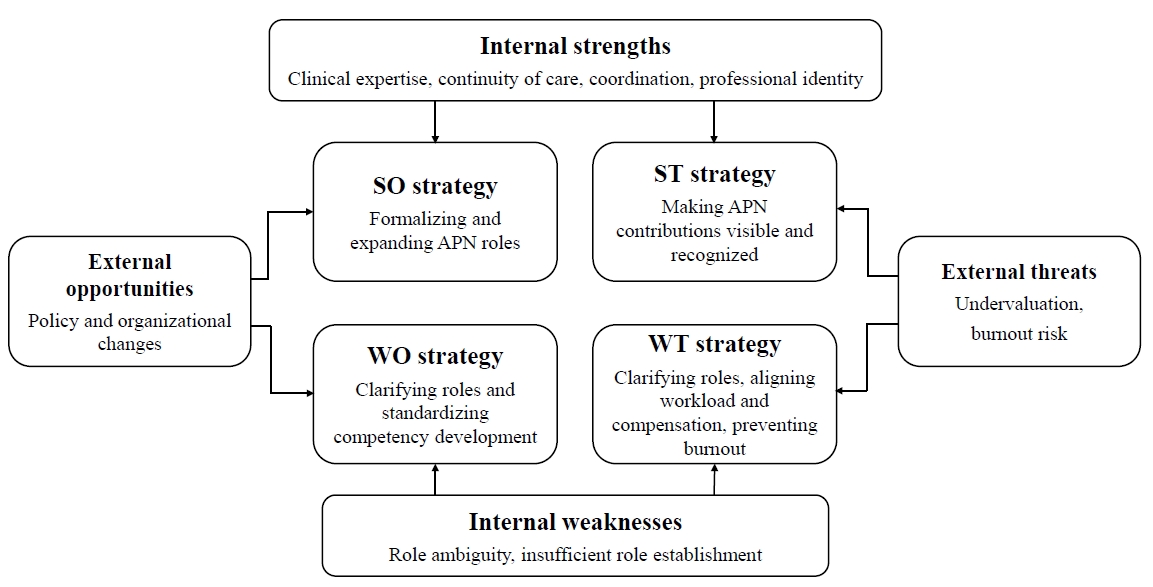
Table 1.Examples of semistructured interview questions
Table 2.General characteristics of the participants (N=24)
Table 3.SWOT analysis of the advanced practice nurse system
Table 4.Strategic directions for developing the advanced practice nurse system using the TOWS matrix
APN, advanced practice nurse; SO, strengths–opportunities; ST, strengths–threats; SWOT, strengths, weaknesses, opportunities, and threats; TOWS, threats, opportunities, weaknesses, and strengths; WO, weaknesses–opportunities; WT, weaknesses–threats. S, W, O, and T denote strengths, weaknesses, opportunities, and threats, respectively.
- 1. Ministry of Health and Welfare. Supplementary guidelines II for the pilot project related to the nurses’ scope of practice. Ministry of Health and Welfare; 2024.
- 2. Kim JH, Jeon MK, Choi S, Lee M, Choi SJ. Strategies for expanding the role of advanced practice providers in the Korean nursing workforce: a mixed-methods approach. J Korean Acad Nurs. 2025;55(4):568-583. https://doi.org/10.4040/jkan.25106ArticlePubMed
- 3. Kim MY, Choi SJ, Lee E, Hyun JW, Kang YA, Park JH. Development of reimbursement models for the deployment of advanced practice nurses in Korea: focusing on general wards and intensive care units. J Korean Clin Nurs Res. 2025;31(3):220-233. https://doi.org/10.22650/JKCNR.2025.31.3.220Article
- 4. Nursing Acts, Law No. 20445 (Sep 20, 2024) [Internet]. Korean Law Information Center; 2024 [cited 2026 Mar 20]. Available from: https://www.law.go.kr/LSW/lsInfoP.do?lsiSeq=265413
- 5. Poghosyan L, Maier CB. Advanced practice nurses globally: responding to health challenges, improving outcomes. Int J Nurs Stud. 2022;132:104262. https://doi.org/10.1016/j.ijnurstu.2022.104262ArticlePubMedPMC
- 6. Health Resources and Services Administration. State of the primary care workforce, 2024 [Internet]. U.S. Department of Health and Human Services; 2024 [cited 2026 Feb 26]. Available from: https://bhw.hrsa.gov/sites/default/files/bureau-health-workforce/state-of-the-health-workforce-report-2024.pdf
- 7. Taiwan Association of Nurse Practitioners. Nurse practitioner accreditation standards [Internet]. Taiwan Association of Nurse Practitioners; 2024 [cited 2025 Mar 20]. Available from: https://www.tnpa.org.tw/en/certification/nurse.php
- 8. Xu C, Koh KWL, Zhou W. The development of advanced practice nurses in Singapore. Int Nurs Rev. 2024;71(2):238-243. https://doi.org/10.1111/inr.12810ArticlePubMed
- 9. Dankers-de Mari EJ, van Vught AJ, Visee HC, Laurant MG, Batenburg R, Jeurissen PP. The influence of government policies on the nurse practitioner and physician assistant workforce in the Netherlands, 2000-2022: a multimethod approach study. BMC Health Serv Res. 2023;23(1):580. https://doi.org/10.1186/s12913-023-09568-4ArticlePubMedPMC
- 10. American Association of Nurse Practitioners. State practice environment [Internet]. American Association of Nurse Practitioners; 2026 [cited 2026 Feb 26]. Available from: https://www.aanp.org/advocacy/state/state-practice-environment
- 11. Choi SJ, Kim MY. Legal and practical solutions for the expanding the roles of medical support staff nurses. J Korean Acad Nurs. 2024;54(3):300-310. https://doi.org/10.4040/jkan.24075ArticlePubMed
- 12. Choi SJ, Lee DH, Kang YA, Leem CS, Jeon MK. A study of the roles, practice, and reimbursement of Korean advanced practice nurses, and proposal for improving reimbursement policies. J Korean Clin Nurs Res. 2024;30(3):178-192. https://doi.org/10.22650/JKCNR.2024.30.3.178Article
- 13. Enforcement Rule on the Performance of Clinical Support Tasks by Nurses, Ordinance of the Ministry of Health and Welfare No. 1187 (Jul 10, 2026) [Internet]. Korean Law Information Center; 2026 [cited 2026 Sep 4]. Available from: https://www.law.go.kr/LSW/lsInfoP.do?lsiSeq=288085
- 14. Kim M, Kim I, Lee Y. A study on legal coherence of legislations related to nursing services: focusing on registered nurse, midwife, advanced practice nurse and nurse assistant. Health Soc Welf Rev. 2018;38(3):420-457. https://doi.org/10.15709/hswr.2018.38.3.420Article
- 15. Cho SH. Applications for advanced practice nursing programs doubled over the past three years: 361 applicants for 30 positions at Sungkyunkwan University. Chosun Ilbo [Internet]. 2026 Apr 20 [cited 2026 Jun 13]. Available from: https://www.chosun.com/national/welfare-medical/2026/04/20/LOPGXGKTHBH4PHKZTNKJPWWGDI/
- 16. Korean Accreditation Board of Nursing Education. 2026 status report on quality management of advanced practice nurse education institutions. Korean Accreditation Board of Nursing Education; 2026. Report No.: 2026-02-04.
- 17. Østensen E, Bergland Å, Larsen MH, Hillestad AH. Advanced practice nursing students’ experiences of role transition during the first phase of their education: a qualitative study. Nord Sygeplejeforsk. 2025;15(1):1-15. https://doi.org/10.18261/nsf.15.1.5Article
- 18. Ladd E, Miller M, Wheeler K, Wainaina S, Aguirre F, McGrath H, et al. A global SWOT analysis of advanced practice nursing: policy, regulation, and practice. Res Sq. 2020 Nov 25 [Epub]. https://doi.org/10.21203/rs.3.rs-113320/v1ArticlePubMed
- 19. Wilbeck J, Schumann L, Comer A, Davis W. Consideration of the emergency nurse practitioner as a population within the APRN Consensus Model: a SWOT analysis. J Am Assoc Nurse Pract. 2022;34(10):1126. https://doi.org/10.1097/JXX.0000000000000781ArticlePubMed
- 20. Challinor J. Global oncology nursing recruitment and retention: a SWOT analysis. Semin Oncol Nurs. 2023;39(1):151361. https://doi.org/10.1016/j.soncn.2022.151361ArticlePubMed
- 21. Sincy P. SWOT analysis in nursing. Int J Nurs Care. 2016;4(1):34-37. https://doi.org/10.5958/2320-8651.2016.00008.9Article
- 22. Yuan Y, Fu J, Leng L, Wen Z, Wei X, Han D, et al. The strengths, weaknesses, opportunities, and threats of generative artificial intelligence: a qualitative study of undergraduate nursing students. Front Public Health. 2025;13:1672140. https://doi.org/10.3389/fpubh.2025.1672140ArticlePubMedPMC
- 23. Weihrich H. The TOWS matrix: a tool for situational analysis. Long Range Plan. 1982;15(2):54-66. https://doi.org/10.1016/0024-6301(82)90120-0Article
- 24. Gürel E, Tat M. SWOT analysis: a theoretical review. J Int Soc Res. 2017;10(51):994-1006. https://doi.org/10.17719/jisr.2017.1832Article
- 25. Tong A, Sainsbury P, Craig J. Consolidated criteria for reporting qualitative research (COREQ): a 32-item checklist for interviews and focus groups. Int J Qual Health Care. 2007;19(6):349-357. https://doi.org/10.1093/intqhc/mzm042ArticlePubMedPMC
- 26. Krueger RA, Casey MA. Focus groups: a practical guide for applied research. 5th ed. Sage Publications; 2014. 280 p.
- 27. Elo S, Kyngäs H. The qualitative content analysis process. J Adv Nurs. 2008;62(1):107-115. https://doi.org/10.1111/j.1365-2648.2007.04569.xArticlePubMedPMC
- 28. Guba EG, Lincoln YS. Fourth generation evaluation. Sage Publications; 1989. 294 p.
- 29. Schönenberger N, Sottas B, Merlo C, Essig S, Gysin S. Patients’ experiences with the advanced practice nurse role in Swiss family practices: a qualitative study. BMC Nurs. 2020;19:90. https://doi.org/10.1186/s12912-020-00482-2ArticlePubMedPMC
- 30. Jeon MK, Choi SJ, Han JE, Kwon EK, Park JH, Kim JH. Experiences of patients and their families receiving medical services provided by advanced practice nurses at tertiary general hospitals. J Korean Acad Nurs. 2024;54(4):594-606. https://doi.org/10.4040/jkan.24069ArticlePubMed
- 31. Wheeler KJ, Miller M, Pulcini J, Gray D, Ladd E, Rayens MK. Advanced practice nursing roles, regulation, education, and practice: a global study. Ann Glob Health. 2022;88(1):42. https://doi.org/10.5334/aogh.3698ArticlePubMedPMC
- 32. Fosah R, Llahana S. Barriers and enablers to leadership in advanced practice nursing: a systematic review. Int Nurs Rev. 2025;72(2):e70034. https://doi.org/10.1111/inr.70034ArticlePubMedPMC
- 33. Kilpatrick K, Savard I, Audet LA, Costanzo G, Khan M, Atallah R, et al. A global perspective of advanced practice nursing research: a review of systematic reviews. PLoS One. 2024;19(7):e0305008. https://doi.org/10.1371/journal.pone.0305008ArticlePubMedPMC
- 34. Korean Nursing Association. Status of advanced practice nurses by specialty as of September 19, 2025 [Unpublished data]. Korean Nursing Association; 2025.
- 35. Lee A. 550,000 nurses, but only half are active in the field…regional gap up to 140-fold. JoongAng Ilbo [Internet]. 2026 May 4 [cited 2026 Jun 10]. Available from: https://www.joongang.co.kr/article/25425649
- 36. Kim MY, Choi SJ, Kim JH, Han JE, Choi EJ. Standard job description for advanced practice nurses to ensure safe medical support tasks. J Korean Clin Nurs Res. 2024;30(3):217-232. http://doi.org/10.22650/JKCNR.2024.30.3.217Article
- 37. Kim MY, Jeon MK, Choi SJ, Kim JH, Kim H, Leem CS. Experience of healthcare providers in the advanced practice nurse system. J Korean Crit Care Nurs. 2021;14(2):42-56. https://doi.org/10.34250/jkccn.2021.14.2.42Article
- 38. Yu H, Connell KA, Delgado S, Brom H, Brooks Carthon JM, Bettencourt A, et al. “I feel abandoned by nursing and not accepted by medicine”: factors undermining a healthy work environment for hospital-based nurse practitioners in the United States. J Am Assoc Nurse Pract. 2026;38(4):263-273. https://doi.org/10.1097/JXX.0000000000001228ArticlePubMedPMC
- 39. McMenamin A, Turi E, Schlak A, Poghosyan L. A systematic review of outcomes related to nurse practitioner-delivered primary care for multiple chronic conditions. Med Care Res Rev. 2023;80(6):563-581. https://doi.org/10.1177/10775587231186720ArticlePubMedPMC
- 40. Elliott N, Begley C, Sheaf G, Higgins A. Barriers and enablers to advanced practitioners’ ability to enact their leadership role: a scoping review. Int J Nurs Stud. 2016;60:24-45. https://doi.org/10.1016/j.ijnurstu.2016.03.001ArticlePubMed
- 41. Kim ES, Kim N, Choi SJ, Kim N, Kim YH, Lee JY, et al. The leadership experience of advanced practice nurses in a tertiary hospital setting : focus group interview. J Korean Crit Care Nurs. 2023;16(3):48-61. https://doi.org/10.34250/jkccn.2023.16.3.48Article
- 42. Hamric AB, Spross JA, Hanson CM. Advanced practice nursing: an integrative approach. 4th ed. Saunders Elsevier; 2009. 822 p.
- 43. International Council of Nurses. Guidelines on advanced practice nursing [Internet]. International Council of Nurses; 2020 [cited 2026 Mar 31]. Available from: https://www.icn.ch/resources/publications-and-reports/guidelines-advanced-practice-nursing-2020
References
Figure & Data
REFERENCES
Citations
Citations to this article as recorded by 
 ePub Link
 Cite
 XML Download
Perceptions of advanced practice nurses’ role expansion among graduate students in advanced practice nursing programs: a qualitative study using SWOT-TOWS analysis
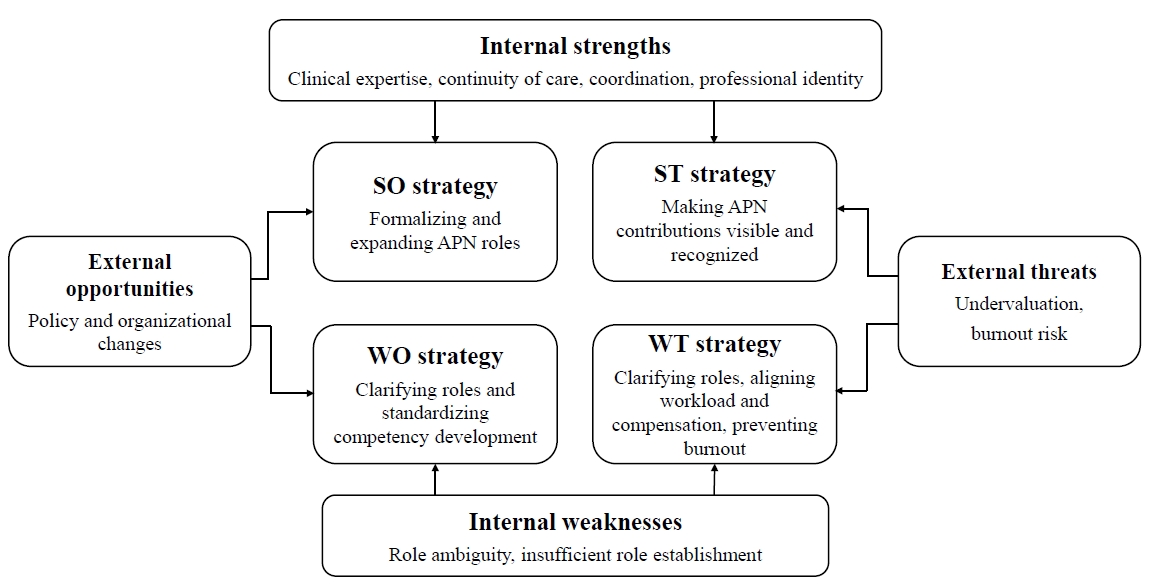
Fig. 1. Synthesis of strategies for developing the advanced practice nurse system. APN, advanced practice nurse; SO, strengths–opportunities; ST, strengths–threats; SWOT, strengths, weaknesses, opportunities, and threats; WO, weaknesses–opportunities; WT, weaknesses–threats.
Fig. 1.
Perceptions of advanced practice nurses’ role expansion among graduate students in advanced practice nursing programs: a qualitative study using SWOT-TOWS analysis
| Type | Interview questions | |||||
|---|---|---|---|---|---|---|
| Opening question | • Please briefly introduce yourself, then explain what led you to enroll in the advanced practice nursing program and how you made that decision. | |||||
| Main question | • How do you view the expansion of advanced practice nurses’ roles in relation to recent changes in the Nursing Act and medical support activities? | |||||
| Probing questions | • What are your thoughts about the advanced practice nurses you work with? | |||||
| • Based on your experience, how would you describe the role of an advanced practice nurse in clinical practice? | ||||||
| • Does the current clinical environment, in your view, allow advanced practice nurses to perform their roles fully? | ||||||
| • If you become an advanced practice nurse, what role would you like to perform? | ||||||
| • What roles do you think advanced practice nurses should play in the Korean healthcare system in the future? | ||||||
| Closing question | • Would you like to add anything about the roles and future development of advanced practice nurses? |
| No. | FGI group | Sex | Age (yr) | Specialty area | Current semester | Total clinical experience (yr) | Current department |
|---|---|---|---|---|---|---|---|
| 1 | Group 1 | F | 37 | Home health | Semester 2 | 13.00 | General ward |
| 2 | Group 1 | F | 32 | Oncology | Semester 2 | 9.33 | General ward |
| 3 | Group 1 | F | 29 | Home health | Semester 2 | 7.58 | Intensive care unit |
| 4 | Group 1 | F | 32 | Home health | Semester 2 | 8.75 | General ward |
| 5 | Group 1 | M | 32 | Critical care | Semester 2 | 7.25 | Intensive care unit |
| 6 | Group 2 | F | 39 | Critical care | Semester 2 | 14.33 | Intensive care unit |
| 7 | Group 2 | F | 33 | Oncology | Semester 2 | 9.67 | Clinical support unit |
| 8 | Group 2 | F | 39 | Home health | Semester 2 | 18.25 | Intensive care unit |
| 9 | Group 2 | F | 28 | Home health | Semester 2 | 5.41 | General ward |
| 10 | Group 3 | F | 30 | Oncology | Semester 2 | 8.00 | General ward |
| 11 | Group 3 | F | 33 | Oncology | Semester 2 | 9.75 | General ward |
| 12 | Group 3 | F | 28 | Oncology | Semester 2 | 6.33 | General ward |
| 13 | Group 3 | F | 32 | Oncology | Semester 2 | 8.17 | General ward |
| 14 | Group 3 | F | 31 | Oncology | Semester 2 | 8.17 | General ward |
| 15 | Group 3 | F | 29 | Critical care | Semester 2 | 7.17 | Intensive care unit |
| 16 | Group 4 | F | 34 | Critical care | Semester 4 | 11.00 | Clinical support unit |
| 17 | Group 4 | F | 31 | Home health | Semester 4 | 8.25 | General ward |
| 18 | Group 4 | F | 28 | Critical care | Semester 4 | 6.58 | Intensive care unit |
| 19 | Group 4 | F | 29 | Home health | Semester 4 | 6.58 | General ward |
| 20 | Group 4 | F | 32 | Critical care | Semester 4 | 9.17 | Intensive care unit |
| 21 | Group 5 | F | 32 | Oncology | Semester 4 | 8.91 | General ward |
| 22 | Group 5 | F | 36 | Oncology | Semester 4 | 13.33 | General ward |
| 23 | Group 5 | F | 28 | Oncology | Semester 4 | 6.25 | General ward |
| 24 | Group 5 | F | 37 | Home health | Semester 4 | 15.59 | General ward |
| SWOT domain | Category | Subcategories |
|---|---|---|
| Strengths | S1. Systematic role in maintaining continuity of care during healthcare workforce shortages | • Expanded roles and a structural buffer during workforce shortages |
| • A key workforce for maintaining continuity of care and operational efficiency | ||
| S2. Trust in clinical competence and collaborative coordination within multidisciplinary teams | • A trusted advanced practice provider whose work draws on clinical expertise | |
| • A central mediator of team-based care | ||
| S3. Recognition of professional roles based on distinctive expertise and patient-centered competencies | • Symbolic professional status and identity as a role model | |
| • Positive perceptions of expanded APN roles | ||
| • Therapeutic communication and education competencies that contribute to patient outcomes | ||
| Weaknesses | W1. Role ambiguity and interprofessional conflict arising from unclear role boundaries | - |
| W2. Insufficient shared understanding and clarification of APN roles within the system | - | |
| Opportunities | O1. Policy and organizational changes that facilitate formalization of APN roles | • Increased organizational use of and demand for APNs |
| • A broader legal and institutional basis following implementation of the Nursing Act and formalization of clinical support duties | ||
| • Greater need for systematic education and competency development as APN roles expand | ||
| • Increased social attention and opportunities to make APN roles more visible | ||
| Threats | T1. Structural undervaluation of APN expertise within the healthcare system | • Mismatch between professional expertise and compensation |
| • Difficulty in measuring and recognizing APN contributions | ||
| T2. Burnout risk arising from insufficient support for expanded roles and responsibilities | • A disproportionate increase in APNs’ responsibilities and workload as their roles expand | |
| • Continuous pressure to demonstrate professional value |
| TOWS strategy | SWOT basis | Strategic direction | Key actions |
|---|---|---|---|
| SO | S1, S2, S3 + O1 | Institutionalizing and expanding APN roles by drawing on clinical expertise and organizational and institutional opportunities | • Specify APN roles and areas of practice in which clinical expertise can be fully used |
| • Expand the use of APNs within organizations in response to clinical and organizational demand | |||
| • Formalize established APN functions as sustainable roles | |||
| WO | W1, W2 + O1 | Clarifying roles and establishing standardized education and competency development systems within the evolving legal and institutional framework | • Clearly define APN roles, responsibilities, and scope of practice in accordance with the evolving legal and institutional framework |
| • Standardize education and practice-based training to develop the competencies required for expanded roles | |||
| • Strengthen the link between APN education and role performance to promote a shared understanding and stable implementation of APN roles | |||
| ST | S1, S2, S3 + T1 | Strengthening recognition of APN expertise and roles by making clinical contributions and outcomes more visible | • Identify and document APNs’ clinical contributions and outcomes |
| • Develop indicators of APNs’ clinical, patient-centered, and coordination contributions | |||
| • Use visible outcomes to support organizational and professional recognition of APN expertise and roles | |||
| WT | W1, W2 + T1, T2 | Preventing role burden and burnout through appropriate workload, organizational support, and compensation systems | • Establish appropriate workload standards that reflect expanded roles and responsibilities |
| • Develop organizational support and compensation systems that match the workload and level of responsibility | |||
| • Prevent role expansion from becoming merely the addition of tasks or substitution for other staff, and support sustainable role performance |
Table 1. Examples of semistructured interview questions
Table 2. General characteristics of the participants (N=24)
F, female; FGI, focus group interview; M, male.
Table 3. SWOT analysis of the advanced practice nurse system
No separate subcategories were identified for W1 or W2. APN, advanced practice nurse; SWOT, strengths, weaknesses, opportunities, and threats.
Table 4. Strategic directions for developing the advanced practice nurse system using the TOWS matrix
APN, advanced practice nurse; SO, strengths–opportunities; ST, strengths–threats; SWOT, strengths, weaknesses, opportunities, and threats; TOWS, threats, opportunities, weaknesses, and strengths; WO, weaknesses–opportunities; WT, weaknesses–threats. S, W, O, and T denote strengths, weaknesses, opportunities, and threats, respectively.


